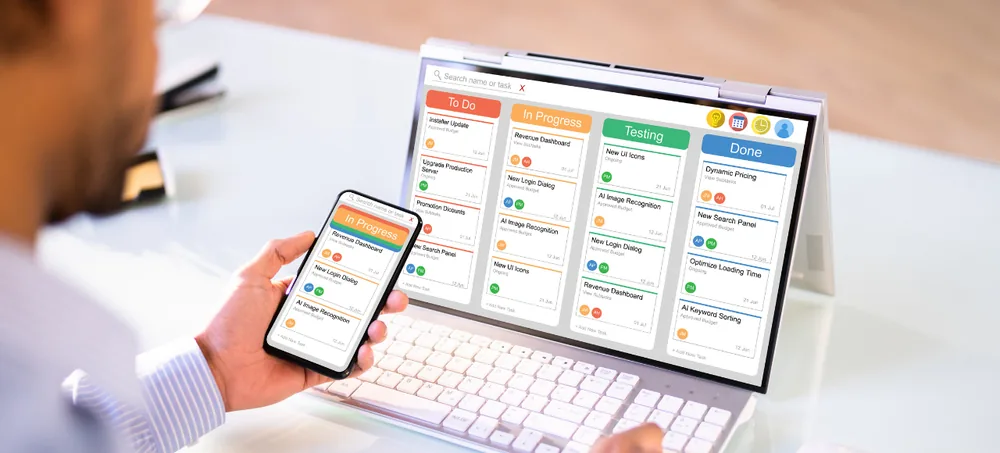
Scale smarter with a complete AI-driven ERP solution built for manufacturing, distribution, and e-commerce businesses etc...

Best ERP Systems India | Cloud ERP Systems for Business
Cloud ERP Systems Across India

Best ERP Systems India: Which Ones You Actually Need First

Best ERP Systems India - ERPLax Cloud ERP Platform

ERP is usually sold as five systems — sales, purchase, inventory, finance, reporting. It is rarely bought that way. Each one has prerequisites: inventory needs product data before it means anything, sales needs inventory to promise against, finance needs both to reconcile. Getting the order right matters more than the feature comparison. ERPLax is a cloud ERP platform where those systems share one set of records, so they can go live in the sequence your business can absorb — useful whether you are shortlisting the top ERP systems India vendors offer, comparing the best ERP system India buyers name, weighing business ERP systems India teams already run, or scoping an enterprise resource planning systems India rollout. Built in Karnataka, delivered nationally.

  • Sales
  • Purchase
  • Inventory
  • Finance
  • Reporting
19+ Years of Experience 1500+ Clients 1700+ Projects

Talk to EchoPx Technologies

Tell us which departments hurt most today and we will scope the first phase around them.

Verified Experts ERP consultants & business analysts
Free Consultation No Obligation 24hr Response
0YearsExperience delivering technology solutions for businesses.
0ClientsOrganizations supported through technology solutions.
0ProjectsProjects delivered across different business requirements.
Definition

What are ERP systems?

Business management platforms connecting multiple operational functions within an organisation. Their purpose is to improve process coordination, reduce manual work and create better visibility — which is why they are worth adopting in the order that fixes the worst coordination problem first.

What ERP systems support

Six activity areas managed through connected workflows on a single platform instead of a different application per department.

  • Sales management
  • Purchase management
  • Inventory management
  • Finance operations
  • Reporting
  • Approval workflows

A cloud ERP system provides a SaaS environment where each can be configured to operational requirements.

Connecting different departments

Sales manages customer requirements, purchase coordinates suppliers, inventory monitors stock, finance manages financial processes. When those operate separately, delays and information gaps follow.

ERP systems connect the departments through integrated business processes.

Automating business workflows

Four manual habits survive in most organisations, each too small on its own to justify a project.

  • Spreadsheet tracking
  • Manual approvals
  • Repeated data entry
  • Separate reporting

Business process automation and business workflow automation turn those habits into structured processes.

Visibility and growth

Leaders need accurate information to understand operations, and growing businesses need systems that adapt as requirements change rather than ones that have to be worked around.

A structured platform absorbs increasing operational complexity as it arrives.

Sequence, Not Shopping List

Each system has something that must come first

Vendors present ERP as a menu of five systems. In practice they depend on each other, and turning one on before its prerequisite exists is the most common way a rollout stalls. Product and customer data underpins everything. Inventory has to be trustworthy before sales can promise against it. Finance reconciles what sales and purchase produced. Reporting is last because it needs all of them.

Six things ERPLax manages

A cloud ERP system for organisations improving business process management, supporting centralized business management through configurable workflows. ERP implementation is scoped from that sequence, which is what separates working ERP solutions India businesses keep from modern ERP software India teams abandon.

  • Sales operations
  • Purchase activities
  • Inventory processes
  • Finance workflows
  • Business reporting
  • Approval processes
What has to exist before each system works Left to right is prerequisite order, not importance MASTER DATA products & customers Reporting Inventory Purchase Sales Finance order of adoption Which systems go live in phase one is a scoping decision, not a default
Cloud ERP Systems India

How the platform is delivered

A SaaS ERP solution where businesses configure workflows according to operational requirements, adding systems as the organisation is ready for them.

Cloud-only SaaS

Delivered on a subscription with hosting, updates, security and backups included. There is no on-premise or self-hosted deployment option.

Phase it deliberately

Systems go live in the order your operations can absorb, rather than everything switching on for one date in a calendar.

Customization within the platform

Configuration and development inside the SaaS environment, covering workflows, approvals, roles and reports rather than code ownership.

One record set throughout

Adding a system later does not mean integrating it, because each one reads and writes the same records from the start.

The Systems

Key features of ERPLax ERP systems

Five systems plus the approval layer running through them. Each card notes what it depends on, so the sequencing decision is visible rather than implied.

Sales Management System

Sales operations involve customer enquiries, quotations, approvals and order processing. Depends on customer data and, for anything physical, on inventory being trustworthy.

  • Customer information
  • Enquiry tracking
  • Quotation management
  • Order processing
  • Sales reporting

Structured sales workflows and better coordination with other departments.

Purchase Management System

Procurement needs organised processes for managing requirements and suppliers. Depends on supplier records and agreed approval limits.

  • Purchase requests
  • Approval workflows
  • Purchase orders
  • Supplier coordination
  • Purchase tracking

Better visibility into purchasing activity and improved procurement coordination.

Inventory Management System

Important for businesses handling products and materials. Depends on product data being clean, which is why it is usually the first real piece of work.

  • Stock monitoring
  • Movement tracking
  • Product information
  • Inventory reporting

Better inventory visibility coordinating purchasing, sales and operations.

Finance Management System

Finance operations require connected information and organised workflows. Depends on sales and purchase producing transactions worth reconciling.

Integrated finance workflows improving operational coordination.

Reporting and Analytics

ERP systems help businesses understand operational performance through connected information. Depends on everything upstream, which is why it lands last and improves quietly thereafter.

Better visibility into business activities as each system comes online.

Approval Workflows

Approvals are not a sixth system so much as a layer inside the others, replacing manual approvals with a recorded queue.

Control that survives holidays, handovers and busy weeks.

ERP System Workflows

What each system runs day to day

Illustrative rather than fixed. Reading them in this order also shows why inventory tends to be worth doing before sales.

Sales workflow

Helps businesses manage sales activities systematically across the team rather than per representative.

  1. Customer enquiry
  2. Quotation creation
  3. Approval process
  4. Sales order confirmation
  5. Delivery coordination
  6. Invoice generation

Purchase workflow

ERP workflows help businesses maintain organised procurement instead of reconstructing it from email later.

  1. Purchase requirement
  2. Approval request
  3. Supplier selection
  4. Purchase order creation
  5. Goods receipt
  6. Invoice processing

Inventory workflow

Connects purchasing and sales activities, and is the chain the other two quietly rely on being accurate.

  1. Goods received
  2. Inventory update
  3. Stock monitoring
  4. Order fulfilment
  5. Inventory reporting
Before You Select

What to evaluate before selecting an ERP system

Five areas decide fit. The sixth decides how the first year actually goes.

01

Business requirements

What the platform must do in the first phase, kept separate from what would be useful in a year.

02

Required workflows

How many stages, roles and exceptions each core process carries today, including the undocumented ones.

03

Reporting needs

Which reports leadership will genuinely read, how often, and what has to be captured upstream for them to be accurate.

04

Integration requirements

For each external system: what data moves, in which direction, how often and who owns it when it fails.

05

Future operational needs

More users is easy. More locations, products, suppliers and approval layers is the real test of integrated ERP systems India-wide.

06

Then agree the order

Write down which systems go live in phase one and which wait. A vendor who says all five at once, on one date, has not looked at your data yet.

Benefits

Benefits of using ERP systems

Five changes that accumulate as each system comes online, rather than arriving all at once.

Centralized business management

One platform for managing different business functions instead of several that each hold part of the record.

Improved process automation

Automated workflows reduce repetitive manual activity and keep processes consistent as teams change.

Better department collaboration

Teams work with connected information instead of isolated systems and forwarded files.

Enhanced operational visibility

Businesses gain a real understanding of their processes and activities, improving as more systems join.

Flexible configuration

Configuration and development within the SaaS platform, according to documented business requirements.

Nothing to host or maintain

Hosting, updates, security and backups are part of the subscription, so no internal team carries them.

Industries

Industries using ERP systems India

The five systems are the same everywhere. Which one goes live first is what changes by sector.

Manufacturing Industry

Manufacturers manage production, inventory, purchasing, sales and finance, so manufacturing ERP systems India-wide usually begin with material and inventory data.

Trading and Distribution

Trading businesses require visibility across suppliers, stock and customer orders, which makes inventory and purchase the natural first pair.

Retail Industry

Retail businesses manage product information, sales transactions and inventory, where product data quality decides how quickly everything else works.

Service Businesses

Service organisations require customer management, billing and reporting, and often start with sales and finance because inventory barely applies.

Small and Medium Businesses

Growing businesses require systems that support increasing operational needs, and benefit most from phasing rather than a single switchover.

Multi-Location Operations

Businesses across several sites often roll out one system everywhere before adding the next, rather than one site getting everything.

Why ERPLax

Why choose ERPLax as your ERP system partner?

Judge any enterprise ERP systems India vendors offer on whether they will phase the rollout honestly, then on how well the workflows match yours.

01

Cloud ERP platform

A cloud-only SaaS ERP platform designed for modern businesses, with no infrastructure to run alongside it.

02

Business-focused solution

The platform focuses on aligning ERP workflows with business requirements rather than the other way round.

03

Configurable ERP workflows

Organisations configure processes according to operational needs, including approval stages and role permissions.

04

Integrated business processes

Sales, purchasing, inventory, finance and reporting connected through one platform and one set of records.

05

Experienced technology partner

EchoPx Technologies brings 19+ years of experience delivering technology solutions.

06

1500+ clients, 1700+ projects

Delivery experience folded back into how each rollout is scoped, sequenced and supported.

FAQs

Frequently asked questions

What businesses ask while comparing ERP systems in India.

The right ERP system depends on business requirements, industry needs, workflow complexity and operational objectives. Businesses should select a platform that supports automation and integrated processes, and decide which modules genuinely need to go live first.

Businesses use ERP systems to connect departments, automate workflows, improve visibility and manage operations through centralized business management, so information is shared rather than re-entered between teams.

Yes. ERPLax is a cloud-only SaaS ERP platform designed for integrated business management. There is no on-premise or self-hosted deployment option, and hosting, updates, security and backups are part of the subscription.

Yes. ERPLax supports customization through configuration and development within the SaaS platform according to business requirements, covering workflows, approvals, roles and reports. Customers do not receive source code ownership.

ERPLax can support manufacturing, trading, distribution, retail, service and growing businesses requiring integrated business processes. The platform stays the same across sectors while the configuration differs.

Businesses should consider business requirements, required workflows, reporting needs, integration requirements and future operational needs. It is also worth agreeing the order in which modules go live, since few organizations adopt all of them at once.

Pick the systems, then pick the order

The right ERP system helps businesses create connected operations, automate workflows and improve visibility across departments. Which of the five you turn on first is a separate decision, and usually the one that determines whether the rollout feels manageable. ERPLax provides a cloud ERP platform with integrated business processes, configurable workflows and centralized business management — talk to EchoPx Technologies about scope and sequence together.

Serving businesses across India info@erplax.in Cloud subscription · No servers to maintain

Specialized Applications

ERP Solutions Built for Your Industry

Purpose-built & ready to deploy. Hover to explore, click to learn more.

View all modules

Testimonials

What Our Clients Say

Real stories from businesses running their operations on ERPLax.