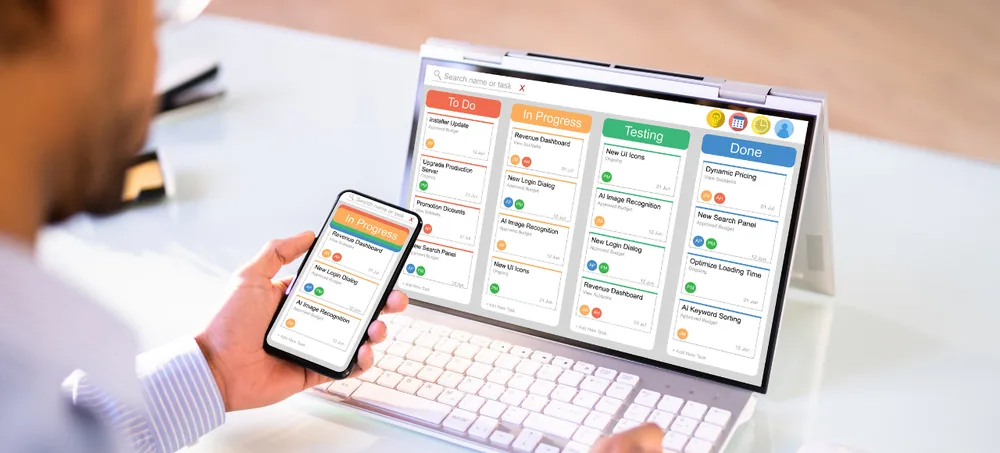
Scale smarter with a complete AI-driven ERP solution built for manufacturing, distribution, and e-commerce businesses etc...

Enterprise Resource Planning Implementation India | Cloud ERP
Cloud ERP Implementation Across India

Enterprise Resource Planning Implementation India

Enterprise Resource Planning Implementation India - ERPLax Cloud ERP Platform

Implementation is not software deployment. It is the work of turning how a business already operates into workflows a system can carry — sales, purchasing, inventory, finance, approvals and reporting, connected rather than kept in separate applications. ERPLax is a cloud ERP platform built for that approach, and EchoPx Technologies brings 19+ years of ERP software implementation and ERP consulting experience to the process behind it, from Karnataka to businesses across India.

  • Requirement Analysis
  • Workflow Configuration
  • Data Preparation
  • Testing & Validation
  • User Adoption
19+ Years of Experience 1500+ Clients 1700+ Projects

Talk to EchoPx Technologies

Tell us which departments are in scope and we will outline a realistic implementation plan.

Verified Experts ERP consultants & implementation leads
Free Consultation No Obligation 24hr Response
0YearsExperience in delivering business technology solutions.
0ClientsOrganizations supported through technology solutions.
0ProjectsProjects delivered across different business requirements.
Why Implement

Why businesses need enterprise resource planning implementation

Most organisations start with separate applications for accounting, sales tracking, inventory, purchasing and reporting. Each supports its own department well enough. The gaps show up between them.

Disconnected business information

Sales needs inventory information, purchasing needs demand visibility, finance needs transaction detail from both. When each department holds its own records, a large share of the working day goes into collecting data from other people.

A cloud ERP platform connects those processes through centralized business management.

Manual operational processes

Spreadsheets, email and manual approvals slow daily activity and make the process depend on specific individuals being available.

  • Sales approvals
  • Purchase approvals
  • Inventory movement
  • Financial transactions
  • Reporting

Configurable ERP workflows standardise each of those.

Limited operational visibility

Leaders need accurate information to understand performance. Without integrated systems, producing a report means manual consolidation before anyone can read anything.

Connected activity across departments creates real operational visibility.

Difficulty managing growth

More products, customers, suppliers, transactions and departments all need more coordination. Operational complexity rises faster than headcount does.

A SaaS ERP solution adapts through configuration and development within the platform.

The ERPLax Approach

The ERP implementation process, gate by gate

The goal of ERP implementation is not software deployment. It is an organized business management system where processes, data and teams work together — which is why the process starts with your requirements rather than with a module list.

Seven things the engagement covers

Implementation begins by understanding business requirements, existing workflows and operational priorities. ERP workflows are then configured to support those processes rather than the other way round.

  • Business process analysis
  • ERP workflow configuration
  • Module setup
  • Process automation
  • Requirement alignment
  • Integration planning
  • User adoption support
Six gates, each with something agreed No gate opens until the one before it produced a decision 1 2 3 4 5 6 Requirement Understanding Process Mapping ERP Configuration Data Preparation Testing Validation User Adoption Scope agreed Workflows Configured Data ready Validated Live A plan built after requirement analysis, not quoted before it
Cloud ERP Implementation India

How the platform is delivered

ERPLax supports organisations looking for ERP implementation services in India with a cloud-first SaaS approach, so there is no infrastructure programme running alongside the process programme.

Cloud-only SaaS ERP

Delivered on a subscription with hosting, updates, security and backups included. There is no on-premise or self-hosted deployment option.

Configurable ERP workflows

Every business operates differently. Processes, approval stages and roles are defined against your operational requirements.

Customization inside the platform

ERP customization means configuration and development within the SaaS platform, covering workflows, modules and reports rather than code ownership.

Integration planned, not assumed

ERP integration and ERP migration requirements are scoped during implementation by what data moves, in which direction and how often.

Features

ERPLax features for ERP implementation

Six capability areas that most implementations touch. Which of them are in the first phase is a scoping decision, not a default.

Centralized Business Management

Manage different business functions through one cloud ERP platform, organising operational activity through connected workflows instead of separate systems.

  • Information accessibility
  • Department coordination
  • Fewer disconnected tools
  • Structured processes

Sales Process and Sales Management

Sales teams need accurate customer information, order visibility and consistent workflows rather than a personal method per representative.

  • Customer management
  • Workflow configuration
  • Order processing
  • Approvals
  • Sales reporting

Purchase Management

Procurement runs across several activities, from request through to supplier coordination. Structured workflows make the status of each one visible.

  • Purchase requests
  • Approval workflows
  • Purchase orders
  • Purchase tracking

Inventory Management

Inventory accuracy matters for any business handling products, materials or supplies, and it is where purchase and sales teams most often disagree.

  • Stock visibility
  • Organized movement
  • Purchase and sales coordination

Finance Management

Financial operations need accurate transaction tracking and reporting. Finance-related workflows draw on the operational transactions that produced them.

That connection is what removes the monthly reconciliation between operations and the ledger.

Reporting and Operational Visibility

Reports help leaders understand performance. ERP workflows support structured reporting by connecting information from across business activities.

Reporting and analytics only work when the underlying data was captured consistently in the first place.

Workflow Configuration

Four workflows worth mapping before you configure anything

These are examples, not templates. The point of configuration is that your version of each chain differs from the next company's — and that difference is what gets captured during requirement analysis.

Sales workflow

Helps teams maintain process consistency and improve coordination between sales, stores and finance.

  1. Customer inquiry
  2. Sales quotation
  3. Approval process
  4. Sales order confirmed
  5. Delivery coordination
  6. Invoice generation

Purchase workflow

A centralized workflow makes purchasing activity trackable rather than reconstructed from email threads.

  1. Purchase request
  2. Internal approval
  3. Supplier selection
  4. Purchase order
  5. Goods receipt
  6. Invoice processing

Inventory workflow

Inventory needs accurate movement tracking across operations, because purchasing and sales both read from it.

  1. Stock receiving
  2. Inventory updates
  3. Material movement
  4. Stock monitoring
  5. Inventory reporting

Finance workflow

Connecting these to the operational transactions above is what creates genuinely integrated business operations.

  1. Transaction recording
  2. Invoice management
  3. Payment tracking
  4. Expense processing
  5. Financial reporting
Step by Step

The ERP implementation workflow with ERPLax

Six steps, each producing something the next one depends on. Skipping ahead is the most common reason implementations run long.

01

Requirement understanding

Business objectives, existing systems and operational challenges, along with department requirements, user roles, approval requirements and reporting expectations.

02

Process mapping

Existing workflows reviewed end to end to identify where automation and improvement are actually worth having.

03

ERP configuration

The SaaS ERP solution configured to requirements, covering user roles, workflow rules, approval processes, business modules and reporting.

04

Data preparation

Required business information prepared so operations can transition into the platform without carrying old inconsistencies across.

05

Testing and validation

Sales, purchase, inventory, finance and reporting workflows reviewed against realistic scenarios rather than screen by screen.

06

User adoption

Employees introduced to the workflows their roles depend on. Implementations succeed or fail here more often than on configuration.

Benefits

Benefits of enterprise resource planning implementation

Six changes that follow from integrated business processes and configurable ERP workflows.

Improved process efficiency

Connected processes and automated workflows cut the manual coordination that fills the first hour of most days.

Better decision support

Centralized information means operational data is available when the decision is being made, not after.

Reduced process complexity

Integrated workflows simplify daily operations, particularly where several departments touch one transaction.

Enhanced collaboration

Departments work with connected processes rather than passing versions of the same record between isolated systems.

Better business control

Defined approvals and structured transactions give management genuine visibility into operational activity.

Flexible business configuration

Customization through configuration and development within the SaaS ERP platform, according to business requirements.

Industries

Industries that benefit from ERP implementation in India

The platform is the same across sectors. What changes is which workflows get configured first.

Manufacturing Businesses

Inventory, production planning, purchasing, sales and finance all interact. Implementation focuses on the coordination between those departments.

Trading and Distribution

These businesses need visibility across purchasing, inventory, sales orders and customer management, connected through integrated workflows.

Retail Organizations

Customer transactions, inventory availability, purchasing and reporting managed centrally rather than per location or per counter.

Service-Based Businesses

Structured customer management, project coordination, billing and reporting processes organised through ERP workflows.

Growing Small and Medium Businesses

SMEs usually need better systems the moment operational complexity outgrows the applications that got them here. A SaaS ERP solution gives business process automation without the infrastructure.

Multi-Location Operations Across India

Businesses running several sites need one operational picture rather than a set of regional spreadsheets that agree only at year end.

Why ERPLax

Why choose ERPLax for ERP implementation India

Businesses comparing an ERP implementation company India-wide, or an ERP implementation partner India-based, should weigh process understanding as heavily as platform capability.

01

Experience-driven ERP approach

19+ years delivering technology solutions for business requirements, combined with a cloud ERP platform built for modern organisations.

02

Cloud ERP platform

A SaaS ERP approach giving businesses ERP capability through a cloud platform rather than owned infrastructure.

03

Business-focused implementation

Aligning workflows with actual operations: understanding processes, configuring workflows and supporting operational requirements.

04

Configurable ERP workflows

Different organisations have different processes, so workflow configuration is based on documented business requirements.

05

Integrated business processes

Sales, purchasing, inventory, finance and reporting connected as one operational environment.

06

1500+ clients, 1700+ projects

Delivery experience folded back into how each implementation gets scoped, sequenced and supported.

FAQs

Frequently asked questions

What businesses ask before starting an ERP implementation in India.

Enterprise resource planning implementation is the process of deploying and configuring an ERP platform to support business operations. It includes understanding business requirements, configuring workflows, setting up processes and enabling users to manage operations through a centralized system.

Businesses consider ERP implementation to improve process organization, connect departments, automate workflows and gain better operational visibility, particularly once departments start maintaining their own versions of the same information.

Yes. ERPLax is a cloud-only SaaS ERP platform designed to help businesses manage operations through centralized business management and configurable workflows. There is no on-premise or self-hosted deployment option.

Yes. ERPLax supports customization through configuration and development within the SaaS platform according to specific business requirements. Customers do not receive source code ownership.

ERP implementation timelines depend on business requirements, workflows, modules, configuration needs and organizational readiness. A realistic plan is agreed after requirement analysis rather than quoted before it.

ERP implementation cost depends on business requirements, number of users, workflow complexity, configuration requirements, integrations and implementation scope. ERPLax uses a SaaS subscription model, so a requirements review establishes the commercial scope.

Yes. ERP implementation can include integration planning based on business requirements. Each integration is evaluated during implementation by what data moves, in which direction, how often and who owns the process.

ERPLax can support businesses across industries that require centralized business management, workflow automation and integrated operational processes, including manufacturing, trading and distribution, retail, services and growing SMEs.

Build better business operations with ERPLax

Modern businesses need connected systems that support efficient workflows, accurate information and real operational control. ERPLax helps organisations implement a cloud ERP platform designed around business processes, automation opportunities and operational requirements — scoped from your own workflows rather than from a standard template. Talk to EchoPx Technologies about enterprise resource planning implementation services in India.

Serving businesses across India info@erplax.in Cloud subscription · No servers to maintain

Specialized Applications

ERP Solutions Built for Your Industry

Purpose-built & ready to deploy. Hover to explore, click to learn more.

View all modules

Testimonials

What Our Clients Say

Real stories from businesses running their operations on ERPLax.