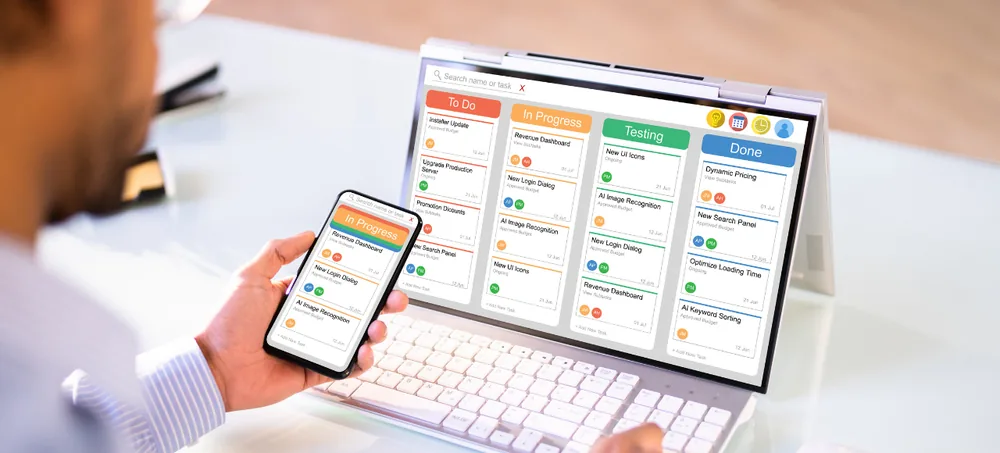
ERPLax helps businesses implement a configurable cloud ERP platform that brings multiple business functions together through integrated workflows, so process consistency, collaboration and access to business information all improve together.
Tell us how your departments work today and we will map it to a realistic implementation scope.
ERPLax brings extensive experience in business technology solutions, delivered by EchoPx Technologies in Bengaluru.
Bangalore businesses operate in a competitive environment where efficient processes, accurate information and faster decision-making are essential. As organizations expand, managing operations through disconnected applications and manual processes creates the kind of friction that no amount of extra effort resolves.
Companies consider ERP implementation Bangalore-wide to overcome disconnected systems, manual processes, limited operational visibility and the difficulty of managing growing business requirements. With ERPLax, organizations configure ERP workflows around their operational needs while improving process consistency, collaboration and access to business information through a SaaS ERP solution.
Enterprise resource planning implementation is a change project with a software component. The technical configuration is rarely the hard part. Getting departments to record work in one place, agreeing what a number means across teams and keeping the first phase small enough to actually finish is where projects succeed or quietly stall.
That is why the choice of ERP implementation partner matters as much as the platform. Businesses comparing ERP consulting services Bangalore offers should confirm early who runs requirement analysis, who performs configuration, who owns data preparation and how change requests are handled after go-live, because those answers vary far more between vendors than feature lists do.
Most ERP enquiries start from one of these situations rather than from a missing feature.
Finance, sales, inventory, procurement and operations run on separate systems, creating information gaps and making collaboration difficult.
An ERP implementation connects these functions through a unified platform with shared information.
Manual approvals, repeated data entry and administrative activity slow down daily operations and consume senior time.
ERP software implementation creates structured workflows that reduce repetitive tasks.
When information is spread across multiple systems, management teams struggle to understand current business performance.
A cloud ERP solution gives centralized access to operational information for effective monitoring.
Repeated data entry across departments leads to inconsistencies that erode confidence in the numbers.
ERP implementation maintains connected processes and improves data accuracy.
Businesses need timely information for planning, but traditional reporting methods require significant manual effort each cycle.
ERP systems organize business information and support improved reporting workflows.
Some organizations arrive having tried once already. Scope grew faster than adoption and the system never became where work happens.
A tighter first phase with agreed ownership is usually what changes the outcome.
ERPLax provides cloud ERP implementation services in Bangalore focused on helping businesses configure and adopt a platform aligned with their operational requirements, not a generic template.
Implementation begins with understanding existing operations, department requirements, workflow challenges and process improvement opportunities before anything is configured.
Workflows are configured based on operational requirements within the SaaS ERP platform, so the system reflects the approval structure the business already runs on.
Business functions are connected through integrated workflows, letting teams manage operations through one centralized system instead of coordinating between three.
Successful implementation requires teams to understand new processes. ERPLax supports the business through the transition rather than handing over a login and leaving.
Five service areas that make up a complete ERP solution implementation engagement.
ERP software implementation involves configuring and deploying ERP capabilities based on business requirements rather than switching on a default configuration.
ERPLax helps organizations move from disconnected operational processes toward a structured ERP environment with connected workflows across departments.
Cloud ERP implementation lets businesses access ERP capabilities through a SaaS platform without depending on traditional software installation models.
There is no server sizing exercise, no on-premise installation and no perpetual or one-time licence to negotiate before configuration can start.
ERP consulting helps businesses evaluate operational requirements, identify suitable workflows and plan ERP adoption in a sequence the team can absorb.
ERPLax supports organizations in understanding ERP requirements and designing practical implementation approaches rather than aspirational ones.
Businesses often have unique processes that require specific configurations rather than a workaround built beside the system.
ERPLax provides customization through configuration and development within its SaaS ERP platform according to business requirements. Customers do not receive source code.
ERP integration connects business processes and improves information flow between operational areas so data does not have to be re-entered at each boundary.
Organizations can evaluate integration requirements based on their existing business systems and workflow needs during requirement analysis.
Requirements keep moving after launch. New approval levels, additional branches and extra reports are normal rather than exceptional.
Because configuration happens inside the SaaS platform, adjustments after go-live are handled as change requests rather than a rebuild.
Those six areas are usually bought as one engagement rather than separately. Businesses searching for ERP implementation services Bangalore providers offer are generally looking for a single party that understands the process, configures the platform and stays available afterwards, not three vendors coordinating between themselves.
It also helps to separate two decisions that often get merged. Choosing ERP software Bangalore businesses will run on is a product decision about module coverage and workflow flexibility. Choosing who performs the ERP software implementation Bangalore operations depend on is a delivery decision about method, ownership and support. A strong platform with a weak rollout still produces a system nobody uses.
With ERPLax both sit with the same team, which removes the gap where requirements get lost in translation between a licence seller and an implementation contractor.
Five stages, each with a defined output. The meter shows how far the project has travelled by the end of each one.
The process starts by understanding business operations, existing workflows, challenges and ERP expectations. Nothing is configured before this is written down, because a demo cannot show where your process actually breaks.
Based on the documented requirements, ERP workflows are configured within the platform. This is where the system starts to resemble how your organization already works.
Existing information is reviewed and prepared for ERP usage. This is the stage most often underestimated: masters and balances carried across without cleaning become the reason people stop trusting the system in month two.
Configured workflows are reviewed against real transactions to confirm they support business operations. Gaps found here are cheap; gaps found after go-live are not.
Teams begin using the platform with workflows designed around their operations. Training covers each role rather than one power user, so adoption does not rest on a single internal champion.
What the configured platform actually does once the rollout is complete.
Business information is managed through one connected ERP platform instead of multiple disconnected systems, so operations across departments stay organized and accessible.
ERP workflow automation structures approvals, operational processes and recurring activities, reducing dependency on manual coordination and improving process consistency.
A centralized ERP environment gives teams access to relevant business information for operational monitoring and day-to-day decision-making.
ERP capabilities are configured according to operational requirements and industry processes rather than applied as a fixed template.
Implementation connects different business activities so departments collaborate through shared workflows on the same underlying records.
Each user works within the modules and records their role requires, which supports both usability and internal control across the organization.
What changes in the ordinary week once departments record work in one place.
Structured workflows replace repetitive manual activity across daily operations.
Centralized information helps management understand operations more effectively.
Standardized workflows improve coordination between departments.
Connected processes let teams work from shared business information.
Organized data supports improved reporting and operational planning.
Timelines depend on the modules in scope, workflow complexity, data preparation, integrations and how quickly users adopt the new process. A focused first phase covering the highest-volume processes generally reaches live usage sooner and builds internal confidence for the next one, which is why experienced implementation teams push back on all-at-once rollouts.
Businesses evaluating affordable SaaS ERP implementation should look past the headline figure and at scope. Paying for modules and capacity the first phase will not touch is the most common way an implementation budget gets consumed before the system delivers anything.
The modules overlap across sectors. The workflows, approvals and reports rarely do, which is why configuration matters more than a fixed template.
Production processes, inventory operations, procurement and business planning connected through shared workflows.
Inventory management, order processing, purchasing and sales workflows on one centralized platform.
Better control over product information, inventory, sales operations and consolidated reporting.
Projects, customers, financial processes and internal operations managed in one environment.
Centralized systems for increasing process complexity and improved visibility as operations expand.
What an ERP implementation company should be able to state plainly before you commit.
Subscription-based ERP capabilities without traditional deployment models. No on-premise install, no self-hosted build and no one-time licence.
Implementation aligns with business workflows and operational requirements through platform configuration and development.
Requirement understanding, configuration, workflow setup and adoption support handled as one engagement.
Workflows can be reconfigured as operational requirements evolve, without rebuilding the module they sit inside.
Requirement discussions, configuration, testing and support handled locally in Karnataka, India.
19+ years of experience, 1500+ clients and 1700+ projects behind EchoPx Technologies.
Shortlists usually mix three kinds of vendor. Some are resellers who pass implementation to a third party. Some are project shops that build something bespoke and hand it over. Others are product teams offering the platform, the configuration and ongoing support as one relationship. Knowing which one you are speaking to changes what a quotation actually covers and who you call when something needs changing.
ERPLax sits in the third group. EchoPx Technologies runs the requirement discussion, configures the platform, prepares the data and supports the rollout, so ERP consulting and implementation sit inside the same engagement rather than being bought separately from different parties.
ERP implementation in Bangalore refers to the process of adopting and configuring an ERP system to manage business operations through integrated workflows, covering requirement analysis, configuration, data preparation, testing and user adoption.
Businesses use ERP implementation services to connect departments, improve workflow management, organize business information and create better operational visibility instead of running finance, sales, inventory and procurement on separate systems.
Yes. ERPLax is a cloud-only SaaS ERP platform designed to help businesses manage integrated business processes. There is no on-premise installation, locally installed version or self-hosted deployment.
Yes. ERPLax provides configuration and development within its SaaS ERP platform according to business requirements. Customers do not receive source code.
ERP implementation timelines depend on business requirements, process complexity, configuration needs and organizational readiness. A focused first phase generally reaches live usage sooner than a full multi-department rollout.
ERP workflows can be configured according to industry requirements and business processes. Manufacturing, trading, retail and service organizations each need different approval paths, document flows and reports.
ERP integration requirements can be evaluated based on existing systems and business workflow needs. Integration scope is agreed during requirement analysis rather than assumed at the start.
Businesses should evaluate ERP partners based on platform capabilities, implementation approach, business understanding, configuration flexibility and support process, including who performs workflow changes after go-live.
Existing information is reviewed, organized, validated and structured for ERP usage, with a migration plan agreed before cutover. Item masters, customer records and opening balances carried across without cleaning are a common cause of lost confidence after go-live.
No. ERPLax is delivered exclusively as a cloud SaaS subscription. There is no on-premise installation, no perpetual or one-time licence purchase and no self-hosted deployment option.
Cost depends on the modules in scope, user count, workflow complexity, integrations, data preparation effort and training requirements. ERPLax is offered on a SaaS subscription basis, so commercials are discussed against the agreed implementation scope.
Most stalled rollouts come from scope growing faster than user adoption, unclear ownership between the business and the implementation team, or data that was never cleaned before migration. A focused first phase with agreed ownership reduces those risks.
Choose a cloud ERP platform designed to help businesses organize operations, connect workflows and improve operational visibility. Talk with ERPLax experts to understand how ERP implementation can support your business requirements.
ERPLax by EchoPx Technologies, Bengaluru, Karnataka, India. Email info@erplax.in
Specialized Applications
Purpose-built & ready to deploy. Hover to explore, click to learn more.
Testimonials
Real stories from businesses running their operations on ERPLax.
ERPLax gave us real-time visibility into stock across three warehouses. Wastage dropped and our fulfillment time improved almost overnight.
GST e-invoicing used to eat up two days every month. With ERPLax's accounting module it's now automatic and our filings are always on time.
Billing at our stores used to take a minute per customer. ERPLax's POS module cut that to under 15 seconds, even during peak festival rush.
Payroll for 200+ employees across two branches used to take our HR team a full week. ERPLax's HRM module now runs it in a single afternoon.
Tracking batch numbers and expiry across our distribution network was a nightmare on spreadsheets. ERPLax's inventory module made it effortless.
Front desk, housekeeping and billing are now all on one screen. ERPLax's hotel management module has made check-in day a breeze for our staff.
Fee collection, attendance and report cards used to live in three different tools. ERPLax brought it all into one dashboard our staff actually enjoys using.
Tracking material costs and site progress across four active sites was chaos before ERPLax. Now our project managers update status from their phones daily.
Our online store orders now sync straight into inventory and accounting — no more manual entry, no more overselling out-of-stock items.
Our sales team can now see every lead's history and follow-ups in one place. Deal closures are faster and nothing falls through the cracks anymore.
ERPLax gave us real-time visibility into stock across three warehouses. Wastage dropped and our fulfillment time improved almost overnight.
GST e-invoicing used to eat up two days every month. With ERPLax's accounting module it's now automatic and our filings are always on time.
Billing at our stores used to take a minute per customer. ERPLax's POS module cut that to under 15 seconds, even during peak festival rush.
Payroll for 200+ employees across two branches used to take our HR team a full week. ERPLax's HRM module now runs it in a single afternoon.
Front desk, housekeeping and billing are now all on one screen. ERPLax's hotel management module has made check-in day a breeze for our staff.
Fee collection, attendance and report cards used to live in three different tools. ERPLax brought it all into one dashboard our staff actually enjoys using.
Tracking material costs and site progress across four active sites was chaos before ERPLax. Now our project managers update status from their phones daily.
Our online store orders now sync straight into inventory and accounting — no more manual entry, no more overselling out-of-stock items.
Our sales team can now see every lead's history and follow-ups in one place. Deal closures are faster and nothing falls through the cracks anymore.