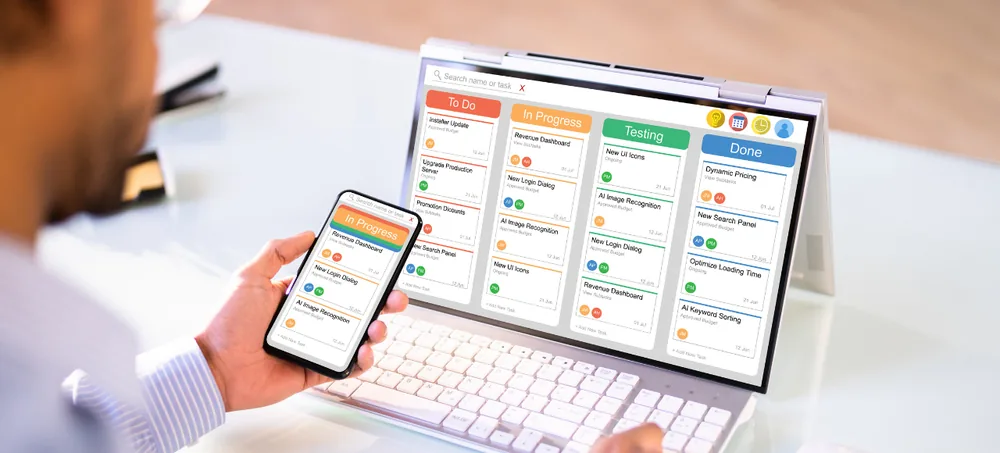
Cloud-based laundry shop ERP with POS billing, garment tracking, online booking, customer CRM, pickup and delivery, inventory and finance. Whether you operate a single counter in Indiranagar, a dry cleaning shop in Jayanagar or multiple outlets across Bengaluru, ERPLax can be configured according to your operating requirements.
Get a free walkthrough tailored to your Bangalore laundry business.
Laundry shops handle different types of customer requests throughout the day. As a business adds more employees, locations and delivery services, disconnected records can create additional administrative work.
Many laundry shops begin with handwritten order slips or spreadsheets that become difficult to search as orders accumulate, while instructions, prices and completion dates need to stay associated with the correct booking.
A single order can contain several garments with different treatment requirements — shirts for washing, trousers for ironing and a suit for dry cleaning — and employees need to distinguish between these while keeping the customer order connected.
When booking and invoicing happen in separate systems, employees may enter the same transaction twice, and invoices, payments and expense records can end up managed independently of each other.
When the latest processing information is not available at the service counter, employees may need to contact the laundry department directly to answer a customer's enquiry.
Doorstep businesses need customer addresses, collection schedules, employee assignments and delivery information — if this exists only in separate messages, pending activities become difficult to coordinate.
Repeat customers may have preferred addresses, service histories and outstanding balances that are hard to retrieve without centralized customer records.
Detergents, cleaning chemicals, garment covers, tags and other supplies need to be purchased and used, but billing-only records provide no connected process for stock and procurement.
Laundry businesses operating several collection counters with a central processing facility need consistent branch references, order transfers and consolidated reporting.
Laundry shop ERP software is an enterprise resource planning solution configured for the operational and administrative needs of laundry service businesses. It brings together customer bookings, garments, processing workflows, sales, billing, inventory, purchasing, finance and reports. When a customer brings garments to a laundry shop, the transaction does not finish with the initial invoice — items must be inspected, sorted, cleaned, finished, checked, packed and returned.
Basic laundry shop software may focus on billing, customer registration or order entry. Laundry shop ERP extends these functions with relevant procurement, inventory, finance, approvals and management reporting.
A laundry POS system supports customer transactions at the service counter. ERP software provides the broader business structure that connects those transactions with processing, fulfillment and administration.
Laundry CRM focuses on customer information and relationships. Laundry ERP connects that customer data with orders, garments, billing, inventory, purchasing and finance across the full service lifecycle.
Configurable ERPLax workflows connecting customer booking, garment tracking, POS billing, inventory and administration for Bangalore laundry shops.
Configurable POS workflows connecting customer orders with relevant billing information — per-garment pricing for ironing and dry cleaning, weight-based pricing for wash-and-fold, and payment records for cash, UPI, card or bank transfer.
Operational value: More consistent counter transactions with related customer and order information.
Invoice workflows associated with customer orders, service prices and relevant adjustments, with GST-related invoice fields considered for applicable Indian accounting requirements.
Operational value: More organized invoices and transaction records.
Configurable order records containing customer information, garments, services, quantities, prices, instructions and completion details, with status stages reflecting the shop's operating procedures.
Operational value: Consistent order information with better visibility into work awaiting processing or fulfillment.
Configurable garment-level records associated with the original order, useful when one garment requires a different service or completion process from the others.
Operational value: More structured garment records and processing coordination.
Identification workflows for garments, order bags or processing batches through suitable configuration and compatible scanning devices at receiving, sorting or packing.
Operational value: Consistent identification references when the scanning workflow is correctly implemented.
Assessed for integration with appropriate RFID systems — tags, readers, technical interfaces and the ERP records to be updated — relevant for uniforms, linen and other reusable textiles.
Operational value: Opportunities to connect compatible RFID identification events with business workflows.
Relevant customer profiles, contact information, addresses, order histories and invoice references, including company references and agreed pricing for business customers.
Operational value: More accessible customer information linked to relevant transactions.
Booking and order workflows that can be integrated with appropriate customer-facing applications, covering customer details, selected services, collection address and appointment information.
Operational value: Better continuity between booking information and internal order processing.
Configurable workflows for scheduling, customer addresses, staff assignments, collection information, dispatch and handover records, with driver apps and GPS routing evaluated through suitable integrations.
Operational value: More structured fulfillment coordination.
ERP inventory workflows for stock records, goods receipts, material issues, transfers and purchasing requirements, with purchase requisitions, approvals and supplier orders connected to procurement.
Operational value: Better visibility into recorded stock movements and connected procurement administration.
Billing, payment records, customer balances and appropriate expense administration connected with applicable ERP workflows and reports, with external accounting integrations evaluated where required.
Operational value: More connected financial administration.
Configurable location structures, customer orders and reporting across outlets, with configurable dashboards for order, invoice, payment, inventory and branch-level visibility by role.
Operational value: Centralized business management with relevant location-level and operational visibility.
A laundry shop ERP system should reflect the stages actually used by the business, with recorded activity at each step supporting consistent billing and reporting.
The counter employee creates or retrieves a customer record and records garment categories, quantities or weight, selected services and applicable prices, with special instructions maintained.
Garments are received and reviewed, associated with appropriate order or item references, and sorted according to their required service.
Employees carry out washing, drying, ironing, dry cleaning or other applicable activities, with processing stages updated according to the configured workflow.
Completed garments are reviewed before packing, with items requiring additional work directed to a relevant review or reprocessing stage.
The invoice reflects the applicable service charges and approved adjustments, with relevant payment information recorded against the customer transaction.
The completed order is assembled and prepared for collection or delivery, with the appropriate completion or fulfillment status recorded.
Relevant purchasing, inventory and financial transactions are managed through connected ERP processes.
Management reviews recorded business transactions across orders, billing, inventory and branch operations.
These benefits depend on defining suitable workflows and ensuring that employees maintain accurate records throughout the laundry process.
Customer profiles, garment information, service orders and billing references can stay connected through the ERP workflow, with employees accessing relevant business information according to their assigned roles.
Configured service prices and billing procedures help support a consistent approach to customer transactions at the counter.
Processing stages help staff review pending work and completed activities without checking separately with the processing department.
Item references, barcode or QR code labels and related garment records can support the identification procedures selected by the shop.
Collection requests and fulfillment activities can remain associated with the original customer order.
Customer contact details, addresses, previous orders and relevant balances can be maintained in a centralized system.
Material requests, stock receipts, transfers and supplier purchases can follow connected ERP workflows.
Appropriate user roles and approval processes help organize responsibilities across counter staff, processing teams and management, while laundry chains can configure business locations and centralized reporting.
Managers can review recorded order, billing, finance and inventory information across the business.
Different laundry business models have different operational priorities — ERPLax can be configured according to the services a shop actually offers.
Retail laundry shops serving residential customers may prioritize counter billing, garment intake, processing status and customer collection, with ERPLax supporting order management, POS billing and relevant reporting.
Dry cleaning businesses often work with garments requiring item-specific care instructions and separate service charges, needing individual garment records, condition notes and relevant processing stages.
Wash-and-fold businesses may charge according to weight or selected service packages, with a workflow commonly including receiving, weighing, washing, drying, folding, packing and handover.
Home pickup and delivery businesses need customer addresses, collection schedules, dispatch assignments and order processing information, with connected customer or driver interfaces evaluated as needed.
Attended laundromats providing managed washing, drying and folding services can evaluate relevant customer records, POS billing and order management; machine payment or equipment control needs separate technical assessment.
Businesses operating collection counters in different Bengaluru neighborhoods with a central processing facility can use relevant location structures, customer orders, branch workflows and management reports.
Commercial laundries serving hotels, restaurants and institutions may need bulk processing, commercial account records and contract-related billing, alongside uniform and workwear service support.
Hospitality businesses may manage guest laundry, employee uniforms and housekeeping linen, while hospitals may require administrative records for textile collection, processing, distribution and department returns.
Laundry shops in different Bangalore business areas can evaluate connected customer booking, POS billing, garment tracking and delivery workflows configured for their location.
Laundry shops offering counter service, dry cleaning or doorstep collection can evaluate customer booking, POS billing, garment tracking and delivery workflows.
Businesses serving residential customers and commercial accounts may require online booking, pickup scheduling, customer records and order processing.
Dry cleaning shops and garment care providers may prioritize garment descriptions, service-specific prices, customer histories and billing.
Laundry services managing customer bookings, collection schedules and delivery requests can evaluate connected order and fulfillment processes.
Shops operating across residential neighborhoods can assess POS billing, customer management, inventory and relevant multi-branch administration.
Retail laundry and dry cleaning businesses can evaluate service catalogs, customer order tracking, pricing and related ERP workflows.
Business process automation for laundry shops connects the steps that already happen in the business, so information recorded at one stage remains available at the next.
A customer order begins with the selected services and applicable pricing arrangement, with relevant information connected to invoice preparation.
Garments move through defined operational stages, with employees recording relevant updates as activities are completed.
A shop may require manager approval for special discounts, invoice adjustments or purchases — these rules can be considered in the ERP configuration.
An employee identifies a material requirement and submits a request; the process can include authorization, supplier ordering and goods receipt.
Material receipts, issues and transfers can be recorded in the appropriate stock locations.
Customer invoices, payments, balances and relevant expenses can support the configured financial process.
Management can review the activities recorded through the ERP modules.
A customer booking website, communication service or scanning device can be integrated where technically appropriate, as part of the agreed SaaS implementation scope.
Understand the subscription scope before choosing ERP software — ERPLax pricing is shaped by the factors below rather than a single flat download price.
Order management, POS billing, CRM, inventory, purchasing, finance and reporting.
Counter staff, processing employees, accounts personnel, delivery teams and managers may need different functionality.
Multiple collection outlets or processing facilities can affect configuration requirements.
Garment pricing, weight-based charges, approvals and special cleaning workflows may require configuration.
Booking websites, customer portals or dedicated applications may involve additional development and integration.
Barcode, QR code and RFID requirements may involve compatible equipment and technical work.
Mapping, route planning and rider applications depend on the intended integration scope.
Existing customer, service and inventory records may need review before migration, affecting required testing and training activities.
Configure the ERP around your shop's operating procedures through a structured implementation process.
Identify the laundry services offered, customer types, operating locations and existing challenges.
Document customer booking, garment receiving, sorting, cleaning, inspection, billing and fulfillment.
Determine which functions are required for CRM, POS billing, garment tracking, inventory, purchasing, finance and reporting.
Define service catalogs, prices, employee responsibilities, approvals and relevant processing statuses.
Review barcode printers, scanning devices, payment providers, customer websites and communication tools as required.
Prepare available customer information, price lists and other relevant records for migration.
Test representative laundry bookings, invoices, processing updates and dispatch workflows.
Train counter staff, processing employees, managers and accounts personnel according to their responsibilities, then adopt the configured ERP workflows according to the agreed implementation plan.
ERPLax is positioned for Bangalore laundry businesses that need a configurable cloud platform connecting multiple operational and administrative functions.
Maintain relevant customer information, service bookings and order histories.
Configure prices, invoice records and payment information.
Support appropriate item references and processing status records.
Connect collection requests and dispatch information with customer orders.
Organize customer contact details, addresses and relevant transaction histories.
Manage relevant material records, stock movements and supplier transactions.
Connect customer billing, relevant expenses and management information.
Configure shop locations, processing facilities and centralized business reports.
Connect sales, approvals, purchasing, inventory, finance and reporting through consistent ERP-driven steps.
ERPLax is delivered exclusively as a subscription-based cloud ERP solution.
Customization involves configuration and development within the SaaS platform according to agreed operational requirements.
ERPLax is developed by EchoPx Technologies, bringing 19+ years of experience, 1500+ clients and 1700+ projects.
Laundry shop ERP software connects customer booking, garment processing, POS billing, inventory, purchasing, finance and reporting through related business workflows. ERPLax provides a configurable cloud SaaS ERP platform for these activities.
The best solution depends on the shop's services, number of employees, branch structure, billing requirements, integrations and budget. ERPLax can be evaluated by Bangalore laundry businesses seeking connected operational and administrative processes.
Yes. ERPLax is a cloud-only SaaS ERP platform delivered through a subscription model.
Yes. ERPLax can be configured for customer registration, laundry orders, POS billing, garment information and relevant business reporting. Subscription suitability depends on the shop's requirements.
Yes. ERPLax supports configurable dry cleaning service records, garment-specific information, processing workflows and invoicing.
Yes. ERPLax supports service price lists, invoice preparation, payment records and relevant customer balances through configurable billing workflows.
ERPLax supports POS workflows for selecting customers, recording laundry services, applying prices and preparing invoices.
GST-related invoice fields can be configured according to applicable Indian business and accounting requirements.
Relevant payment methods can be recorded against customer transactions. Direct payment gateway processing requires a suitable integration.
Yes. ERPLax supports configurable service bookings containing relevant customer, garment, pricing and completion information.
Yes. Orders can follow configured stages reflecting the shop's processing and fulfillment activities.
Garment-level records and identification workflows can be configured according to the business's requirements.
Barcode workflows can be considered with compatible label printers, scanners and suitable ERP configuration.
Yes. QR code-based identification workflows can be evaluated with appropriate labels and connected scanning interfaces.
RFID integration depends on the selected tags, readers, middleware, technical interfaces and agreed scope. Automated RFID functions are not assumed to be included in every configuration.
Yes. ERPLax supports relevant customer profiles, contact information, order histories, addresses and billing references.
Loyalty program requirements can be assessed as part of additional configuration or integration planning.
Yes. ERPLax provides order workflows that can be connected to suitable online booking interfaces. The customer-facing website or application must be included in the implementation scope.
Connected customer application requirements can be assessed for laundry booking and pickup. Dedicated app functionality should be confirmed during solution planning.
Yes. ERPLax supports configurable pickup requests, scheduling, assignments, dispatch and recorded fulfillment information.
Relevant delivery assignments and task statuses can be managed through configured workflows. A dedicated rider application requires an agreed implementation scope.
Live GPS tracking requires suitable mapping and driver application integrations.
Route planning and optimization requirements can be evaluated through compatible mapping or logistics service integrations.
Customer notifications through SMS, WhatsApp, email or other services can be evaluated through appropriate external integrations.
Yes. Inventory workflows can support relevant materials, stock receipts, issues, transfers and reporting.
Relevant cleaning material records can be maintained through configurable stock management workflows.
Yes. ERP purchasing workflows can include purchase requests, approvals, supplier orders and goods receipts.
Yes. ERPLax supports configurable business locations and relevant centralized reporting.
Appropriate order movement and processing workflows can be configured according to the business's operating model.
Yes. ERPLax can support relevant bulk order information, business customer accounts, service pricing, billing, inventory and purchasing.
Yes. Relevant weight-based pricing, customer booking, processing and fulfillment workflows can be configured.
ERPLax can support relevant customer service orders and POS billing. Direct integration with self-service laundry machines requires separate technical assessment.
Yes. ERPLax can support relevant guest laundry records, department references, billing and inventory workflows.
ERPLax can support administrative linen collection, processing, inventory and distribution records. Specialized healthcare handling requirements remain the responsibility of the institution.
Yes. Configurable reports can present relevant order, invoicing, payment, inventory and operational information.
External accounting integration feasibility depends on the selected application, available technical interfaces and agreed requirements.
Yes. ERPLax supports configuration and development within its SaaS platform according to agreed business requirements.
ERPLax can support changing requirements through appropriate configuration of modules, services, users, locations and business workflows.
Yes. ERPLax follows a cloud-only SaaS subscription model.
Pricing depends on the required modules, users, number of business locations, configuration, integrations and implementation scope. Contact the ERPLax team for subscription details.
Businesses can request an ERPLax product demonstration to review the relevant laundry management workflows and discuss available evaluation arrangements.
Implementation depends on the selected ERP processes, existing data, integrations, testing and employee training requirements.
Migration feasibility can be reviewed according to the available data format, quality of records and required transaction information.
Contact the ERPLax team with your laundry business model, locations, service categories, billing requirements and operational challenges. A demonstration can focus on the relevant workflows.
Bring laundry orders, POS billing, garment tracking, customer CRM, pickup and delivery, inventory and finance together with ERPLax — cloud-only, subscription-based laundry shop ERP software for Bangalore businesses.
Review customer booking, POS billing, garment tracking, pickup and delivery, inventory and reporting.
Discuss required modules, users, locations, integrations and configuration for your Bangalore laundry shop.
Explore how ERPLax can connect your laundry business processes through a centralized cloud ERP platform.
+91 97399 66977 · info@erplax.com · www.erplax.com
Laundry ERP Software in Bangalore · Laundry Shop Management System · Laundry Management System Software · Online Laundry Management System · Laundry Service Management Software · Laundry Tracking Software · Software Laundry Management System · Laundry Application Management System · Laundry Management Software Free Download Guide
Specialized Applications
Purpose-built & ready to deploy. Hover to explore, click to learn more.
Testimonials
Real stories from businesses running their operations on ERPLax.
ERPLax gave us real-time visibility into stock across three warehouses. Wastage dropped and our fulfillment time improved almost overnight.
GST e-invoicing used to eat up two days every month. With ERPLax's accounting module it's now automatic and our filings are always on time.
Billing at our stores used to take a minute per customer. ERPLax's POS module cut that to under 15 seconds, even during peak festival rush.
Payroll for 200+ employees across two branches used to take our HR team a full week. ERPLax's HRM module now runs it in a single afternoon.
Tracking batch numbers and expiry across our distribution network was a nightmare on spreadsheets. ERPLax's inventory module made it effortless.
Front desk, housekeeping and billing are now all on one screen. ERPLax's hotel management module has made check-in day a breeze for our staff.
Fee collection, attendance and report cards used to live in three different tools. ERPLax brought it all into one dashboard our staff actually enjoys using.
Tracking material costs and site progress across four active sites was chaos before ERPLax. Now our project managers update status from their phones daily.
Our online store orders now sync straight into inventory and accounting — no more manual entry, no more overselling out-of-stock items.
Our sales team can now see every lead's history and follow-ups in one place. Deal closures are faster and nothing falls through the cracks anymore.
ERPLax gave us real-time visibility into stock across three warehouses. Wastage dropped and our fulfillment time improved almost overnight.
GST e-invoicing used to eat up two days every month. With ERPLax's accounting module it's now automatic and our filings are always on time.
Billing at our stores used to take a minute per customer. ERPLax's POS module cut that to under 15 seconds, even during peak festival rush.
Payroll for 200+ employees across two branches used to take our HR team a full week. ERPLax's HRM module now runs it in a single afternoon.
Front desk, housekeeping and billing are now all on one screen. ERPLax's hotel management module has made check-in day a breeze for our staff.
Fee collection, attendance and report cards used to live in three different tools. ERPLax brought it all into one dashboard our staff actually enjoys using.
Tracking material costs and site progress across four active sites was chaos before ERPLax. Now our project managers update status from their phones daily.
Our online store orders now sync straight into inventory and accounting — no more manual entry, no more overselling out-of-stock items.
Our sales team can now see every lead's history and follow-ups in one place. Deal closures are faster and nothing falls through the cracks anymore.
