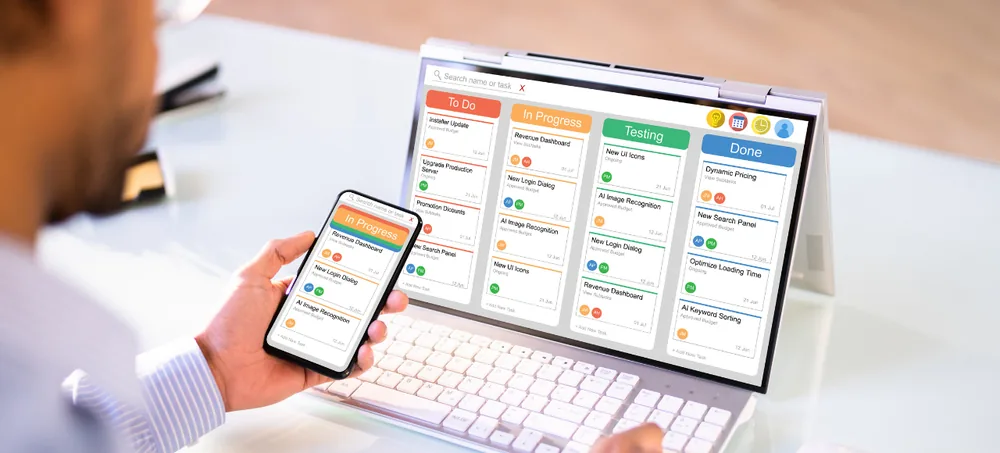
Scale smarter with a complete AI-driven ERP solution built for manufacturing, distribution, and e-commerce businesses etc...

Order Management Software India | Cloud Order ERP
Cloud Order Management Across India

Order Management Software India

Order Management Software India - ERPLax Cloud ERP

Most businesses can tell you the moment an order arrived and the moment it shipped. Ask about anything in between and somebody has to go and find out. An order is not an event, it is a duration — and the questions it generates almost all land in the middle of that duration, when it is approved but not allocated, or picked but not dispatched. ERPLax provides order management capabilities through a cloud ERP platform where the order carries its own status. Relevant whether you are comparing an order management system India vendors list, evaluating order processing software India suppliers pitch, shortlisting sales order management software India teams will use, or scoping purchase order software India procurement needs. Built in Karnataka, delivered nationally.

  • Sales Orders
  • Purchase Orders
  • Order Processing
  • Inventory
  • Fulfilment
  • Reporting
19+ Years of Experience 1500+ Clients 1700+ Projects

Talk to EchoPx Technologies

Tell us who currently answers “where is that order?” and how long it takes them.

Verified Experts ERP consultants & business analysts
Free Consultation No Obligation 24hr Response
0YearsExperience delivering technology solutions for businesses.
0ClientsOrganizations supported through technology solutions.
0ProjectsProjects delivered across different business requirements.
The Problem

Order management challenges businesses face

Six problems. The last one is the one people actually feel day to day, and the first five are why it exists.

Managing multiple order sources

Orders arrive from sales teams, distributors, online channels and business customers, each in its own format and each needing the same things afterwards.

Multi channel order management software India businesses need turns several intakes into one process, including e-commerce order management software India retailers run.

Manual order processing

Re-entering the same order into a spreadsheet, then a system, then an invoice takes time and introduces differences between the three copies.

Order lifecycle management through structured workflows keeps one record from start to close, with order approvals built into the path.

Inventory coordination problems

Order processing depends on stock information, so an order system that cannot see live inventory is confirming things it cannot verify.

An integrated order management system India teams share has orders and inventory reading the same records rather than two copies.

Purchase order management

Purchases run alongside sales and share the same anatomy: a requirement, an approval, a counterparty and a receipt that closes it.

Both sides of the order book on one platform.

Order fulfilment coordination

Fulfilment is where an order stops being information and becomes a physical event, and where a disconnected system goes quiet.

Order fulfillment software India operations require has fulfilment activity updating the order it completes.

Limited order visibility

Management teams need information about order status and business activity. Without centralized systems, preparing that means collecting from several sources — which is why the answer to a simple status question takes an afternoon.

Order tracking software India teams adopt holds status on the order itself, readable without a phone call.

The Blind Middle

You know the ends. The questions are about the middle.

Nobody rings up to ask whether their order was received, and nobody asks whether it was delivered once it has arrived. They ask on day four, when it has been approved and allocated and is waiting for a van — and that is precisely the stretch most businesses cannot answer without walking to a desk. The value of an order system is not in recording the beginning and the end. It is in the states in between having names, and being visible.

Seven things ERPLax supports

Order Management Software India capabilities through a cloud ERP platform for businesses seeking centralized order processing, with workflows configured to operational requirements.

  • Customer order management
  • Sales order processing
  • Purchase order management
  • Inventory coordination
  • Warehouse integration
  • Order tracking
  • Reporting
One order, seven states The lit ones are the states most businesses can answer for WHERE IS MY ORDER? Taken Approved Allocated Picked Dispatched Delivered Invoiced where every question lands Most of an order's life happens in the part nobody can see Illustrative — your order states are defined during requirement analysis
Cloud Order Management Software India

How the platform is delivered

Customization means configuration and development within the ERPLax SaaS platform according to business needs, including which states an order passes through and who can see each one. Delivered as a SaaS ERP solution, that connection is the practical difference between ERP order management software India vendors offer and the online order management software India teams outgrow.

Cloud-only SaaS

Delivered on a subscription with hosting, updates, security and backups included. There is no on-premise or self-hosted deployment option.

Status on the order

Each step writes its state to the order itself, so answering a status question is a lookup rather than an investigation.

Customization within the platform

Configuration and development inside the SaaS environment, covering order states, approval rules, roles and reports rather than code ownership.

Name your middle states

The useful design question is not how many states you want but which ones somebody genuinely needs to see. Four well-chosen states beat twelve nobody updates.

Features

ERPLax order management software features

Eight capability areas. Each one writes a state to the order as it runs.

Sales Order Management

Customer orders captured and progressed through one workflow, carrying their status with them rather than leaving it with the person who took the order.

  • Order entry
  • Order review
  • Order status
  • Customer information

Sales orders handled consistently across sources.

Purchase Order Management

Requirement creation, approvals, supplier coordination and goods receiving, running on the same platform as the sales side.

  • Requirement creation
  • Approval processes
  • Supplier coordination
  • Goods receiving

Procurement organised alongside sales activity.

Order Processing Management

The shared pipeline that moves an order between states: validation, approval, allocation and progression.

  • Order validation
  • Approvals
  • Stock allocation
  • Progression

One process regardless of how the order arrived.

Inventory And Order Integration

Availability checks and stock updates referencing the live inventory record, so an order is never confirmed against a figure nobody verified.

  • Availability checks
  • Stock updates
  • Product requirements
  • Reorder signals

Orders and inventory reading the same figures.

Warehouse Order Management

Picking, packing and dispatch connected to the order, which is where the two least visible middle states actually get resolved.

  • Fulfilment coordination
  • Dispatch activity
  • Stock movement
  • Reporting

Warehouse activity updating the order it completes.

Order Tracking

Status as a property of the order rather than knowledge held by a person, so a status question is a lookup.

A status anyone with access can read.

Multi Channel Order Management

Sales teams, distributors, online channels and business customers as intakes into one order record rather than four parallel systems.

  • Channel intake
  • Unified order record
  • Consistent status
  • Consolidated view

Several sources, one set of numbers.

Order Reporting

Order reporting built from what the workflows captured, rather than assembled from several sources when somebody asks.

  • Open orders
  • Fulfilment status
  • Source mix
  • Management visibility

Operational visibility without a collection exercise.

Workflow Examples

Order management workflows

Four workflows. Count the states in each one, then count how many of them your current setup can report on.

Customer sales order

From capture to close, with the availability check placed before the commitment rather than after it.

  1. Customer order
  2. Order entry
  3. Inventory check
  4. Order approval
  5. Fulfilment
  6. Order closed

Purchase order

Requirement to receipt. The same anatomy as a sales order, pointed the other way.

  1. Purchase requirement
  2. Approval process
  3. Supplier order
  4. Goods receiving
  5. Inventory update

Order fulfilment

The middle states made real: allocation, picking and dispatch, each updating the order as it happens.

  1. Confirmed order
  2. Stock allocation
  3. Picking
  4. Dispatch
  5. Order closed

B2B order

Business customer orders carrying their own review and approval, on the same pipeline as everything else.

  1. Business customer order
  2. Order review
  3. Approval
  4. Inventory confirmation
  5. Delivery
  6. Reporting
Before You Select

Order management implementation considerations

Five things to establish before a demo, plus one exercise that tells you more than all five.

01

Understand business processes

Map how an order actually moves today, from the moment it arrives to the moment it closes, including the steps only one person knows about.

02

Identify integration needs

Inventory, accounting, e-commerce channels, transporters: what has to exchange information with the order system, in which direction, and who owns it when it fails.

03

Define approval workflows

Which orders need approval, at what value, by whom, and what should happen when the approver is unavailable. This is where order processing either flows or stalls.

04

Evaluate reporting requirements

Which order reports get read and by whom, then work backwards to what has to be captured during processing for those reports to be accurate.

05

Review scalability requirements

More order volume is usually manageable. More sources, more approval layers and more fulfilment routes is the real test, so plan against where the business is going rather than where it is.

06

Then time one status question

Pick an order currently in progress and ask somebody where it is. Time how long the answer takes and count how many people were involved. That number is the problem this category of software exists to solve, and it is a far better brief for any vendor than a feature list.

Benefits

Benefits of order management software India

Five changes that follow when an order carries its own status.

Centralized order information

Every order on one record regardless of the source it arrived through.

Better order visibility

Status is a property of the order rather than knowledge held by whoever took it.

Improved department coordination

Sales, purchase, warehouse and finance work from the same order rather than four copies.

Reduced manual administration

Re-entry between source, spreadsheet and system disappears when there is one record.

Connected business processes

Orders reference the same inventory, customers and suppliers as the rest of the platform.

Nothing to host or maintain

Hosting, updates, security and backups are part of the subscription, so no internal team carries them.

Industries

Industries using order management software

Every business takes orders. What differs is how long the middle of one lasts.

Manufacturing

Sales orders and purchase orders running together with production in between, which lengthens the middle.

Retail

Counter and store demand alongside supplier replenishment on the same order platform.

E-commerce

Orders arriving as data, where the customer can see the status gap before you can.

Wholesale

High volumes from business customers, where approval rules matter more than entry speed.

Distribution

Orders from distributors and direct customers at once, each expecting a different service level.

B2B Businesses

Formal purchase orders with review and approval steps before anything is committed.

Why ERPLax

Why choose ERPLax order management software?

The case for order management inside an ERP is that an order is not finished when it is taken. It needs stock, an approval, a dispatch and an invoice, and every one of those already lives on the platform. A standalone order tool has to ask another system for all of it.

01

Cloud ERP platform

A cloud-only SaaS ERP platform designed for modern business operations, with no infrastructure to run alongside it.

02

Integrated business processes

Inventory workflows connect with sales, purchasing, finance and reporting activities in one environment.

03

Configurable workflows

Businesses configure order processes according to their requirements, including order states, approval rules and role-based access, as configuration within the platform rather than code you own.

04

Business process automation

Automation opportunities identified across operational workflows rather than only inside the stock ledger.

05

Experienced technology partner

EchoPx Technologies brings 19+ years of experience delivering technology solutions.

06

1500+ clients, 1700+ projects

Delivery experience folded back into how each rollout is scoped, configured and supported.

FAQs

Frequently asked questions

What businesses ask while comparing order management software in India.

Order management software helps businesses manage sales orders, purchase orders, order processing, inventory coordination, fulfilment and reporting through one connected platform, from the moment an order is taken to the moment it is closed.

Businesses use order management software to reduce manual order administration and to keep order status visible while the order is still in progress, which is when most questions about it are asked.

Yes. ERPLax provides order management capabilities through a cloud-only SaaS ERP platform. There is no on-premise or self-hosted deployment option, and hosting, updates, security and backups are part of the subscription.

Yes. Sales order and purchase order workflows are both supported, including approvals, supplier coordination and the receipts and dispatches that close each one.

Yes. Order processing depends on inventory information, so availability checks and stock updates reference the same records rather than a periodic copy of them.

Manufacturing businesses run sales orders and purchase orders together with production in between, which is a common fit. Suitability depends on your own workflows, which a requirement analysis establishes.

Customization means configuration and development within the ERPLax SaaS platform according to business requirements, covering order states, approval rules, roles and reports. Customers do not receive source code ownership.

Pricing depends on users, business requirements, configuration, modules, implementation scope, integrations and subscription requirements. Defining the requirement first makes the commercial scope straightforward to assess.

Time one status question this week

Effective order management gives an order named states that are visible while it is still in progress, which is when anybody actually asks. Pick an order in progress, ask where it is, and time the answer. Bring that number and the states your orders pass through, and the scope of the project defines itself in the first conversation rather than the fifth. ERPLax provides cloud ERP order management capabilities with integrated business processes, configurable workflows and centralized business management. Tell EchoPx Technologies how your stock is tracked today and we will be straight about what the ERP workflows cover.

Serving businesses across India info@erplax.in Cloud subscription · No servers to maintain

Specialized Applications

ERP Solutions Built for Your Industry

Purpose-built & ready to deploy. Hover to explore, click to learn more.

View all modules

Testimonials

What Our Clients Say

Real stories from businesses running their operations on ERPLax.