Flexible CRM software designed for businesses in Dubai and UAE
Businesses in Dubai operate in a highly competitive market where customer relationships, fast communication and efficient sales management are essential for growth. ERPLax provides custom CRM software Dubai businesses can rely on to manage customer data, sales pipelines, enquiries, follow-ups and business relationships from one central platform — backed by dedicated CRM implementation services UAE teams can lean on from setup through go-live.
Tell us about your business — we'll get back within 24 hours
Dubai businesses manage customers through multiple channels including websites, social media, WhatsApp, phone calls, emails and sales teams. Without proper CRM solutions Dubai companies can depend on, customer information becomes scattered across spreadsheets and disconnected applications — and without CRM automation software UAE handling the repetitive follow-up work, opportunities slip through the cracks.
Enquiries across channels get missed without a central system to capture them.
Without reminders, valuable opportunities go cold before they're addressed.
Spreadsheets and disconnected apps create inconsistent customer data.
Managers can't see pipeline stages, deal value or activity in real time.
No single record of past conversations makes customer service inconsistent.
Pulling sales and performance reports manually wastes valuable time.
CRM (Customer Relationship Management) software is a business solution used to manage interactions between companies and their customers. A CRM system stores customer information and helps businesses track sales activities, communication history and customer requirements.
For Dubai businesses dealing with high customer expectations and competitive markets, this customer relationship management software UAE teams adopt helps create organised and personalised customer experiences — a genuine CRM system Dubai companies can build their sales process around.
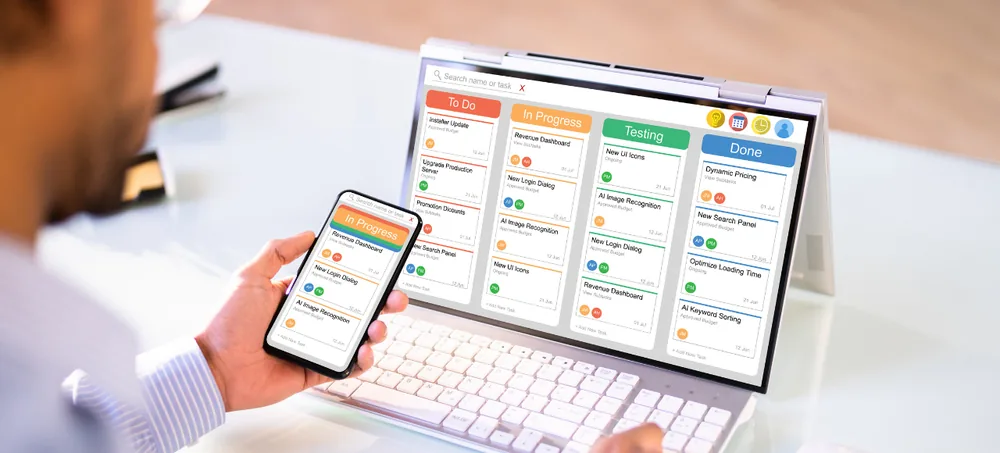
A single connected view of every deal stage, updated as your team works.
From centralised customer data to automated follow-ups, CRM software changes how Dubai teams work day to day.
Everything a Dubai business needs to manage leads, customers, sales and support from one connected platform.
Capture, assign, score and qualify leads with follow-up scheduling and conversion tracking.
Maintain complete profiles for individuals and companies with full communication history.
Track opportunities, deal stages, expected revenue and sales forecasting.
Create professional quotations with pricing, approval workflows and order conversion.
Track support tickets, complaints and service requests with resolution reporting.
Campaign management, customer segmentation, email and SMS integration.
Automate notifications, follow-up reminders, lead assignment and approvals.
Monitor sales, customer and revenue performance with custom dashboards.
Access customer information, leads and follow-ups while travelling or meeting clients.
User permissions, department access and activity tracking to keep data secure.
Connect CRM with ERP, accounting, ecommerce and third-party applications.
As a CRM development company Dubai businesses can rely on, ERPLax delivers business CRM software Dubai that stays affordable CRM software Dubai teams can adopt without unnecessary complexity, alongside dedicated lead management software Dubai and customer management software UAE capability.
ERPLax CRM software can be customised for the way each industry actually sells and serves customers.
A structured flow from customer data setup through to reporting and analysis.
Contacts, companies & leads
Website, social & campaigns
Identify valuable opportunities
Meetings, quotes & negotiation
Opportunity to customer
Issues & service activity
Performance & revenue trends
A connected platform that improves visibility, speed and customer relationships across every team.
Understand customer needs through complete interaction history and personalised communication.
Sales teams manage opportunities, follow-ups and customer interactions more effectively.
Access customer information instantly and respond quickly to enquiries.
Automation reduces repetitive administrative activities.
Managers monitor sales performance and customer activities through dashboards.
Add more users, features and integrations as your business expands.
ERPLax CRM software Dubai solutions can integrate with the systems your business already runs on.
A cloud CRM software Dubai businesses choose to manage customer relationships from anywhere — with Cloud options where required.
Remote access, multi-location support and easy scalability.
Standard CRM suits common needs; custom CRM fits unique processes.
Custom CRM development, built around your business model and customer management process.
Based on your business model & industry
Configured to how you manage customers
Sales, inventory, finance & billing
Start small, add modules as you grow
Business insights through custom dashboards
Choose the deployment model that fits
Websites, payments & communication tools
Implementation guidance & ongoing help
Common questions from Dubai and UAE businesses evaluating CRM software.
The right CRM software can help Dubai businesses improve customer relationships, increase sales efficiency and create better business processes. From lead management and sales automation to customer support and ERP integration, our CRM platform helps organisations manage customers more effectively.
Specialized Applications
Purpose-built & ready to deploy. Hover to explore, click to learn more.
Testimonials
Real stories from businesses running their operations on ERPLax.
ERPLax gave us real-time visibility into stock across three warehouses. Wastage dropped and our fulfillment time improved almost overnight.
GST e-invoicing used to eat up two days every month. With ERPLax's accounting module it's now automatic and our filings are always on time.
Billing at our stores used to take a minute per customer. ERPLax's POS module cut that to under 15 seconds, even during peak festival rush.
Payroll for 200+ employees across two branches used to take our HR team a full week. ERPLax's HRM module now runs it in a single afternoon.
Tracking batch numbers and expiry across our distribution network was a nightmare on spreadsheets. ERPLax's inventory module made it effortless.
Front desk, housekeeping and billing are now all on one screen. ERPLax's hotel management module has made check-in day a breeze for our staff.
Fee collection, attendance and report cards used to live in three different tools. ERPLax brought it all into one dashboard our staff actually enjoys using.
Tracking material costs and site progress across four active sites was chaos before ERPLax. Now our project managers update status from their phones daily.
Our online store orders now sync straight into inventory and accounting — no more manual entry, no more overselling out-of-stock items.
Our sales team can now see every lead's history and follow-ups in one place. Deal closures are faster and nothing falls through the cracks anymore.
ERPLax gave us real-time visibility into stock across three warehouses. Wastage dropped and our fulfillment time improved almost overnight.
GST e-invoicing used to eat up two days every month. With ERPLax's accounting module it's now automatic and our filings are always on time.
Billing at our stores used to take a minute per customer. ERPLax's POS module cut that to under 15 seconds, even during peak festival rush.
Payroll for 200+ employees across two branches used to take our HR team a full week. ERPLax's HRM module now runs it in a single afternoon.
Front desk, housekeeping and billing are now all on one screen. ERPLax's hotel management module has made check-in day a breeze for our staff.
Fee collection, attendance and report cards used to live in three different tools. ERPLax brought it all into one dashboard our staff actually enjoys using.
Tracking material costs and site progress across four active sites was chaos before ERPLax. Now our project managers update status from their phones daily.
Our online store orders now sync straight into inventory and accounting — no more manual entry, no more overselling out-of-stock items.
Our sales team can now see every lead's history and follow-ups in one place. Deal closures are faster and nothing falls through the cracks anymore.