
Unorganized lead management
Leads arrive through websites, calls, emails and referrals. Without a system, lead status and ownership become guesswork within a week.
A CRM lead management system gives capture and ownership a defined process.
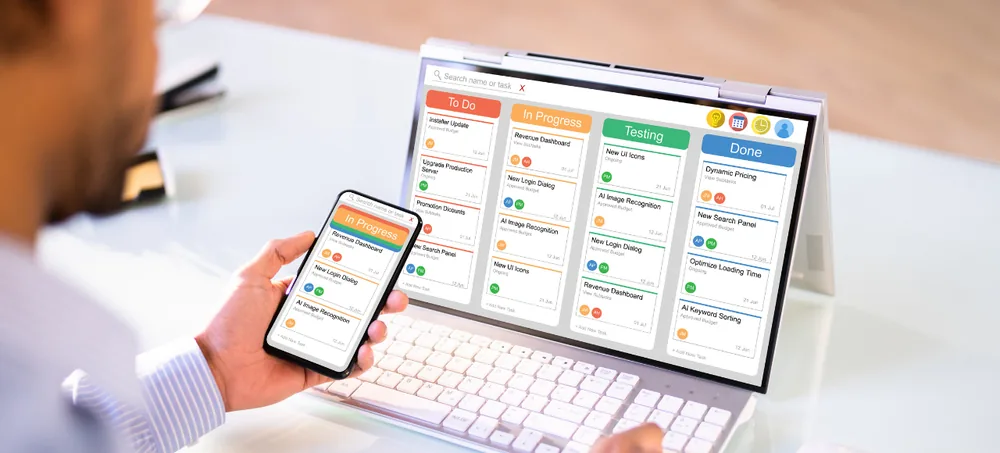
Capturing leads, tracking conversations, managing opportunities and keeping customer records accurate gets harder every quarter on spreadsheets and email. ERPLax is a cloud CRM platform that centralizes customer relationship management, sales activity and business workflows — a SaaS approach with configurable workflows and integrated business processes, for companies weighing up CRM software Bangalore and CRM solutions Bangalore options.
Tell us how your sales team works today and we will map the CRM workflow to it.
Six key challenges drive most CRM evaluations. At their core, they all point to the same underlying issue: customer information is scattered across different tools and systems instead of being available to the right person exactly when they need it.
Leads arrive through websites, calls, emails and referrals. Without a system, lead status and ownership become guesswork within a week.
A CRM lead management system gives capture and ownership a defined process.
Sales usually turns on timely communication. Managed manually, follow-ups slip through exactly when the deal was still winnable.
CRM automation software organises follow-up activity and sales workflows.
Details held across spreadsheets, inboxes and individual employees mean nobody sees the whole relationship at once.
Customer management software builds one centralized customer database.
Managers need to see where the business actually stands, not what the team remembers in the Monday meeting.
CRM dashboard software makes the pipeline readable at a glance.
Building sales reports by hand consumes the time that should be going into the next set of conversations.
CRM reporting software generates structured reports from live records.
Managing relationships by memory works at fifty customers and quietly stops working somewhere after that.
A CRM platform gives rising interaction volumes a structure.
CRM software is not only a customer database. A complete CRM system connects customer information with sales activity and the business processes behind it — a lead enters, the team tracks communication, opportunities move through defined stages, and managers read the pipeline from the same records.
ERPLax CRM helps businesses manage customer-facing activity through a structured digital platform rather than a shared spreadsheet and a set of personal reminders.
ERPLax follows a SaaS platform model, so CRM capability is used through a subscription-based cloud environment rather than software anyone has to install and maintain.
One customer database instead of a version per salesperson, so history survives holidays and handovers.
Online CRM software reached from a browser or the mobile app, which matters when the team spends its day out of the office.
Lead, opportunity, follow-up and closure sit in one sequence rather than in four unrelated places.
Configured stages and rules keep the sales process consistent as the team grows, which is where operational visibility comes from.
Six capability areas, described by the problem each one removes. Whether you are after a sales CRM Bangalore teams can adopt quickly or custom CRM software Bangalore shaped to one specific process, judge on exactly this — which problems the tool actually retires. It is the only useful way to compare the best CRM software Bangalore vendors put in front of you.
Lead management software Bangalore teams rely on captures, organises and tracks potential opportunities. Without structured lead tracking, businesses lose visibility of enquiries long before anyone notices a drop in conversions.
Better control over customer acquisition activity.
CRM pipeline management software organises opportunities by sales stage, so teams monitor deals from initial enquiry through to closure instead of reconstructing status from memory.
Managers see sales activity and open opportunities as they stand.
Customer database management software keeps details, interaction history and related information in one place, which is what stops the same question being asked twice.
Consistent customer information during sales and service.
CRM sales automation software organises the repetitive administrative side of selling — follow-up scheduling, opportunity tracking and recurring sales activity.
Sales teams spend more of the day on customer engagement.
Managers otherwise collect information manually from several sources. CRM dashboards present customer insights and sales information already organised.
Reporting that supports decisions rather than explaining last month.
Disconnected communication history shows up in the customer experience. Interaction records keep the relationship legible to whoever picks it up next.
More structured customer relationships over the long run.
A CRM workflow manages customer interactions from first enquiry through to conversion, with the record carrying forward at every handover.
Customer enquiries are recorded in the CRM whatever route they arrive by.
Sales reviews the customer requirement and decides the next action, with the reasoning recorded against the lead.
Qualified leads become sales opportunities, tracking requirements, discussions and progress in one place.
Representatives manage planned communication and customer activity against a schedule the system holds.
Successful opportunities move through the final sales process with the history attached rather than recreated.
Customer information stays available for future communication and ongoing relationship management.
Six changes that follow from centralized customer information and configurable sales workflows.
Customer records held in a structured CRM environment rather than distributed across personal files.
Sales teams and managers review opportunities and activity from the same live view of the pipeline.
CRM workflows organise customer communication so the next action is scheduled, not remembered.
Defined workflows create consistency across sales processes, which matters most when the team changes.
Centralized information helps teams understand the full interaction history before they pick up the phone.
CRM processes can extend into broader ERP workflows when the business needs integrated management.
Many businesses need more than standalone CRM software, because a sale rarely ends at the sale. This is where CRM ERP software Bangalore buyers start looking at business process automation across the whole chain rather than in the sales team alone.
Sales activity connects outward almost immediately. An order affects stock, stock affects fulfilment, fulfilment affects invoicing, and every one of those creates a reporting requirement. Where those live in separate systems, someone spends their week keeping the two versions in agreement.
An integrated CRM ERP solution Bangalore businesses can actually run connects customer management with those wider operational processes. ERPLax provides ERP capability where CRM-related workflows form part of a broader business management platform, which is what avoids maintaining disconnected systems for customer information and operational transactions.
One scoping note worth settling early: CRM and marketing automation are different tools solving different problems. Decide which one the business actually needs before the requirement list is written, and treat any integration between them as its own piece of work.
The sales motion differs by sector, so the stages and fields differ too. The platform underneath does not.
CRM software for real estate Bangalore covers site enquiries, customer conversations and sales opportunities, where lead volume is high and follow-up timing decides the outcome.
CRM software for manufacturing Bangalore handles customer enquiries and sales processes that need to connect with production and dispatch rather than end at the quotation.
CRM software for education Bangalore organises admission enquiries, communication and student-related interactions across an intake cycle.
CRM software for healthcare Bangalore structures patient-facing communication and relationship processes on the administrative side of the organisation.
CRM software for service industry Bangalore manages customer requests, opportunities and communication workflows across delivery teams.
CRM for startups Bangalore and CRM software for SMEs Bangalore usually starts with lead capture and follow-ups, adding pipeline reporting once the volume justifies it.
Businesses shortlisting CRM companies in Bangalore, or comparing CRM implementation Bangalore and CRM consulting services Bangalore offers, should evaluate on workflow capability, scalability and business fit. The right CRM matches how you already manage customers and sales — it does not ask you to change that first.
A centralized online environment for customer records, reached wherever the sales team happens to be working.
Subscription software with hosting, updates, security and backups handled as part of the service.
Stages, fields, ownership rules and follow-up logic set to how your sales process actually runs.
Records, interaction history and communication kept together so the relationship is legible to the whole team.
The repetitive administrative steps run to configured rules rather than to individual discipline.
Customer processes can extend into finance, inventory and orders instead of stopping at the CRM boundary.
Nearly two decades of building business software across very different operating models.
Delivery experience folded back into how each CRM rollout gets scoped and configured.
What businesses ask while comparing CRM tools in Bangalore.
A CRM tool is software that helps businesses manage customer information, sales opportunities, communication and relationship processes in one place, so enquiries, follow-ups and customer history are not spread across spreadsheets and individual inboxes.
Yes. ERPLax is delivered as cloud-only SaaS software on a subscription, reached through a browser or the mobile app. There is no on-premise deployment or perpetual licence option, and hosting, updates, security and backups are part of the service.
Yes. Small businesses use CRM software to organize leads, customer information and sales activities. Scope is usually phased, starting with lead capture and follow-ups before pipeline reporting and automation are added.
Yes. CRM systems track opportunities through defined sales stages, so managers can see current opportunities, pending follow-ups and where each deal sits without asking the team for an update.
Yes. CRM and ERP integration connects customer processes with wider business operations such as finance, inventory, orders and reporting, which avoids maintaining separate systems for customer information and operational transactions.
CRM pricing depends on users, required features, customization, integrations and implementation requirements. ERPLax uses a SaaS subscription model, and a requirements review is the right way to establish the commercial scope.
CRM workflows can be configured according to business requirements. Customization refers to configuration and development within the SaaS platform, covering stages, approvals, roles, fields and reports. Customers do not receive source code ownership.
A structured CRM helps businesses manage leads, sales activity, customer information and communication workflows without depending on individual memory. ERPLax provides a cloud CRM platform covering customer management, sales automation and integrated business processes — and you see it running on your own sales stages before deciding anything.
Specialized Applications
Purpose-built & ready to deploy. Hover to explore, click to learn more.
Testimonials
Real stories from businesses running their operations on ERPLax.
ERPLax gave us real-time visibility into stock across three warehouses. Wastage dropped and our fulfillment time improved almost overnight.
GST e-invoicing used to eat up two days every month. With ERPLax's accounting module it's now automatic and our filings are always on time.
Billing at our stores used to take a minute per customer. ERPLax's POS module cut that to under 15 seconds, even during peak festival rush.
Payroll for 200+ employees across two branches used to take our HR team a full week. ERPLax's HRM module now runs it in a single afternoon.
Tracking batch numbers and expiry across our distribution network was a nightmare on spreadsheets. ERPLax's inventory module made it effortless.
Front desk, housekeeping and billing are now all on one screen. ERPLax's hotel management module has made check-in day a breeze for our staff.
Fee collection, attendance and report cards used to live in three different tools. ERPLax brought it all into one dashboard our staff actually enjoys using.
Tracking material costs and site progress across four active sites was chaos before ERPLax. Now our project managers update status from their phones daily.
Our online store orders now sync straight into inventory and accounting — no more manual entry, no more overselling out-of-stock items.
Our sales team can now see every lead's history and follow-ups in one place. Deal closures are faster and nothing falls through the cracks anymore.
ERPLax gave us real-time visibility into stock across three warehouses. Wastage dropped and our fulfillment time improved almost overnight.
GST e-invoicing used to eat up two days every month. With ERPLax's accounting module it's now automatic and our filings are always on time.
Billing at our stores used to take a minute per customer. ERPLax's POS module cut that to under 15 seconds, even during peak festival rush.
Payroll for 200+ employees across two branches used to take our HR team a full week. ERPLax's HRM module now runs it in a single afternoon.
Front desk, housekeeping and billing are now all on one screen. ERPLax's hotel management module has made check-in day a breeze for our staff.
Fee collection, attendance and report cards used to live in three different tools. ERPLax brought it all into one dashboard our staff actually enjoys using.
Tracking material costs and site progress across four active sites was chaos before ERPLax. Now our project managers update status from their phones daily.
Our online store orders now sync straight into inventory and accounting — no more manual entry, no more overselling out-of-stock items.
Our sales team can now see every lead's history and follow-ups in one place. Deal closures are faster and nothing falls through the cracks anymore.