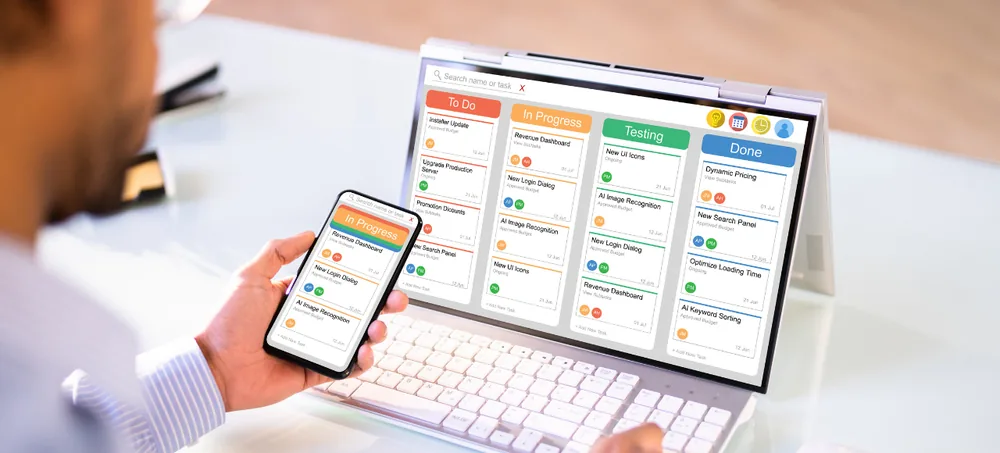
ERPLax E-commerce Website Development Services focuses on planning configurable digital commerce workflows and connected online storefront experiences around a centralized cloud ERP platform. Businesses can evaluate e-commerce storefront design, customer-facing interfaces, shopping cart workflows, checkout integrations, product management and B2B or B2C order processes according to their project requirements - whether launching a new online store, expanding a retail business, developing a wholesale customer portal or connecting an existing e-commerce website with ERP operations.
ERPLax is developed by EchoPx Technologies, bringing experience in business software development, configurable applications and ERP workflow implementation. For e-commerce businesses, this experience informs an approach that considers both the customer-facing website and the business activities behind each transaction - connecting relevant product, customer, sales, inventory, purchasing and financial workflows rather than treating the online storefront as an isolated system.
An e-commerce website may have a professional design but still create operational difficulties when its business workflows are poorly defined. Customers expect clear product information, employees need accurate order records and managers need visibility into transactions and fulfillment - the website and ERP processes must be planned together where connected commerce operations are required.
A product may appear on the website while internal business records show a different quantity. A suitable e-commerce ERP integration can define how stock availability is updated and which application acts as the authoritative record.
An order placed through a website may need to be recreated in a separate sales or accounting system. Connected order workflows help associate online purchases with the relevant ERP transactions.
Businesses selling products with different sizes, colors, specifications or packaging units need an organized catalog, or customers may struggle to find the correct item.
A confusing cart or checkout process can create unnecessary friction for customers. E-commerce development should include an appropriate review of the customer journey.
Business customers may need agreed prices, bulk quantities, quotations, repeat ordering or approval procedures that a generic consumer-oriented workflow does not represent.
Customers may register on the website while the business maintains account information elsewhere. Connected CRM and order workflows help maintain these relationships.
Once an order is placed, employees may need to confirm inventory, prepare items, generate dispatch information and record completion without connected processes.
Discount codes and customer-specific rates require clearly defined business rules, and owners may need to combine website order data, inventory transactions and purchasing information into clear reports.
Payment services, shipping providers and marketplaces may all be involved in a project, and an online business may add product categories, customer groups or sales channels as requirements evolve.
E-commerce website development services involve designing, configuring, building and connecting the digital experiences through which customers browse and purchase products or services. A complete project may include product catalogs, category navigation, product detail pages, carts, checkout, customer accounts, payment integrations, order confirmation and related administration - the customer-facing experience is only one part of the solution.
Design focuses on the presentation and usability of the shopping experience - page layouts, visual hierarchy, navigation and product presentation. Development addresses the functional behavior behind the website, such as catalog data, account registration, cart calculations, checkout workflows and integrations. Both activities should be coordinated.
An e-commerce platform manages the customer shopping experience and its related commerce functions. ERP integration connects relevant business transactions with sales, inventory, purchasing, finance or other operational modules.
ERPLax is a cloud-only SaaS ERP solution providing a configurable business management foundation, while customer-facing e-commerce websites and specialized commerce features are evaluated through agreed development and integration requirements. A multi-vendor marketplace, advanced checkout or custom recommendation engine should not be assumed to be standard ERPLax functionality without confirming scope.
ERPLax-related e-commerce development planning can align customer-facing interfaces with the relevant SaaS ERP records and processes - every online business has different products, audiences and buying journeys.
A custom design project begins by understanding what customers need to find and how they make purchasing decisions - a retail brand may prioritize categories, a wholesaler bulk entry, a manufacturer specifications.
Responsive design adapts page layouts and navigation for suitable desktop, tablet and mobile experiences, including product cards, category filters, menus, cart controls and checkout forms.
The process can include mapping customer journeys, planning navigation, creating wireframes and reviewing the clarity of purchase actions, including B2B account terms or bulk pack sizes.
Catalog records may include product names, descriptions, categories, images, specifications, selling units and relevant prices. ERPLax can support configurable product and inventory information.
A single product family may contain multiple variants with distinct prices or stock quantities. The e-commerce design should define how customers select these options.
An e-commerce website may require category pages, keyword search, filtering and sorting options depending on product attributes and catalog complexity.
The required cart behavior may include product variants, quantities, pricing, available discounts and relevant delivery charges, including B2B quantity-based rules.
The process may include customer identification, delivery details, order review, payment method selection and purchase confirmation - guest, registered or business account ordering.
An integration project needs to establish how payment status, transaction references, refunds and exceptions relate to the sales order. Availability of any gateway must be confirmed during planning.
A consumer storefront may support returning customers, while a B2B portal may need company accounts and authorized purchasing contacts. ERPLax supports configurable customer-related ERP records.
A wishlist lets customers save products for later consideration, while discount codes, campaign periods and customer categories require clearly defined business rules for pricing and approval.
ERPLax supports configurable sales and order management workflows connected with a suitable storefront, defining what information is transferred and how exceptions are handled.
ERPLax supports configurable inventory workflows for stock receipts, issues, transfers and related transactions across single or multiple locations.
ERPLax supports purchase requisitions, approval workflows, supplier orders and goods receipt processes for product and packaging replenishment.
An order may progress through confirmation, preparation, packing, dispatch and delivery, and not every transaction follows the expected path - cancellations, returns and billing adjustments need defined handling.
ERPLax can support relevant customer records, sales orders, invoices, account histories and financial reports based on recorded transactions.
An effective e-commerce solution should map the customer journey to the relevant internal business workflows - the specific automation and synchronization behavior depends on the integration design and the selected services.
The business defines its products, categories, descriptions, pricing arrangements and relevant stock structure.
The website displays products through the agreed pages, navigation and search interface.
The customer selects the relevant products, variants and quantities.
The cart presents the applicable items, quantities and charges according to the configured rules.
The customer provides the required purchasing and delivery information.
Where online payment is used, the selected payment service processes the relevant transaction.
The confirmed purchase can be connected with the relevant ERP sales order workflow through the agreed integration.
The business reviews stock and proceeds with the appropriate preparation and dispatch activities.
Relevant invoice and payment information is recorded according to the organization's financial processes.
Management can review recorded orders, inventory movements and related business information.
Business-to-business e-commerce has different requirements from a typical consumer online store - a wholesale customer may need agreed prices, bulk quantity selection, company purchasing contacts, quotation requests or purchase approval procedures, and may expect the website to reflect a long-term commercial relationship rather than a single retail transaction.
Product catalog, categories and search
Variants, quantities and pricing
Delivery details and payment gateway
Connected sales order and customer record
Inventory, invoicing and business reports
A B2B storefront may require company records, relevant contacts and billing information. ERPLax supports configurable customer and sales records that can provide the ERP foundation for these accounts.
A manufacturer or distributor may offer different prices to different customers or customer categories, established according to the commercial agreement and the selected ERP configuration.
Business customers may purchase products in larger quantities or defined packaging units - the ordering interface should reflect the relevant product units and quantity rules.
Some transactions begin with a quotation rather than immediate checkout. A suitable workflow may allow customer enquiries to proceed through internal review and sales administration.
Business customers may require approval from an authorized employee before an order is submitted, defined in the customer-facing portal and relevant business workflow.
Some B2B customers purchase the same products regularly - a reorder interface can be considered as part of the commerce development scope.
Business customers may need access to relevant invoices or previously recorded orders through a connected customer portal developed or integrated according to requirements.
ERPLax provides configurable sales, customer, inventory, purchasing and financial workflows that can support the underlying business administration.
B2C e-commerce focuses on the experience of customers shopping directly with a business - a consumer may browse product categories, compare items, review prices and purchase through the website, and the storefront should make these activities understandable and convenient.
A consumer store may feature product collections, brands, categories and promotional information.
Customers need clear names, descriptions, images, options, pricing and relevant purchasing details.
Customers should be able to review selected items and understand the order before completion.
Registered customers may need addresses, order histories and relevant account details.
Businesses may define eligible products, promotional rules and campaign periods.
Payment providers and delivery services should be connected according to the business's chosen operating model.
Product availability should follow an agreed relationship with relevant inventory records.
Confirmed orders can connect with applicable ERP sales and financial workflows.
ERPLax can be evaluated for the applicable configurable ERP workflows behind connected online selling operations across different industries.
Retailers need product catalogs, pricing, carts, customer accounts and order management, plus suitable inventory locations where physical stores are also operated.
Fashion stores may require product variants, size information, colors, images and category filters so customers understand the available options.
Electronics retailers may need detailed specifications, model references and multiple product variants organized around how customers compare products.
Home product businesses may need product collections, descriptions, dimensions and delivery information reflected in navigation and checkout.
Brands may need category-based catalogs, product descriptions, promotional offers and customer accounts reflecting applicable business requirements.
Businesses selling packaged goods may require product units, inventory records and delivery-related processes, with specialized handling assessed separately.
Manufacturers may use e-commerce for product inquiries, distributor ordering or direct product sales, with B2B pricing, quotations and inventory information.
Wholesale businesses may require bulk quantities, customer-specific rates and repeat ordering; multi-vendor marketplace projects need vendor, catalog and settlement workflows evaluated separately.
A startup may begin with a focused online store and limited catalog, while enterprise organizations with several departments may need complex ordering, approvals and reporting.
Businesses researching ecommerce website development services often also search for ecommerce website development, ecommerce development services, ecommerce web development, ecommerce website development company, ecommerce web development company, ecommerce development agency, ecommerce website developers, custom ecommerce website development, ecommerce website design and development, online store development services, ecommerce platform development or ecommerce software development - ERPLax can be evaluated for a connected, configurable approach across each of these requirements.
Many online businesses also search for professional ecommerce website development services for businesses, custom ecommerce website development with ERP integration, ecommerce website design and development for online stores, cloud based ecommerce website development solutions, B2B ecommerce website development with customer-specific pricing, B2C ecommerce website development with shopping cart and checkout, ecommerce website development for small businesses and startups, ecommerce website development for retailers and wholesalers, ecommerce website development for manufacturing businesses, custom online store development with inventory management, ecommerce shopping cart and checkout development services, responsive ecommerce website design and development, ecommerce order management and inventory integration, online shopping website development with configurable workflows, ecommerce website development with customer accounts and billing, ecommerce storefront integration with cloud ERP software, ecommerce website redesign and ERP workflow integration, SaaS ecommerce development and business process automation, ecommerce UI UX design and customer journey development and ecommerce website development services in India - ERPLax is built to address each of these scenarios through configuration.
Day-to-day e-commerce website development also depends on a reliable online storefront, digital commerce, product catalog, product categories, product variants, stock availability, product detail pages, shopping cart, checkout process, payment gateway integration, customer account, wishlist, coupons, promotional rules, order confirmation, order fulfillment, inventory synchronization, purchase orders, returns management, customer relationship management, B2B customer portal, B2C online store, wholesale pricing, responsive design, user experience, conversion optimization, SEO-friendly website structure, configurable ERP workflows and online business management - all addressed within the ERPLax platform.
Whether you are comparing ecommerce website development services India options, ecommerce development company India options, ecommerce website developers Bengaluru providers, ecommerce website development Bangalore options, custom online store development Karnataka options, B2B ecommerce development India options, ecommerce ERP integration Bengaluru providers, ecommerce website design India options or ecommerce development services Bangalore options, the ERPLax team can walk through the relevant modules and configuration for your business.
Relevant online orders, customers, inventory and financial information can be associated through connected workflows.
Where integrations are implemented, businesses can reduce the need to recreate website transactions in separate administrative systems.
A defined relationship between catalog information and ERP inventory supports more consistent product administration.
Order statuses and internal preparation activities can be connected with relevant sales transactions.
Configured pricing rules help organize retail, wholesale and customer-specific sales arrangements.
Relevant customer orders, invoices and transaction histories can remain associated with the appropriate account.
Product replenishment and supplier administration can be managed through ERP procurement processes.
Invoices, recorded payments and expenses can support appropriate business reports.
B2B purchasing, discounts and selected business adjustments can follow defined approval procedures.
Management can review the activities recorded through the connected sales, inventory and finance workflows.
These benefits depend on the selected implementation, compatible integrations and accurate business records.
E-commerce website development should consider the relationship between customer navigation, product information and purchase completion - the website's layout and content need to reflect how potential customers search for and compare products.
Product and category pages should have clear topics, descriptive headings and appropriate metadata, with information architecture making important pages discoverable.
Descriptions should explain what the product is, its relevant characteristics and the information customers need to make a decision.
The business should use appropriate product images with meaningful descriptions and accessible alternative text.
Categories should reflect the actual product catalog and help customers move between related items.
Important buttons, filters, product options and checkout fields should work appropriately on the intended mobile devices.
Customers should understand the relevant price and selected product quantity before purchase.
Checkout forms should gather the information necessary to complete the selected transaction.
Search functions can help customers locate products in larger catalogs.
Businesses may want to evaluate browsing activity, cart events and purchase completion through appropriate analytics tools and a defined implementation.
Website owners can review customer feedback, search visibility and recorded website usage to identify suitable improvements - conversion-focused design is an objective, not a guarantee of specific results.
Some businesses already operate an online store but need improvements to its design, catalog administration or internal integrations - an e-commerce redesign project should begin with an assessment of the current website and workflows.
Identify important pages, navigation patterns and checkout steps.
Review product categories, variants, attributes and descriptions.
Determine how customer orders, stock information, payments and fulfillment are currently managed.
The organization may need a new design, additional customer functions or more connected ERP processes.
Product, customer and transaction records may require preparation before changes are implemented.
Relevant page addresses, metadata and content relationships should be considered during a redesign.
Representative product selection, checkout, order creation and fulfillment processes should be checked.
The project should establish which systems create and update records and how errors are handled.
Indian retailers, brands, manufacturers and wholesalers may require different e-commerce website structures and business processes - ERPLax can be evaluated for the relevant SaaS ERP workflows.
Businesses can plan product catalogs, responsive storefront interfaces and customer purchasing journeys according to their requirements.
Manufacturers and distributors may require quotation, wholesale pricing and business account workflows.
Retailers may need product detail pages, carts, checkout, customer accounts and relevant fulfillment integration.
Applicable GST-related invoice requirements can be considered during configuration, and payment services may support UPI, cards or net banking according to the chosen provider.
Businesses can evaluate connected sales, inventory and supplier purchasing processes, and those based in Bengaluru may require a storefront connected with inventory, sales and customer management.
E-commerce website development costs vary depending on the project's scope and technical requirements. ERPLax follows a cloud-only SaaS subscription model for its ERP platform; the pricing of connected storefront development, integrations and configuration depends on the agreed solution scope.
Custom page layouts, mobile-responsive design and specialized customer interfaces can affect development requirements.
A catalog containing many categories, product variants or detailed attributes may require additional data preparation.
Different buying journeys, promotional rules, customer types and checkout requirements influence the scope.
Company accounts, agreed pricing, quotations and purchasing approvals may require specialized workflows.
The selected payment provider and required transaction behavior affect integration planning.
The project should define availability rules and synchronization, and courier integrations and shipping calculations may require additional services.
Account dashboards, order histories, invoice access and self-service functions can involve development work.
Sales, CRM, inventory, purchasing, finance and reporting affect the SaaS ERP configuration.
Existing records may need review and preparation, and the project's complexity determines which workflows and user roles need to be tested and documented.
A professional-looking storefront is important, but it should also support the purchasing processes and administration required by the business - before choosing an e-commerce development approach, consider how the customer experience and internal operations will connect.
Identify whether your audience consists of individual consumers, wholesalers, businesses, distributors or a combination.
List the required categories, product variants, specifications and pricing arrangements.
Determine how customers browse, compare products, add items to the cart and complete checkout.
Select suitable payment services and establish how payment records will relate to orders.
Identify which system maintains product availability and how updates will reach the storefront.
Define how orders will be confirmed, prepared, dispatched and marked complete.
If business buyers need quotations, account pricing or approvals, include these requirements early.
Determine whether users need order history, addresses, saved carts, invoices or self-service functions.
Product pages, category navigation and relevant content should be included in planning.
Document which system creates or changes the relevant records and how exceptions are handled.
Confirm which workflows are supported by ERPLax and which customer-facing functions require additional development or integration.
Review realistic examples using the business's actual purchasing and fulfillment requirements.
ERPLax focuses on connecting business operations through configurable SaaS ERP workflows - for e-commerce projects, this makes it relevant when the business needs to associate online purchases with sales, inventory, purchasing, customers and finance.
Online purchases can be associated with appropriate sales workflows through agreed storefront integrations.
Relevant item records and stock transactions can support the business processes behind the storefront.
Customer information, sales orders and invoice references can remain connected.
Different pricing and transaction requirements can be evaluated according to the organization's sales model.
Product replenishment, supplier transactions and sales-related financial administration can be managed through relevant ERP modules.
Business-specific quotations, purchases and selected adjustments can follow configured procedures.
Managers can review the appropriate sales, stock, purchasing and financial transactions.
ERPLax supports configuration and development within its cloud SaaS environment.
Customer-facing websites, checkout providers and external services can be evaluated through the agreed technical scope.
ERPLax is developed by EchoPx Technologies, bringing 19+ years of experience, 1500+ clients and 1700+ projects.
A successful e-commerce development project begins with understanding the customer's buying journey and the organization's operational processes - the development scope and implementation activities depend on the selected storefront, integrations and business processes.
Identify the products or services being sold, customer groups and business objectives, then define the relevant B2C, B2B, wholesale or marketplace model.
Identify which functions belong to the customer-facing storefront and which are managed through ERPLax ERP workflows, and define the necessary integrations.
Develop the proposed page structure, navigation, product layouts, cart and checkout journey.
Prepare product categories, descriptions, variants, prices, customer records and applicable stock information.
Develop or configure the agreed website interfaces and configure relevant sales, inventory, purchasing, customer and financial workflows within ERPLax SaaS.
Evaluate and implement the agreed payment, delivery, communication or external platform connections.
Review representative browsing, checkout, payment, order and fulfillment scenarios, and review page titles, descriptions and search visibility requirements.
Train employees responsible for catalog, orders, inventory and finance, adopt the configured workflows and evaluate additional functionality as requirements change.
E-commerce website development services involve planning, designing, building and integrating online shopping experiences. They may include product catalogs, carts, checkout, customer accounts, payments and order management. ERPLax provides a cloud SaaS ERP foundation for related business workflows and agreed storefront integrations.
ERPLax can be evaluated for connected e-commerce development requirements involving customer-facing storefront interfaces and configurable SaaS ERP workflows. The exact website functions and development deliverables must be agreed during solution planning.
Website design focuses on layout, navigation, visual presentation and usability. Development implements the functional shopping experience, integrations and transaction workflows.
Yes. Business-specific development and configuration can be evaluated within the ERPLax SaaS platform, together with the required storefront and third-party integrations.
ERPLax supports configurable business customer, sales, pricing and order workflows that can form part of an integrated B2B commerce solution. Specialized customer portals and purchasing functions depend on the agreed implementation.
Yes. ERPLax can support the relevant ERP processes behind a B2C storefront, including customer, sales, inventory and financial transactions. The customer-facing storefront and checkout must be included in the proposed scope.
ERPLax can be evaluated by startups requiring connected business management. Suitability depends on the required modules, integrations, project scope and subscription budget.
Integration feasibility can be evaluated according to the existing storefront platform, available technical interfaces and required data workflows.
A dedicated customer-facing storefront and its functions should be confirmed within the specific proposed solution. SaaS ERP capabilities alone should not be interpreted as confirmation of a complete ready-made online store.
Shopping cart requirements can be included in connected storefront development planning. The final capabilities depend on the selected commerce interface and agreed implementation scope.
Custom checkout requirements can be evaluated through the chosen storefront and suitable integrations. Payment and order processing behavior must be defined during planning.
Payment gateway integration feasibility depends on the selected provider, available technical interfaces and agreed transaction requirements.
These payment methods may be available through selected payment providers. Actual availability and integration compatibility must be confirmed with the chosen service.
ERPLax supports configurable product and inventory workflows. The relationship between ERP stock records and storefront availability must be defined through the integration.
Relevant product and item structures can be configured according to business requirements. The storefront display of variants must be included in the commerce development scope.
Yes. ERPLax supports customer-related ERP records, sales transactions and billing references. A customer-facing account portal requires an agreed interface.
An order history interface can be evaluated through a connected customer portal. Its functions depend on the implemented storefront and the available transaction records.
Wishlist development can be considered as a customer-facing e-commerce requirement. It is not assumed to be a standard ERP function.
Relevant pricing and discount rules can be configured in business workflows. Online coupon functionality depends on the storefront and agreed integration requirements.
Customer-specific pricing can be evaluated through relevant configurable sales workflows and associated commerce interfaces.
ERPLax can support suitable business customer, sales and inventory workflows. Specialized bulk-ordering interfaces must be defined within the development scope.
Quotation and approval requirements can be evaluated through configurable ERP workflows and suitable customer-facing integrations.
A multi-vendor marketplace requires specialized vendor, catalog, order and settlement workflows. Feasibility and development scope must be assessed separately.
ERPLax supports relevant configurable sales and fulfillment records. Courier integrations, shipping labels and live tracking require additional technical assessment.
Shipping integration feasibility depends on the selected logistics provider and its available interfaces.
Relevant return, adjustment and inventory workflows can be configured. Customer-facing return portals and external payment refunds require appropriate integrations.
Yes. ERPLax supports customer and sales-related records that can connect with broader ERP administration.
Yes. ERP purchasing workflows can include requisitions, approvals, supplier orders and goods receipts.
Yes. Configurable reports can use relevant sales, invoice, payment, purchasing and inventory records.
Yes. ERPLax is a cloud-only SaaS ERP platform.
Yes. ERPLax supports configuration and development within its SaaS platform according to agreed business requirements.
ERPLax can be evaluated for complex business workflows involving multiple user roles, customer categories, locations, approvals and integrations. The applicable modules and solution scope must be assessed.
Responsive design can be included in the customer-facing website development scope. The final behavior should be evaluated against the intended devices and browsers.
SEO-friendly website structure, metadata and product content can be included in storefront development planning. Search engine rankings are not guaranteed by the ERP platform.
A redesign can be planned alongside the relevant ERP integration requirements. The existing website technology and required changes must be reviewed first.
Costs depend on the storefront scope, custom design, catalog complexity, checkout, B2B features, integrations, data migration and implementation requirements. ERPLax ERP access follows a SaaS subscription model.
Yes. ERPLax follows a cloud-only SaaS subscription model. The applicable pricing depends on the proposed modules and requirements.
The schedule depends on the selected storefront, UI/UX requirements, catalog data, integrations, testing and implementation complexity.
Migration feasibility depends on the existing data format, quality of records and required ERP and storefront structures.
Relevant ERP location, inventory and order workflows can be configured. The storefront's presentation of location-specific availability or fulfillment requires appropriate integration.
External accounting integration can be evaluated according to the selected application and available technical interfaces.
Contact the ERPLax team with your business model, product catalog requirements, intended storefront functions, existing systems and ERP integration needs. The proposed solution can then be evaluated.
An effective e-commerce website needs to support more than product presentation. Customers need a clear shopping experience, while business teams need organized order records, product information, inventory, purchasing, billing and fulfillment. ERPLax E-commerce Website Development Services focuses on planning connected commerce solutions around configurable cloud SaaS ERP workflows - whether you are launching a B2C online store, planning a B2B wholesale portal, developing a custom purchasing experience or integrating an existing storefront with business operations.
Specialized Applications
Purpose-built & ready to deploy. Hover to explore, click to learn more.
Testimonials
Real stories from businesses running their operations on ERPLax.
ERPLax gave us real-time visibility into stock across three warehouses. Wastage dropped and our fulfillment time improved almost overnight.
GST e-invoicing used to eat up two days every month. With ERPLax's accounting module it's now automatic and our filings are always on time.
Billing at our stores used to take a minute per customer. ERPLax's POS module cut that to under 15 seconds, even during peak festival rush.
Payroll for 200+ employees across two branches used to take our HR team a full week. ERPLax's HRM module now runs it in a single afternoon.
Tracking batch numbers and expiry across our distribution network was a nightmare on spreadsheets. ERPLax's inventory module made it effortless.
Front desk, housekeeping and billing are now all on one screen. ERPLax's hotel management module has made check-in day a breeze for our staff.
Fee collection, attendance and report cards used to live in three different tools. ERPLax brought it all into one dashboard our staff actually enjoys using.
Tracking material costs and site progress across four active sites was chaos before ERPLax. Now our project managers update status from their phones daily.
Our online store orders now sync straight into inventory and accounting — no more manual entry, no more overselling out-of-stock items.
Our sales team can now see every lead's history and follow-ups in one place. Deal closures are faster and nothing falls through the cracks anymore.
ERPLax gave us real-time visibility into stock across three warehouses. Wastage dropped and our fulfillment time improved almost overnight.
GST e-invoicing used to eat up two days every month. With ERPLax's accounting module it's now automatic and our filings are always on time.
Billing at our stores used to take a minute per customer. ERPLax's POS module cut that to under 15 seconds, even during peak festival rush.
Payroll for 200+ employees across two branches used to take our HR team a full week. ERPLax's HRM module now runs it in a single afternoon.
Front desk, housekeeping and billing are now all on one screen. ERPLax's hotel management module has made check-in day a breeze for our staff.
Fee collection, attendance and report cards used to live in three different tools. ERPLax brought it all into one dashboard our staff actually enjoys using.
Tracking material costs and site progress across four active sites was chaos before ERPLax. Now our project managers update status from their phones daily.
Our online store orders now sync straight into inventory and accounting — no more manual entry, no more overselling out-of-stock items.
Our sales team can now see every lead's history and follow-ups in one place. Deal closures are faster and nothing falls through the cracks anymore.
