
Enterprise Resource Management India
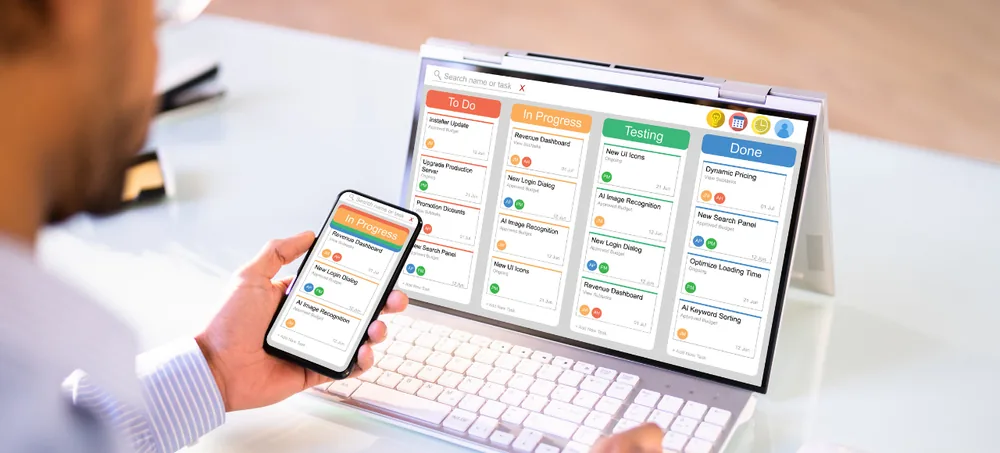
Custom ERP software to manage your business resources, processes, and operations. Connect sales, purchase, inventory, billing, CRM, manufacturing, warehouses, HRM, reports, approvals, and workflow automation through one customizable enterprise management platform — ERPLax provides Enterprise Resource Management India solutions for small, medium, and growing businesses that need better visibility and control across departments, configured around your existing workflow, departments, users, approval levels, reports, branches, warehouses, and integration requirements. Start with the modules required today and expand as your business grows.
Request Custom ERP Quote
Schedule a free consultation with our ERP team.
Enterprise Resource Management Software India for Growing Businesses
More customers mean more orders, more products create larger inventory requirements, and additional employees create new responsibilities and approval levels — businesses often respond by adding more spreadsheets or separate applications, and over time this creates real operational problems that Enterprise Resource Management Software India helps solve through a connected system.
Repeated Data Entry
The same information gets entered across disconnected systems.
Stock Mismatches
Records drift from what's actually on the shelf.
Different Information Across Departments
Teams work from inconsistent versions of the same data.
Slow Approvals
Manual approval chains hold up routine transactions.
Delayed Order Processing
Orders stall moving between disconnected systems.
Billing Mistakes
Disconnected sales and billing data leads to errors.
Difficult Reporting
Manual spreadsheet consolidation slows management down.
Limited Business Visibility
Disconnected data makes it hard to see the full picture.
Manual Follow-Ups
Nothing prompts the next step without a connected system.
Challenges When Scaling
Processes that worked small become difficult to coordinate.
What Is Enterprise Resource Management Software?
Enterprise Resource Management software is a business system used to manage an organization's resources, transactions, and operational processes through a centralized platform — instead of each department maintaining separate information, it connects related activities such as customers, suppliers, products, inventory, raw materials, employees, warehouses, orders, production capacity, and financial information, creating an organized information flow across the business.
Sales: Enquiry to Reports
Customer Enquiry → Quotation → Sales Order → Inventory → Dispatch → Invoice → Payment → Reports.
Purchase: Requirement to Invoice
Requirement → Purchase Request → Approval → Purchase Order → Goods Receipt → Stock → Supplier Invoice.
Manufacturing: Demand to Sales
Demand → Material Planning → Purchase → Raw Materials → Production → Quality → Finished Goods → Sales.
Enterprise Resource Management vs Enterprise Resource Planning
Businesses searching for Enterprise Resource Management India and Enterprise Resource Planning India are often looking for very similar software capabilities. Enterprise resource management is a broader business concept focused on managing organizational resources efficiently. Enterprise Resource Planning, or ERP, is the software approach commonly used to connect and manage those resources and processes — in practical business software terms, an ERP platform may manage Sales + Purchase + Inventory + Manufacturing + Billing + CRM + HRM + Reports + Automation. ERPLax uses customizable ERP software to help businesses centralize these processes according to their actual workflow.
Key Features of ERPLax ERP Software India
ERPLax's current India ERP page specifically highlights sales, purchase, inventory, production, billing, and CRM as connected ERP functions.
Sales Management
Manage sales activity from initial enquiry through order completion, connected to inventory.
Purchase Management
Manage procurement from requirement through supplier invoice.
Inventory Management
Manage stock across purchase, sales, manufacturing, and warehouse activities.
Warehouse Management
Manage inventory warehouse by warehouse across multiple storage locations.
Billing and Invoicing
Connect invoices with sales, customers, and inventory transactions.
CRM and Customer Management
Manage customer acquisition and relationships alongside sales operations.
Manufacturing Resource Management
Connect production, inventory, purchasing, sales, quality, and reporting.
Batch, Lot, Serial Number and Expiry Tracking
Detailed product tracking for traceable or expiry-sensitive items.
Barcode and QR Code Management
Use barcode and QR workflows for identification and inventory transactions.
Distribution Management
Connect orders with inventory and dispatch across distribution networks.
POS Management
Connect point-of-sale activity with centralized ERP inventory.
HRM and Employee Resource Management
Employee master, attendance, leave, shifts, and payroll workflows.
Approval Workflow
Route important transactions through defined approval levels.
Role-Based Access
Give employees system access according to job responsibilities.
Reports and Dashboards
Review operational performance using centralized ERP transaction data.
Why Businesses in India Need Enterprise Resource Management
What a connected ERP platform solves as disconnected tools become harder to coordinate.
Reduce Manual Work
Related transactions use connected information instead of repeated entry.
Improve Resource Visibility
Understand what resources are available and how they're being used.
Improve Inventory Control
Stock tracking, warehouse management, and real-time visibility.
Connect Departments
Sales, inventory, purchasing, and production operate through connected workflows.
Reduce Data Mismatch
Centralized transactions reduce dependence on manually maintained versions.
Improve Order Processing
Sales, inventory, billing, and dispatch move through a defined workflow.
Improve Reporting
Management reports use ERP transaction data instead of spreadsheets.
Support Growth
A modular structure allows functionality to expand as requirements change.
Benefits of Enterprise Resource Management
What ERPLax Enterprise Resource Management India delivers for growing businesses.
Centralized Business Management
Bring important resources, transactions, and departments into one connected environment.
Real-Time Operational Visibility
Access current ERP transaction information instead of waiting for consolidated data.
Better Resource Utilization
Clearer visibility into stock, raw materials, warehouses, and orders.
Faster Order Processing
Connect quotations, orders, stock allocation, billing, and dispatch.
Better Inventory Control
Track inventory movements across purchase, sales, warehouses, and manufacturing.
Reduced Manual Errors
Reduce unnecessary repeated data entry between connected processes.
Better Purchase Planning
Use inventory and operational requirements to support procurement decisions.
Improved Customer Service
Let teams see relevant enquiries, quotations, orders, invoices, and delivery info.
Better Reporting
Generate reports using centralized business transactions.
Scalable for Growth
Expand users, modules, departments, warehouses, branches, and integrations.
ERP Solutions India for Different Industries
ERPLax currently positions its custom ERP solutions across manufacturing, retail, ecommerce, and other business models.
How ERPLax Enterprise Resource Management Works
From understanding your business to phase-wise expansion — the nine stages ERPLax manages for you.
Understand Your Business
Identify important processes and requirements across departments and users.
Map Business Workflows
Define how transactions should move between teams and departments.
Select ERP Modules
Identify modules required for the first implementation phase.
Configure and Customize
Set up fields, workflows, documents, permissions, reports, and business rules.
Setup Master Information
Configure customers, suppliers, products, warehouses, employees, and tax details.
Test ERP Workflows
Test important transactions, permissions, reports, and integrations.
Train Users
Train employees according to their ERP responsibilities.
Deploy the System
Deploy using the agreed cloud or on-premise environment.
Add Modules as Required
Expand with additional departments, functionality, or integrations.
Cloud and On-Premise ERP Deployment
ERPLax's current India ERP offering includes scalable cloud as well as on-premise deployment options.
Cloud Enterprise Resource Management
Useful for businesses that require centralized access across multiple offices, branches, warehouses, remote employees, and field sales teams.
On-Premise ERP
Selection considers existing infrastructure, internal IT policy, accessibility requirements, number of locations, and integration architecture.
Enterprise Resource Management Integrations
ERP may need to exchange information with existing business applications, communication systems, devices, and external platforms.
Enterprise Resource Planning Software India for Small Businesses
ERP is not only for large enterprises — small and medium businesses can need ERP when transaction volumes, products, users, and operational complexity grow beyond what spreadsheets or standalone applications can comfortably manage.
Distributor: Starting Point
Sales, Purchase, Inventory, Billing, and Reports.
Distributor: Expansion
CRM, Warehouse, HRM, Workflow Automation, and Integrations.
Manufacturer: Starting Point
Purchase, Inventory, BOM, Production, and Sales.
Manufacturer: Expansion
Quality, Job Work, Advanced Reports, Dashboards, and Integrations.
How to Choose an ERP System in India
Choosing the right ERP System India solution should begin with understanding your business rather than comparing only feature counts.
Business Workflow Fit
Can the software support your actual processes?
Module Requirements
Identify which modules are essential now and which may be required later.
Customization
Check whether fields, reports, documents, and workflows can be configured.
Inventory Requirements
Evaluate stock, warehouse, batch, and traceability requirements carefully.
Manufacturing Requirements
Review BOM, planning, work orders, production, quality, and finished-goods processes.
Integration Capability
Determine whether the ERP can communicate with important external applications.
Reporting
Check whether managers can access the operational reports required for decisions.
User Access
Ensure access can be controlled according to responsibilities.
Multi-Location Requirements
Businesses with multiple branches or warehouses need location-level controls.
Scalability
Consider future users, branches, warehouses, modules, and integrations.
Deployment
Choose cloud or on-premise deployment according to business requirements.
Training and Support
Include configuration, testing, user training, and ongoing support in the plan.
Why Choose ERPLax for Enterprise Resource Management India?
ERPLax focuses on custom ERP software aligned with business workflows rather than fixed, one-size-fits-all processes.
Custom ERP Development
Aligned with business workflows rather than only fixed, generic processes.
ERP Based on Actual Business Workflow
Configure sales, purchase, inventory, manufacturing, and billing around how your teams operate.
Modular and Scalable
Start with priority modules and introduce additional functions phase by phase.
Cloud or On-Premise Deployment
Choose deployment based on business and infrastructure requirements.
Inventory and Warehouse Control
Connect stock, purchasing, sales, and warehouse transactions in one environment.
Manufacturing ERP
Connect production with purchasing, inventory, sales, quality, and reporting.
API Integrations
Connect compatible software, platforms, services, and devices.
Role-Based Access
Provide employees with access appropriate to their responsibilities.
Custom Reports and Dashboards
Build reports based on specific management and operational requirements.
Suitable for Growing Businesses
Expand modules, users, warehouses, branches, and workflows as you develop.
Manage Your Business Resources Through One ERP System
Customers, suppliers, inventory, employees, sales orders, purchases, production, and warehouses are all important business resources. Managing them through disconnected software can make it difficult to maintain consistent information and operational visibility.
Frequently Asked Questions
Enterprise Resource Management India refers to software and business systems used to manage organizational resources such as customers, suppliers, inventory, employees, orders, manufacturing and business transactions through connected processes.
Enterprise Resource Management Software India is business management software used to centralize processes such as sales, purchase, inventory, billing, CRM, manufacturing, HRM and reporting.
The terms are closely related. Enterprise resource management describes managing organizational resources, while ERP stands for Enterprise Resource Planning and is the integrated software system commonly used to manage many of those resources and processes.
Enterprise Resource Planning India refers to ERP systems used by Indian businesses to integrate departments and processes such as sales, purchase, inventory, manufacturing, billing, CRM and reports.
Yes, ERPLax currently provides customizable ERP software in India for sales, purchase, inventory, production, billing and CRM with cloud or on-premise deployment options.
ERPLax positions its custom ERP solutions for industries including manufacturing, retail and ecommerce, healthcare, education, logistics, real estate, finance and hospitality, and other workflow-driven businesses.
Yes, ERP inventory functionality can manage product masters, stock inward and outward, warehouse stock, transfers, reorder information and stock reports.
Yes, ERPLax manufacturing ERP can connect production, inventory, purchasing, sales, quality and reporting.
Yes, an ERP solution can be configured to track warehouse-wise inventory, stock transfers, goods receipts, picking, packing and dispatch according to business requirements.
Yes, ERPLax currently offers scalable cloud or on-premise ERP deployment depending on business requirements.
Requirement-specific integrations can be developed for compatible accounting systems, ecommerce platforms, messaging APIs, payment services, logistics systems and other applications.
Yes, ERPLax can use a modular implementation approach so businesses can begin with priority functions and expand modules, reports, users and integrations as requirements change.
Manage Your Business Resources Through One ERP System
Start with your current requirements and expand the platform as your business grows.
Phone: +91 97399 66977 · Email: info@erplax.com