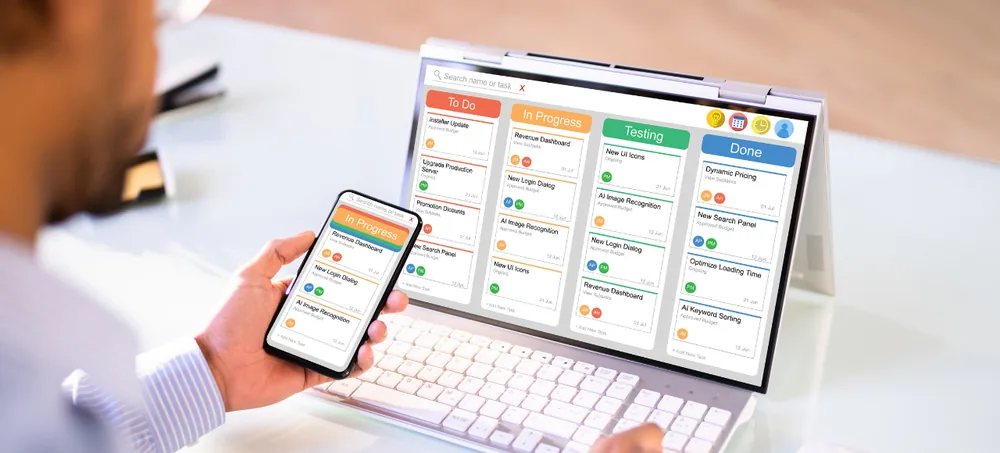
Connect Ecommerce, Inventory, Orders, Warehouse, Customers and Finance in One ERP System. ERPLax provides enterprise resource planning solutions for ecommerce businesses in India that need better control over online orders, product data, stock, warehouses, purchases, customers, billing, fulfilment, returns, reporting and business automation.
As ecommerce operations grow, managing the online store separately from inventory, accounting, CRM, warehouse and purchase systems can create duplicated work and data gaps. ERPLax connects these processes through a centralized ecommerce ERP platform so that teams can work with shared information and structured workflows.
Whether you operate a single online store, multiple ecommerce websites, marketplaces, wholesale channels or an omnichannel business, ERPLax can be configured around your order flow, stock structure, warehouses, approvals, reporting requirements and third-party integrations.
Tell us about your ecommerce business and we’ll get back with next steps.
ERPLax is developed by EchoPx Technologies with experience supporting organizations through enterprise software and business process management platforms.
ERPLax has supported 1500+ clients across business requirements, industries, and operating models across India.
1700+ projects delivered across different technology needs support businesses looking for structured ERP solutions.
This experience helps businesses align ERP capabilities with their operational requirements — not just a feature checklist.
A customer may place an order online within seconds, but completing that order can involve stock validation, warehouse allocation, payment confirmation, invoicing, packing, courier handover, accounting and customer communication. Without integration, staff may repeatedly export spreadsheets, enter the same order in multiple systems, reconcile inventory manually and prepare reports from disconnected data.
Without integration, teams may manually transfer orders from ecommerce platforms into internal systems, repeating the same data entry across websites, marketplaces and back-office tools.
When stock is sold through websites, marketplaces and offline channels without a shared system, inventory can quickly become inconsistent, risking overselling and stockouts.
Without connected order, inventory and warehouse workflows, moving from order confirmation to picking, packing, dispatch and invoicing involves far more manual handoffs.
Without ERP and CRM workflows, customer profiles, order history, transaction data and follow-ups end up scattered across disconnected systems instead of one structured record.
Without visibility into inventory movement and sales demand, reorder decisions, purchase requirements and supplier planning are harder to manage systematically.
When sales, stock, purchase, customer and fulfilment data stay in separate systems, management loses the dashboards and reports needed for a clear operational view.
Enterprise resource planning in ecommerce connects online selling channels with the operational systems behind them, so order, inventory and warehouse activity move through one business system instead of disconnected spreadsheets.
ERPLax can centralize orders received from supported online channels and help teams manage them through structured operational stages, from synchronization to dispatch.
A central stock position across SKUs and warehouses reduces the risk of selling unavailable products and keeps online availability closer to the real position.
Businesses with multiple warehouses or fulfilment points can maintain separate stock by location while management retains centralized visibility.
ERPLax ecommerce ERP modules connect order management, inventory, warehouse, product, purchase and accounting activity into one configurable platform for online businesses.
Order management is one of the most important parts of ecommerce ERP. ERPLax can centralize orders received from supported online channels and help teams manage them through structured operational stages.
Inventory accuracy directly affects online customer experience. An ecommerce inventory ERP can help businesses maintain a central stock position and reduce the risk of selling unavailable products.
Businesses with multiple warehouses or fulfilment points can maintain separate stock by location while management retains centralized visibility.
Product data can be maintained through a structured item master, with selected product information synchronized between ERP and the online platform where supported.
Purchase workflows can connect demand and inventory requirements with supplier management, helping ecommerce businesses replenish products more systematically.
Accounting-related workflows can connect sales invoices, purchase transactions, payment information and tax details with ecommerce operations.
The integration model depends on the ecommerce platform, ERP scope and available APIs, but a common workflow moves from order placement through fulfilment to reporting.
An ecommerce ERP system helps businesses move beyond spreadsheets toward connected, centralized operations as transaction volumes grow.
Orders, products, customers, inventory and operational records can be managed through a connected business system instead of scattered spreadsheets.
Automation can reduce the time spent moving information manually between ecommerce and internal systems.
Teams can monitor stock across warehouses and channels from a centralized ERP inventory structure.
Integrated workflows reduce repeated entry of the same customer, product and transaction information.
Order, warehouse, packing and dispatch activities can be linked through defined workflows for more consistent fulfilment.
Businesses can add users, warehouses, products, channels and modules as operational requirements increase.
Connect online orders, customers, inventory, purchase, fulfilment, returns and reporting for direct-to-consumer operations.
Integrate ecommerce with store inventory, POS, warehouses, purchasing, customers and centralized reporting.
Consolidate operational information from supported marketplaces and coordinate inventory and fulfilment through ERP.
Support account-based customer workflows, quotations, negotiated pricing, approvals, bulk ordering and ERP-backed inventory and billing processes.
Connect online demand with raw materials, production planning, finished goods inventory, warehouses and dispatch where manufacturing workflows are required.
Manage customer orders, product pricing, purchasing, inventory, warehouses, dispatch, returns and outstanding information in one system.
Businesses searching for ecommerce ERP software India, ecommerce ERP integration India, or ecommerce ERP solutions provider India need more than a demo — they need a platform that fits their order flow. ERPLax focuses on configuring ERP around actual ecommerce operations rather than forcing every business into the same model.
ERPLax focuses on configuring ERP around actual business processes rather than forcing every organization into the same operating model.
Businesses can implement the most important ecommerce ERP modules first and expand functionality over time.
ERPLax can connect compatible ecommerce platforms, marketplaces, payment systems, logistics tools and other business applications through available APIs.
ERP workflows can connect ecommerce sales with stock, warehouse, purchase and dispatch operations.
Users can be given access according to department, role, branch, warehouse or responsibility.
Ecommerce ERP implementation moves from requirement discussion through configuration, integration and testing to go-live and ongoing support.
We understand ecommerce platforms, marketplaces, warehouses, products, order volumes and reporting requirements, and map current and desired workflows from order-to-dispatch.
Required modules, integrations, customizations, reports, users and access permissions are documented, then ERPLax modules and workflows are configured accordingly.
Supported ecommerce platforms, marketplaces and third-party tools are connected according to technical feasibility.
Product, customer, supplier and inventory master data is prepared for migration, and order flow, stock updates, billing, returns and integrations are tested before go-live.
Users are trained by role, approved modules and integrations are deployed, and additional reports, workflows or modules can be introduced as the business evolves.
Enterprise resource planning in ecommerce connects online selling channels with internal business processes such as inventory, warehouse, purchases, sales, customers, billing, fulfilment and reporting through an integrated ERP system.
ERP helps ecommerce businesses centralize operational information, reduce manual data entry, improve inventory visibility, streamline order fulfilment and create better reporting across departments.
Yes. Subject to available APIs and technical requirements, ERPLax can integrate ecommerce platforms with ERP for processes such as order synchronization, inventory updates, customer data, billing and fulfilment.
Shopify ERP integration can be developed according to the required data flow and available Shopify APIs. The integration may include orders, customers, products, inventory and fulfilment workflows.
Yes. WooCommerce stores can be connected with ERP to manage orders, stock, warehouse, purchasing, billing, customer records and reports, subject to technical scope.
Marketplace ERP integration can be implemented where supported APIs or integration methods are available. This can help consolidate orders and improve stock and fulfilment management.
Inventory synchronization keeps stock information aligned between ERP and ecommerce channels so that online availability reflects the operational inventory position as closely as the integration design allows.
Yes. ERP can maintain warehouse-wise stock, transfers, receiving, picking, packing and dispatch information while providing centralized inventory visibility.
The right ecommerce ERP system should do more than store data. It should connect online sales with the operational processes required to fulfil those sales accurately and efficiently. ERPLax helps ecommerce businesses integrate orders, inventory, warehouses, purchases, customers, billing, fulfilment, reporting and third-party platforms through a configurable ERP environment. Whether you are replacing spreadsheets, connecting an existing online store, centralizing multiple sales channels or building a custom ecommerce ERP workflow, our team can evaluate your current process and define the modules and integrations required. Call +91 97399 66977 or email info@erplax.com to book a discussion.
Specialized Applications
Purpose-built & ready to deploy. Hover to explore, click to learn more.
Testimonials
Real stories from businesses running their operations on ERPLax.
ERPLax gave us real-time visibility into stock across three warehouses. Wastage dropped and our fulfillment time improved almost overnight.
GST e-invoicing used to eat up two days every month. With ERPLax's accounting module it's now automatic and our filings are always on time.
Billing at our stores used to take a minute per customer. ERPLax's POS module cut that to under 15 seconds, even during peak festival rush.
Payroll for 200+ employees across two branches used to take our HR team a full week. ERPLax's HRM module now runs it in a single afternoon.
Tracking batch numbers and expiry across our distribution network was a nightmare on spreadsheets. ERPLax's inventory module made it effortless.
Front desk, housekeeping and billing are now all on one screen. ERPLax's hotel management module has made check-in day a breeze for our staff.
Fee collection, attendance and report cards used to live in three different tools. ERPLax brought it all into one dashboard our staff actually enjoys using.
Tracking material costs and site progress across four active sites was chaos before ERPLax. Now our project managers update status from their phones daily.
Our online store orders now sync straight into inventory and accounting — no more manual entry, no more overselling out-of-stock items.
Our sales team can now see every lead's history and follow-ups in one place. Deal closures are faster and nothing falls through the cracks anymore.
ERPLax gave us real-time visibility into stock across three warehouses. Wastage dropped and our fulfillment time improved almost overnight.
GST e-invoicing used to eat up two days every month. With ERPLax's accounting module it's now automatic and our filings are always on time.
Billing at our stores used to take a minute per customer. ERPLax's POS module cut that to under 15 seconds, even during peak festival rush.
Payroll for 200+ employees across two branches used to take our HR team a full week. ERPLax's HRM module now runs it in a single afternoon.
Front desk, housekeeping and billing are now all on one screen. ERPLax's hotel management module has made check-in day a breeze for our staff.
Fee collection, attendance and report cards used to live in three different tools. ERPLax brought it all into one dashboard our staff actually enjoys using.
Tracking material costs and site progress across four active sites was chaos before ERPLax. Now our project managers update status from their phones daily.
Our online store orders now sync straight into inventory and accounting — no more manual entry, no more overselling out-of-stock items.
Our sales team can now see every lead's history and follow-ups in one place. Deal closures are faster and nothing falls through the cracks anymore.
