
ERP Companies in Australia — Flexible ERP Solutions for Business Growth
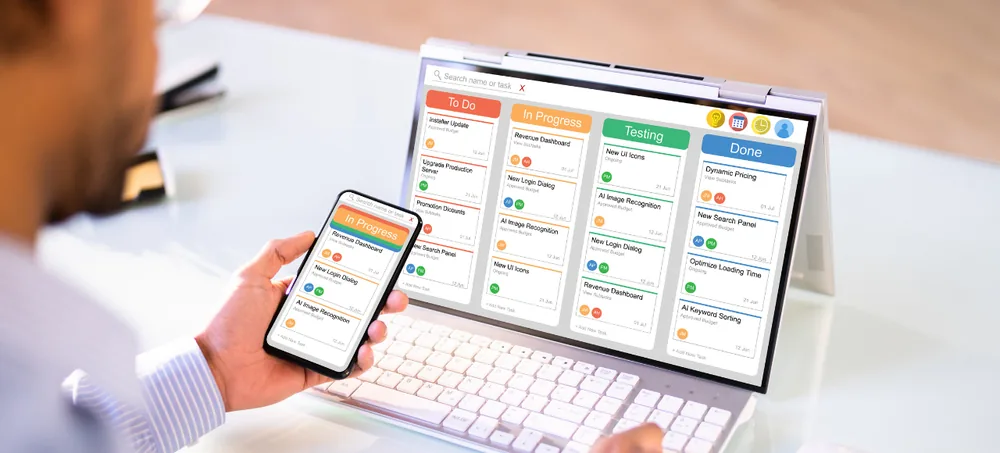
The Australian ERP market is not one market. Global vendors, implementation partners, local specialists, custom developers and boutique consultants all appear in the same search results and suit very different businesses. This page maps the five provider types, then sets out the ERP Solutions Australia ERPLax delivers across finance, inventory, sales, manufacturing, CRM and operations.
Schedule Free Consultation
Tell us your size, industry and constraint — we will tell you which provider type fits, including when it is not us.
Provider Types Mapped
Years of ERP Delivery
Clients Across Industries
Projects Delivered
The Five Kinds of ERP Company in Australia
Searching for an ERP provider returns five quite different business models in one list. Knowing which type you are talking to explains the price gap, the timeline and who will actually be in the room.
Global Software Vendors
Publish the platform, rarely implement it themselves. Deep functionality and long roadmaps, but you are one account among thousands and delivery is usually handed to a partner. Best when your requirements are large, standard and well funded.
Implementation Partners and Resellers
Licence a third-party platform and deliver the project. Capability varies enormously between firms selling the same product, so judge the team rather than the badge. Best when you have already chosen the platform and need delivery.
Local ERP Specialists
Own both the product and the delivery, usually in a defined size or industry band. Fewer modules than a global suite, but decisions are made by people you can reach. Best for mid-size businesses wanting accountability in one place.
Custom ERP Developers
Build the system around your process rather than configuring a package. Right when a workflow is genuinely a competitive advantage; wrong when you are simply avoiding process change. Best for distinctive operations.
Boutique ERP Consultants
Advise on selection and process without selling software. Useful for an independent view before you commit, and worth paying for even if you engage someone else to build. Best used before a shortlist, not after.
Where ERPLax Sits
We are a local specialist and custom developer in one — we own the platform and deliver the project ourselves, which is why the same team scopes, configures, migrates, trains and supports. That model suits small and mid-size businesses who want one accountable party. It suits you less if you need a global suite with twenty country localisations, and we will say so early rather than late. Businesses comparing Top ERP Companies Australia or shortlisting the Best ERP Companies Australia should start by deciding which of the five types they actually need, because that single decision removes most of the list.
ERP Companies Australia for Digital Business Transformation
Whichever provider type you choose, the problems that started the search are the same six.
Duplicate Data Entry
The same order keyed into two or three systems, each pass adding a chance to get it wrong.
No Real-Time Information
Management works from figures that were accurate last week, at best.
Inventory Errors
System stock and physical stock diverge, so purchasing and sales both work blind.
Slow Reporting
Month-end rebuilt by hand, late, and rarely reconciling with the previous version.
Manual Approvals
Purchase and discount approvals chased by email with no record of who agreed what.
Poor Department Coordination
Sales commits to dates operations never sees until the customer complains.
What Is ERP Software?
An integrated business management system connecting different business functions into one centralized platform rather than a separate application per department.
What ERP Connects
- Finance, sales and purchase
- Inventory and manufacturing
- CRM and human resources
- Projects and reporting
What It Provides
- Real-time information across departments
- Automated workflows and approvals
- Better collaboration on shared records
- Improved reporting and decision-making
Reading the Market Honestly
Almost every platform on a Best ERP Software Australia shortlist can hold a product master and raise an invoice, so feature grids rarely separate anything. What separates outcomes is delivery, which is a property of the company rather than the software. That is why comparing ERP Software Companies Australia should focus on who performs each stage in-house, and why the distinction between ERP Providers Australia, ERP Software Providers Australia and ERP Solution Providers Australia matters more than the labels suggest — some publish software, some only implement it, some do both. A capable ERP Software Company Australia will describe your operation back to you before quoting. ERPLax delivers ERP Systems Australia and Enterprise Resource Planning Software Australia as a single accountable team, and provides ERP Consultants Australia engagements for businesses that want the selection question answered before the build question.
Why Businesses Need ERP Systems Australia
Six outcomes that follow from one system of record rather than several partial ones.
Centralized Business Data
A single platform for customers, suppliers, products, inventory, transactions and reports.
Improved Business Efficiency
Automation reduces manual work in order processing, billing, approvals, data entry and reporting.
Better Inventory Control
Monitor stock levels, warehouse movement, product availability and inventory costs.
Stronger Financial Management
Invoices, payments, expenses, receivables, payables and reports connected to operations.
Better Decision Making
Dashboards on sales performance, profitability, inventory status and business trends.
Control and Accountability
Role-based permissions, approval limits and audit trails applied across every department.
How ERPLax ERP Solutions Support Australian Businesses
One transaction runs the whole way through, with no re-entry at any handover.
Sales Management
Customer enquiries, quotations, sales orders, pricing, delivery tracking and sales reports.
Purchase Management
Supplier information, purchase orders, goods receipts, supplier invoices and purchase analysis.
Inventory Management
Product master, warehouses, stock transfers, batch and serial tracking, inventory reports.
Accounting and Finance
Billing, payments, expenses, receivables, payables and financial reporting.
CRM Integration
Lead management, customer database, sales pipeline, follow-ups and customer history.
Business Reporting
Sales analysis, inventory tracking, financial performance and operational dashboards.
ERP Software Modules for Complete Business Management
Core modules plus the industry layers we deploy most often. Choose only what the business needs now.
Accounting and Finance
- Financial transactions and tax reports
- Invoices and payments
- Receivables and payables
- Financial statements
Inventory and Warehouse
- Warehouses and locations
- Products and stock movement
- Reordering and planning
- Inventory valuation
Manufacturing ERP
- Production planning and BOM
- Material requirements
- Work orders and routing
- Quality control and costing
Projects and Construction
- Projects and budgets
- Procurement and site materials
- Contractor management
- Job costing and progress billing
Traceability and Compliance
- Batch, lot and serial tracking
- Expiry and FEFO control
- GST-compliant documents
- Complete audit trail
Access and Integration
- Role-based permissions
- Accounting and ecommerce links
- POS and payment gateways
- Custom API integration
Cloud ERP Companies Australia — Modern ERP Solutions
Suitable for small businesses, growing companies, multi-location operations and remote teams.
Custom ERP Software Australia Development
Build custom where the process is genuinely part of how you compete, and standardise everywhere else.
Industry-Specific ERP Solutions Australia
Sectors we deploy into most often, and what each actually needs from the system.
ERP Consulting Companies Australia Services
Consulting narrows the field before you spend. Worth paying for even if you engage someone else to build.
ERP Implementation Companies Australia Process
A seven-step method that keeps the business trading while the ERP goes live. Ask every provider to describe theirs at this level of detail.
Business Analysis
Understand existing processes, operational challenges and department requirements.
ERP Planning
Define required modules, workflows, user roles and integrations, sequenced by risk.
Configuration
Set up business settings, documents, reports, dashboards and permissions to match operations.
Data Migration
Transfer customers, suppliers, products, inventory and financial data after cleaning.
Testing
Validate workflows, reports and integrations against your own data before go-live.
Training and Deployment
Train each user group by role, then launch with support present.
Support and Optimization
Improve the ERP as the business grows and real usage feedback arrives.
ERP Software Cost Australia — Key Pricing Factors
Six variables drive the number, and provider type drives the range. A global suite and a local specialist can differ by an order of magnitude on the same requirement.
Why Choose ERPLax ERP Solutions?
19+ years of delivery, 1500+ clients and 1700+ projects behind every implementation.
Frequently Asked Questions About ERP Companies in Australia
ERP Companies Australia provide enterprise resource planning software and the services around it. In practice the market contains five different business models — global vendors, implementation partners, local specialists, custom developers and independent consultants — and they suit very different businesses.
First decide which provider type you need, because that removes most of the list. Then score the remaining shortlist on industry experience, customization capability, integration support, implementation expertise and scalability using one written scenario from your own business.
A complete provider offers business analysis, ERP planning, customization, implementation, data migration, integration, testing, training and ongoing support. Ask which of those are performed in-house and which are subcontracted.
Yes. ERPLax provides customizable ERP solutions for Australian businesses across manufacturing, construction, retail, trading, distribution and service industries, on Cloud-Based.
Yes, when scoped properly. Small businesses start with the modules that address a current constraint, typically inventory and billing, and extend as the business grows.
Manufacturing, construction, retail, trading, distribution, wholesale, logistics, engineering and service businesses, each emphasising different modules and costing models.
Yes. Modules, workflows, document formats, reports and dashboards can be customized. Customization should be scoped explicitly and kept upgrade-safe.
ERP implementation covers business analysis, planning, configuration, data migration, testing, training and deployment, followed by support and optimization once the system carries live volume.
Cost depends on user count, modules, customization, integrations, deployment model and support services. Ask for licence, implementation and annual support as three separate figures.
Most do. Cloud ERP offers remote access, secure data management, faster implementation, lower infrastructure requirements and easy scalability, with Cloud available where policy requires it.
Choose the Right ERP Company for Your Business
Decide the provider type first, then judge the shortlist on delivery capability. ERPLax provides customizable ERP Solutions Australia covering finance, inventory, sales, manufacturing, CRM and operations through one integrated platform, delivered by one accountable team.