
Disconnected Departmental Information
Sales, purchasing, warehouse and finance teams may maintain separate records. When departments use different information sources, employees spend time verifying transactions and requesting updates.
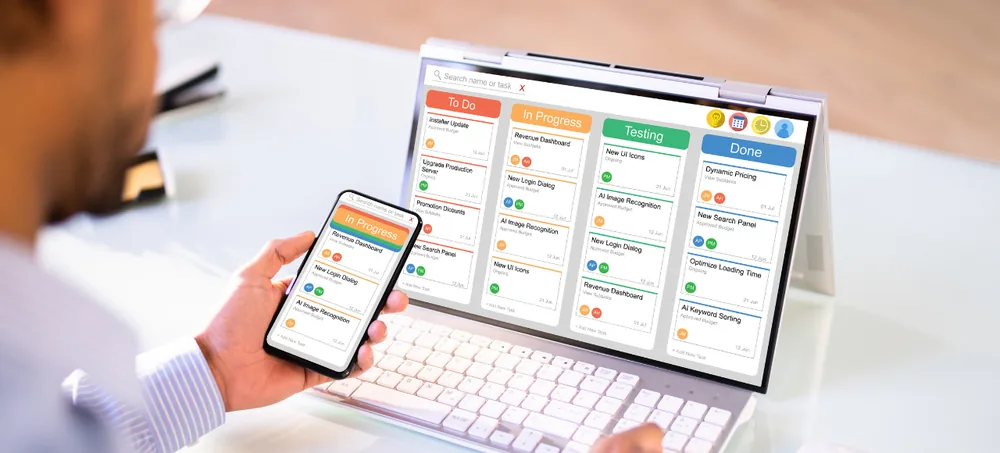
Simplify business operations with professional ERP consulting, configuration, integration and implementation. ERPLax, developed by EchoPx Technologies, provides a cloud-based SaaS ERP platform with implementation services designed around business requirements — evaluating challenges, identifying suitable modules, configuring processes, preparing data, assessing integrations and planning employee adoption.
Tell us about your business, current applications and operational challenges – we'll walk through ERPLax using your own requirements.
ERPLax is developed by EchoPx Technologies, bringing business software experience to organizations evaluating cloud ERP adoption, configurable workflows and integrated business management.
ERP implementation is the process of introducing an enterprise resource planning system into an organization's business operations. It involves more than providing access to software — it typically includes understanding business requirements, mapping existing processes, selecting modules, configuring workflows, preparing operational data, evaluating integrations, testing transactions and training employees.
An ERP implementation company helps businesses translate operational requirements into a practical software configuration and adoption plan. Consultants review existing applications, departmental responsibilities, approval procedures, reporting needs and areas where information is duplicated, using these findings to identify suitable ERP modules and workflow requirements.
ERP software selection determines which platform appears suitable for the organization's requirements; ERP implementation determines how the chosen platform will be configured and introduced into business operations. ERPLax combines its cloud ERP platform with a requirements-led implementation approach.
Connect your sales, purchasing, inventory and finance teams through a structured ERP implementation.
Researching an ERP implementation company in India, an ERP implementation company in Bangalore, ERP implementation services or an ERP software implementation company? ERPLax offers cloud ERP implementation services delivered by ERP implementation consultants acting as your ERP implementation partner, alongside ERP consulting company in India and ERP software company in Bangalore capabilities.
ERPLax also supports SaaS ERP implementation, positions itself as an ERP solution provider in India, and covers ERP deployment services, ERP system implementation, ERP integration services, ERP implementation and support, custom ERP implementation and business ERP implementation services for organizations across India.
Many businesses search for the Best ERP implementation company in India when comparing providers, and for ERP implementation company for manufacturing businesses, ERP software implementation services in Bangalore, SaaS ERP implementation and configuration services and ERP implementation services for inventory and accounting while shortlisting an implementation partner. Others look specifically for an ERP implementation company for trading and distribution, want to understand ERP software implementation cost in India, need ERP implementation services for manufacturing and production, or are planning Cloud ERP implementation with employee training, an ERP implementation company for multiple business locations, ERP implementation and business process consulting services, Configurable cloud ERP implementation services, or want to see an ERP software implementation demo and pricing before committing to a provider.
Many organizations begin with individual applications for accounting, inventory, sales and purchasing. As the business expands, employees may need to exchange information between these systems manually, creating challenges for data consistency, departmental coordination and management reporting.
Sales, purchasing, warehouse and finance teams may maintain separate records. When departments use different information sources, employees spend time verifying transactions and requesting updates.
An employee may enter customer information in a sales spreadsheet and recreate the same information in another system for billing, with purchasing and inventory teams also duplicating product and supplier records.
Businesses handling physical products need accurate records of stock receipts, issues, transfers and adjustments. When inventory information is scattered, employees may struggle to determine available quantities.
Purchasing activities may require approvals from department managers or business owners. When these approvals happen through informal messages, it can be difficult to track decisions and responsibilities.
Businesses may find it difficult to understand which quotations are pending, which sales orders require action and which customers need follow-up.
Manufacturing operations often involve raw materials, production requirements, purchasing and finished goods inventory. When managed separately, departments may lack consistent operational information.
Finance teams may collect information from sales, purchasing and inventory systems before preparing reports. If records are inconsistent, additional verification may be required.
Businesses with several branches, warehouses or departments may need consistent operating procedures across common records and organizational classifications.
Some organizations rely heavily on individual employees to remember approvals, maintain spreadsheets or communicate transaction status, rather than following documented workflows.
ERPLax provides implementation services for organizations adopting its cloud-only SaaS ERP platform. The engagement can cover business assessment, module selection, workflow configuration, data preparation, integration review, testing and employee training according to the agreed project scope.
Why implementation planning matters: ERP software connects processes that may previously have operated independently — a sales order may influence inventory availability, purchasing requirements, warehouse activities and financial records. A structured implementation plan helps clarify responsibilities, data requirements and business rules before the ERP becomes part of daily operations.
ERP software selection considers functional capabilities, subscription terms, integration options and product suitability. Implementation considers workflows, data quality, responsibilities, testing and employee adoption. Both decisions are important, but they address different questions — ERPLax combines its cloud ERP platform with a requirements-led implementation approach.
Illustrative implementation sequence — the actual stages, timeline and scope depend on your agreed project plan
An ERP implementation should provide practical functions for sales, warehouse, purchasing and finance teams. ERPLax offers configurable modules that can be organized according to the company's requirements and agreed implementation scope.
Sales management workflows help businesses organize customer enquiries, quotations, sales orders and related activities, with ERPLax configured around the applicable sales stages and responsibilities.
Purchasing workflows help manage supplier information, procurement requests, purchase orders and goods receipts, with ERPLax supporting defined purchasing responsibilities and relevant approvals.
Inventory workflows help businesses organize item information and stock movements, including goods receipt, stock issue, transfer, adjustment and stock-related reporting.
Finance-related ERP workflows help organize relevant transactions and business records, including sales billing, purchase-related financial information, receivables, payables and management reporting.
CRM helps organize customer details, sales opportunities, follow-up activities and account information, with ERPLax CRM workflows supporting configurable customer engagement processes.
Manufacturing businesses may need to coordinate raw materials, production requirements, work activities and finished goods information through relevant selected modules.
Warehouse operations may involve receiving goods, internal movement, storage, picking and dispatch, with ERPLax warehouse-related capabilities evaluated for the applicable procedures.
Approval workflows help establish how specific business decisions are reviewed, including purchase approvals, discount requests and selected inventory adjustments.
Reports provide information about recorded business transactions and operational activities, planned around sales, purchasing, inventory, customer management and finance.
ERP implementation requires cooperation between business stakeholders, departmental employees and the implementation team. The 11-step ERPLax methodology shown below (see Implementation Process) is put into practice through everyday business workflows such as these.
Illustrative 11-step implementation methodology. The exact stages depend on the project scope agreed for your organization.
A customer submits an enquiry. The sales team records the requirement and prepares a quotation through the relevant ERP or CRM workflow. After customer acceptance, the business creates a sales order, reviews inventory availability where physical products are involved, carries out fulfillment and the finance team prepares the required invoice.
A department identifies a purchasing requirement and prepares a purchase request. The request follows the agreed approval process, the purchasing department prepares the supplier order, the inventory team records the goods receipt, and finance reviews the supplier invoice and payment-related information.
Products arrive from a supplier or another relevant source. The receiving team verifies the information and records the stock receipt, the inventory record is updated, subsequent issues, transfers and adjustments are documented, and management reviews available stock information using relevant reports.
A manufacturing company receives customer demand or identifies a production requirement. Purchasing and inventory teams coordinate necessary materials, production-related activities are organized through the configured modules, and finished goods information is recorded for subsequent inventory and sales activities.
Sales, purchasing and other operational departments record relevant business transactions. Finance employees review the financial information associated with those activities, applicable accounting and reporting processes are completed, and management reviews selected operational and financial reports.
A well-planned ERP implementation can support better business operations when employees use a common system and maintain accurate records.
An ERP implementation gives an organization an opportunity to replace fragmented records with structured business information, making departmental coordination easier.
Configured workflows define who is responsible for particular activities, with approvals, transactions and operational tasks following agreed procedures rather than informal communication.
Integrated ERP workflows and suitable external connections can reduce unnecessary data re-entry, with the extent of automation depending on the final solution.
Reports become more meaningful when departments follow common definitions and maintain accurate records, with implementation establishing the data fields and workflows required for recurring management reviews.
Purchasing and inventory processes are closely related, and an ERP implementation can help businesses coordinate procurement requirements with relevant stock information.
Customer enquiries, quotations and orders may involve several employees. ERP and CRM workflows can help maintain consistent information and responsibilities throughout the sales process.
Organizations may have different procedures across departments or locations. ERP implementation provides an opportunity to document common workflows while accounting for operational differences.
As businesses introduce new products, teams or activities, ERPLax supports review of additional configuration or development within the SaaS platform, subject to agreed scope and commercial terms.
An ERP implementation should reflect the way a business sells, fulfills orders and manages suppliers. ERPLax can be evaluated across different industries through relevant workflow configuration.
Manufacturing companies often manage connected processes involving sales requirements, raw materials, purchasing, production and finished goods. ERP implementation should account for how these activities interact.
Trading and distribution businesses manage products, suppliers, customer accounts, warehouses and recurring transactions, often emphasizing purchasing, stock management, order processing and finance coordination.
Retail operations may involve product catalogs, customer sales, inventory, purchasing and multiple selling channels. ERP implementation helps define how stock records and sales-related information should be maintained.
Ecommerce businesses need to coordinate online orders with inventory, fulfillment, purchasing and finance, with ERPLax evaluated as the ERP environment supporting these internal processes.
Construction businesses may manage project-related purchasing, materials, supplier coordination and financial activities, involving project classifications, approvals, procurement and reporting.
Service organizations may need CRM, customer records, billing, approvals and project-related processes, with implementation reflecting how services are delivered and financial information is managed.
Healthcare equipment distributors, diagnostic service providers and other healthcare-related organizations may require structured purchasing, inventory and customer management.
Food and FMCG companies frequently manage stock movement, purchasing and distribution, with some products requiring specific batch, expiry or quality-related information.
Wholesale organizations may need customer account management, commercial approvals, bulk order processing, supplier purchasing and warehouse coordination.
Choosing an ERP implementation company involves reviewing the platform, implementation approach and the organization's ability to define business requirements clearly. Before selecting a provider, businesses should examine several important factors.
Where ERPLax fits: ERPLax is a cloud-only SaaS ERP platform, and its capabilities should be evaluated against your functional requirements, with configuration and development taking place within the SaaS platform.
Request a business-focused demonstration: a demonstration using actual business scenarios is more useful than a generic presentation – ask to see how representative sales, purchasing, inventory and reporting workflows would operate.
Organizations evaluating ERP for the first time can discuss which business functions need to be included and begin with core sales, inventory and finance workflows scoped to current operations.
Organizations relying on separate applications and spreadsheets can evaluate how a structured ERP implementation would consolidate their existing processes into a common platform.
Organizations with several branches, warehouses or departments can evaluate configurable ERP workflows designed around consistent records and organizational classifications.
A useful quotation should identify included modules, users, SaaS subscription charges, integration scope, workflow configuration, migration services and implementation responsibilities.
| Evaluation Criteria | What Businesses Should Verify |
|---|---|
| Understand the platform | Does the software support the processes your business needs, and how do sales, purchasing, inventory, finance and other modules work together? |
| Review industry requirements | Does the implementation discussion use realistic business examples relevant to your industry? |
| Requirement-gathering approach | Does the process document business workflows, users, approvals, data requirements and reporting expectations clearly? |
| Configuration and development scope | Which requirements are supported by existing functionality, and which need additional configuration or development? |
| Data migration requirements | Which records must be transferred, and who is responsible for preparing them? |
| Integration feasibility | Has compatibility with existing applications been reviewed before finalizing the project scope? |
| Testing and training | Are business users involved in validating important workflows, and does training cover the transactions and reports they will use? |
| Commercial terms | Does the proposal cover SaaS subscription, implementation scope, configuration services and how additional requirements are handled? |
| Business-focused demonstration | Has the vendor shown representative sales, purchasing, inventory and reporting workflows using your own business scenarios? |
ERP consulting focuses on understanding business requirements, evaluating processes and planning suitable ERP workflows. ERP implementation includes configuring the selected system, preparing data, testing processes and helping employees adopt the software — ERPLax combines both within a single requirements-led engagement.
Comparing an ERP implementation company in India, ERP implementation company in Bangalore for small businesses or cloud ERP implementation services for growing businesses? ERPLax supports an ERP consulting and implementation company in India evaluation scoped to your actual business processes.
Businesses reviewing an ERP implementation partner for business process automation, ERP implementation services with data migration, ERP configuration and integration services in India or an ERP implementation company for small and medium businesses can request a demonstration scoped to their real operations.
The cost of ERP implementation depends on business complexity, required modules, users, data migration, integrations and configuration needs. ERPLax follows a cloud SaaS subscription model — businesses evaluating ERP implementation services should consider both the software subscription and the work needed to configure and introduce the system.
Prepare a description of your business, existing applications, required ERP modules and important operational challenges. This information helps establish a relevant proposal and clarify the intended scope.
ERPLax offers a cloud SaaS ERP platform designed to help organizations plan and deliver a requirements-led implementation.
ERPLax is a cloud ERP platform delivered through a subscription-based SaaS model. Organizations can evaluate the relevant modules and subscription terms according to their business requirements.
ERP implementation should begin with understanding operational needs rather than assuming every organization requires the same workflows. ERPLax implementation planning focuses on relevant business activities and functional scope.
ERPLax supports configuration and development within its SaaS platform according to agreed requirements, allowing businesses to define relevant approval stages, transaction processes and reporting needs.
ERPLax provides a broader ERP environment for connecting relevant sales, purchasing, inventory, CRM, finance and other business functions, depending on the modules included.
ERPLax is developed by EchoPx Technologies, with 19+ years of experience, 1500+ clients and 1700+ projects.
ERP adoption requires accurate records and employees who understand the new processes. Implementation planning should include data preparation, testing and training.
Organizations may need to continue using specialized external applications. ERPLax integration requirements can be assessed according to the relevant technical interfaces and business scope.
New reporting requirements, departments or processes may create future configuration needs. ERPLax provides a SaaS platform in which these requirements can be evaluated and addressed.
ERP implementation requires cooperation between business stakeholders, departmental employees and the implementation team. ERPLax implementation planning focuses on understanding operational requirements and introducing the agreed cloud ERP workflows through defined project stages — from initial consultation through gap analysis, process design, configuration, data migration, integration, testing, training, go-live and post-implementation review.
The process begins with a discussion about the organization's business model, existing software and operational difficulties, followed by relevant departments describing their activities and information requirements.
The documented requirements are compared with the available ERPLax modules and configuration options, identifying requirements addressed through standard functionality and those needing additional configuration or development.
The organization defines how key processes should operate within ERP, including transaction stages, approval responsibilities, required information and reporting needs, addressing both everyday transactions and relevant exceptions.
The agreed business workflows are configured within the ERPLax SaaS platform, preparing master data structures, transaction processes, approval stages and report requirements.
The business identifies data required for the new ERP environment. Customer, supplier, product and other relevant records are reviewed, prepared, mapped and checked for completeness and consistency.
Where connections to external systems are required, the available interfaces and data exchange needs are reviewed, identifying which application maintains each type of information and planning validation procedures.
Employees test representative business activities and provide feedback used to identify adjustments, while relevant employees are introduced to the configured system with training focused on their responsibilities.
The company prepares to begin regular operational usage, confirming data readiness, user responsibilities and transaction procedures, then reviews after adoption how effectively the configured processes meet business needs.
Bangalore is an important business center with organizations operating across technology, manufacturing, retail, professional services, distribution and other industries. Businesses in different sectors require different approaches to enterprise resource planning. ERPLax provides cloud SaaS ERP implementation services that businesses in Bangalore and across India can evaluate according to their operational requirements.
Manufacturing companies operating around Peenya or Bommasandra may prioritize material management, purchasing, production and inventory workflows.
Technology and professional services businesses operating around Whitefield, Electronic City or HSR Layout may emphasize customer management, project-related workflows, approvals and finance.
Distributors operating across Bengaluru may require coordinated sales, supplier purchasing, warehouse and inventory management through configurable ERP workflows.
Organizations operating across Hyderabad, Chennai, Mumbai and Pune may need consistent records and workflows for departments, branches and business locations.
ERPLax can be evaluated by companies in Delhi NCR, Ahmedabad, Kolkata, Coimbatore and other Indian business locations according to their operational requirements.
Answers on implementation services, methodology, pricing, data migration and support.
An ERP implementation company helps businesses introduce enterprise resource planning software into their operations. Services typically include requirement gathering, process mapping, configuration, data migration, integration planning, testing and employee training.
ERPLax provides implementation services associated with its cloud SaaS ERP platform. Businesses can discuss requirement assessment, module selection, workflow configuration, data migration, integration feasibility, testing and user training according to the agreed project scope.
ERPLax, developed by EchoPx Technologies, provides cloud ERP software and related implementation services for organizations evaluating centralized business management in India.
Businesses in Bangalore can evaluate ERPLax according to their operational requirements, selected modules and subscription needs. The platform supports a cloud SaaS approach to ERP adoption.
ERP implementation pricing depends on the number of users, selected modules, workflow complexity, data migration, integrations and required services. ERPLax pricing should be requested based on the defined business requirements and SaaS subscription scope.
ERP implementation duration depends on the organization's size, functional requirements, data quality, integrations and testing needs. A project-specific implementation plan should be prepared after the requirements are reviewed.
ERP consulting focuses on understanding business requirements, evaluating processes and planning suitable ERP workflows. ERP implementation includes configuring the selected system, preparing data, testing processes and helping employees adopt the software.
Yes. ERPLax is a cloud-only SaaS ERP platform. Its software is provided through a subscription arrangement, with functionality determined by the selected modules and agreed configuration.
ERPLax supports configuration and development within its SaaS platform according to agreed business requirements. Specific changes should be reviewed for technical feasibility and scope.
Data migration requirements can be evaluated during implementation planning. The process depends on the existing data sources, formats, quality and agreed migration scope.
Potential integrations can be assessed according to the external systems, their available interfaces and the required business workflows. Compatibility and implementation scope must be confirmed.
Manufacturing companies can evaluate ERPLax for relevant sales, purchasing, inventory, production-related and finance workflows. Specialized manufacturing requirements should be confirmed during solution planning.
Yes. Trading and distribution businesses can evaluate ERPLax modules for sales, purchasing, inventory, supplier records and related business processes.
Small businesses can evaluate ERPLax when they need structured workflows and centralized information. The appropriate modules and subscription scope should reflect their operational requirements.
ERP inventory workflows can help businesses maintain organized records of stock receipts, issues, transfers and adjustments. Accurate usage and consistent procedures are essential for meaningful inventory information.
ERPLax includes finance-related ERP capabilities. Businesses should define their required accounting processes, reports and relevant statutory requirements during implementation planning.
Configurable approval workflows can be evaluated for relevant activities such as purchase requests, commercial decisions and stock adjustments. The final workflow depends on the agreed configuration.
Common data requirements include customer records, supplier information, product details, stock information and relevant operational records. The exact data depends on the selected ERP modules and migration scope.
Employee training is important because users need to understand how the configured workflows support their responsibilities. Training also helps establish consistent data-entry and transaction practices.
ERP can help organizations establish consistent processes across departments and locations. The relevant organizational structure, user requirements and reporting scope should be defined during implementation.
User acceptance testing is the process of having business users review configured ERP workflows using representative transactions. It helps verify that the system reflects agreed operational requirements before broader adoption.
After adoption, the organization reviews system usage, identifies operational issues and evaluates additional requirements. Any further configuration, development or services should follow the applicable SaaS arrangement.
Businesses can evaluate relevant sales, billing, finance and GST-related requirements through ERPLax. Specific statutory formats, reporting functions and integrations should be confirmed during implementation assessment.
ERP software is the application used to manage business processes. ERP implementation services help configure that application, prepare data, test workflows and introduce it into the organization's daily operations.
A SaaS ERP approach allows businesses to use a cloud subscription platform and configure relevant workflows within the available service environment. Organizations should evaluate functionality, subscription terms, integrations and implementation scope before adoption.
Begin by documenting your current applications, important business challenges, required modules and approximate user needs. Request an ERPLax consultation to discuss your functional requirements, configuration scope and implementation considerations.
Business processes become more difficult to manage when departments maintain separate applications, inconsistent records and informal approval procedures. A structured ERP implementation provides an opportunity to organize these activities and establish a more connected operational environment.
ERPLax offers a cloud SaaS ERP platform with implementation services for businesses seeking configurable workflows across sales, purchasing, inventory, customer management, finance and related processes. Whether your organization is evaluating ERP for the first time or planning to replace fragmented business systems, the implementation should begin with a clear understanding of your requirements.
Discuss requirement assessment, module selection, workflow configuration and implementation planning.
Discuss modules, users, subscription scope, data migration, integrations and implementation services.
Review your existing operations and the processes you want to improve.
ERPLax by EchoPx Technologies – Requirement-Led ERP Implementation. Configurable Cloud Workflows. Centralized Business Management. Write to info@erplax.in
Specialized Applications
Purpose-built & ready to deploy. Hover to explore, click to learn more.
Testimonials
Real stories from businesses running their operations on ERPLax.
ERPLax gave us real-time visibility into stock across three warehouses. Wastage dropped and our fulfillment time improved almost overnight.
GST e-invoicing used to eat up two days every month. With ERPLax's accounting module it's now automatic and our filings are always on time.
Billing at our stores used to take a minute per customer. ERPLax's POS module cut that to under 15 seconds, even during peak festival rush.
Payroll for 200+ employees across two branches used to take our HR team a full week. ERPLax's HRM module now runs it in a single afternoon.
Tracking batch numbers and expiry across our distribution network was a nightmare on spreadsheets. ERPLax's inventory module made it effortless.
Front desk, housekeeping and billing are now all on one screen. ERPLax's hotel management module has made check-in day a breeze for our staff.
Fee collection, attendance and report cards used to live in three different tools. ERPLax brought it all into one dashboard our staff actually enjoys using.
Tracking material costs and site progress across four active sites was chaos before ERPLax. Now our project managers update status from their phones daily.
Our online store orders now sync straight into inventory and accounting — no more manual entry, no more overselling out-of-stock items.
Our sales team can now see every lead's history and follow-ups in one place. Deal closures are faster and nothing falls through the cracks anymore.
ERPLax gave us real-time visibility into stock across three warehouses. Wastage dropped and our fulfillment time improved almost overnight.
GST e-invoicing used to eat up two days every month. With ERPLax's accounting module it's now automatic and our filings are always on time.
Billing at our stores used to take a minute per customer. ERPLax's POS module cut that to under 15 seconds, even during peak festival rush.
Payroll for 200+ employees across two branches used to take our HR team a full week. ERPLax's HRM module now runs it in a single afternoon.
Front desk, housekeeping and billing are now all on one screen. ERPLax's hotel management module has made check-in day a breeze for our staff.
Fee collection, attendance and report cards used to live in three different tools. ERPLax brought it all into one dashboard our staff actually enjoys using.
Tracking material costs and site progress across four active sites was chaos before ERPLax. Now our project managers update status from their phones daily.
Our online store orders now sync straight into inventory and accounting — no more manual entry, no more overselling out-of-stock items.
Our sales team can now see every lead's history and follow-ups in one place. Deal closures are faster and nothing falls through the cracks anymore.