Implement ERP Around the Way Your Business Actually Operates
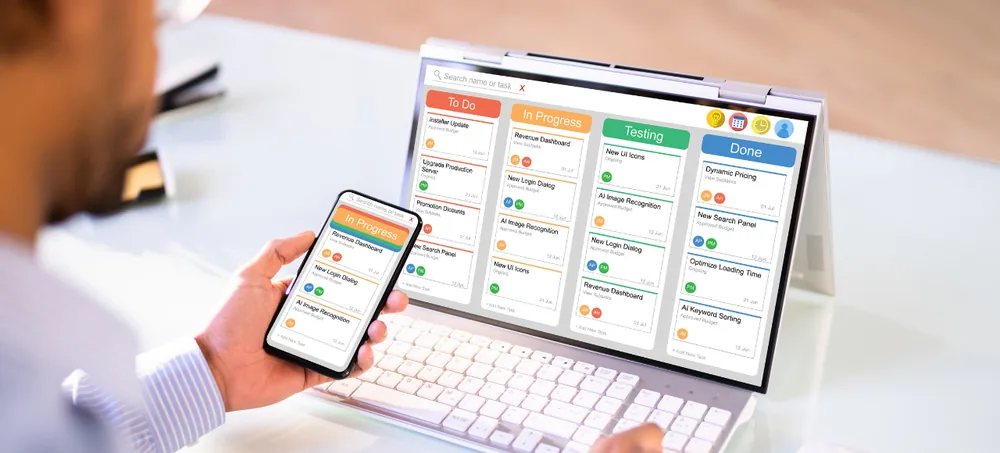
ERPLax provides ERP implementation services in India for businesses that want to replace disconnected software, spreadsheets and manual processes with one structured business management platform. Our implementation approach covers requirement analysis, process mapping, ERP configuration, customization, data preparation, integration, testing, user training, deployment and post-implementation support.
Whether you are implementing ERP for the first time, migrating from legacy software, introducing new modules, moving to cloud ERP or expanding an existing ERP system, ERPLax can define a phased implementation plan based on your business requirements.
Tell us about your ERP implementation requirement and we’ll get back with next steps.
ERPLax is developed by EchoPx Technologies with experience supporting organizations through enterprise software and business process management platforms.
ERPLax has supported 1500+ clients across business requirements, industries, and operating models across India.
1700+ projects delivered across different technology needs support businesses looking for structured ERP solutions.
This experience helps businesses align ERP capabilities with their operational requirements — not just a feature checklist.
Most ERP implementation problems come from the project approach, not the software. Understanding the common challenges helps businesses plan a more structured and realistic implementation.
ERP projects become difficult when scope, workflows and responsibilities are not clearly defined. Requirement analysis and process mapping should be completed before major configuration begins.
Duplicate, incomplete or inconsistent data can create problems after migration. Data should be reviewed and prepared before import.
Key users should participate in requirement discussions, testing and training because they understand practical day-to-day workflows.
Customization should focus on genuine operational requirements. Unnecessary customization can increase complexity and future maintenance effort.
Critical workflows should be tested using realistic scenarios before production rollout.
Employees need clear communication, role-based training and support when transitioning from old systems to ERP.
ERPLax focuses on how your organization operates before deciding how modules should be configured — so implementation reflects real workflows, not a generic template.
We study existing departments, processes, applications, spreadsheets, approval levels, reports, pain points, master data and integration requirements, and map current and proposed workflows for implementation scope.
ERPLax configures organizational settings, users, roles, branches, warehouses, tax settings, document numbering and approval levels, and customizes fields, forms, reports and workflows where standard configuration is not enough.
Business data is reviewed, cleaned, structured and migrated according to agreed scope, and the ERP can be connected with compatible ecommerce, accounting, payment and logistics applications.
ERP implementation is more than activating modules — it is planning, configuring, migrating and testing a system that fits how your business actually runs.
We study existing departments, processes, applications, approval levels, reports and pain points, then map current and proposed workflows so the ERP reflects the correct sequence of activities.
Required modules are selected according to project scope, so businesses can start with essential modules and implement additional functionality in later phases.
ERPLax configures organizational settings, users, roles, branches, warehouses, tax-related settings, document numbering, approval levels, masters and operational rules.
Where standard workflows do not match operational requirements, ERP functionality can be customized with additional fields, forms, reports, dashboards and document formats.
ERP can be connected with compatible ecommerce platforms, payment systems, accounting applications, communication tools, logistics systems and third-party APIs.
Relevant business data is reviewed, cleaned, structured and migrated according to agreed scope, including customers, suppliers, products, opening stock and employee records.
A structured ERP implementation moves through discovery, configuration, data and testing before go-live and ongoing support.
A properly implemented ERP system helps businesses move from disconnected processes to coordinated, reliable operations.
Defined workflows, validations and approvals help teams follow consistent operating procedures.
Connected modules reduce the need for repeated data entry across multiple applications.
Dashboards and reports provide easier access to current business information.
Sales, purchase, inventory, billing and dispatch activities can move through coordinated workflows.
Structured inward, outward, transfer, reservation and warehouse workflows improve stock visibility.
New modules, users, locations and integrations can be introduced as the organization grows.
Connect procurement, raw materials, BOM, production, inventory, quality-related workflows, costing and dispatch.
Connect product, inventory, purchase, POS or online orders, customer data, payments, warehouse, fulfilment, returns and reporting.
Manage dealer orders, pricing, purchase, stock, warehouses, dispatch, returns, outstanding payments and sales activity.
Support receiving, stock locations, movement, picking, packing, dispatch, delivery-related information and operational reporting.
ERP workflows can be configured for project-related purchasing, material usage, vendors, expenses, approvals, billing and reporting depending on business requirements.
ERP can support finance-related operations, purchasing, inventory, customer or patient-related business records, HR and reporting where relevant to the organization’s administrative workflow.
Businesses searching for an ERP implementation company, ERP implementation consultants, or an ERP implementation partner in India need more than a demo — they need a partner that understands how implementation actually works.
ERPLax focuses on how your organization operates before deciding how modules should be configured.
Where required, workflows, forms, reports, approvals and modules can be customized according to project scope.
Implement essential modules first and expand the system phase by phase instead of introducing unnecessary complexity from day one.
Connect ERP with compatible ecommerce platforms, accounting tools, payment services, logistics applications and other third-party platforms.
ERP workflows can be adapted for manufacturing, distribution, retail, ecommerce, warehousing, service and other business models.
Whether you are a small business, a growing SME or a larger enterprise, a phased ERP implementation roadmap keeps the project realistic and lets you expand as operations grow.
Begin with sales, purchase, inventory, billing and customer/supplier masters — the processes with the greatest operational impact.
Introduce CRM, warehouse management, approval workflows, and dashboards and reports once core operations are stable.
Larger organizations can add manufacturing, HRM, POS and advanced automation as transaction volumes and complexity grow.
Connect ecommerce, marketplace, logistics and mobile workflows, and add locations or custom modules as the business expands.
Evaluate whether the provider understands your workflows, supports required modules and integrations, offers appropriate customization, and provides training and post-go-live support.
ERP implementation services cover the activities required to introduce an ERP system into an organization, including requirement analysis, process mapping, configuration, customization, data migration, integrations, testing, user training, deployment and post-go-live support.
Yes. ERPLax provides ERP implementation services for businesses that need configurable and customizable ERP workflows across sales, purchase, inventory, warehouse, manufacturing, billing, CRM, HR and reporting.
A typical ERP implementation process includes requirement analysis, process mapping, scope definition, configuration, customization, data migration, integrations, testing, user training, go-live and post-implementation support.
ERP implementation timelines vary depending on modules, customization, users, locations, integrations, data migration, testing and business process complexity. A realistic schedule should be defined after requirement analysis.
ERP implementation cost depends on the selected modules, number of users, required customizations, integrations, data migration, training, deployment model and support scope. ERPLax can prepare a scope-based quotation after understanding the requirements.
Yes. Businesses can begin with core modules such as sales, purchase, inventory and billing, then add CRM, warehouse, manufacturing, HRM, ecommerce, integrations and advanced reports in later phases.
Yes. Data migration can be included according to the project scope and data availability. The process may include data review, formatting, field mapping, migration and validation.
Yes, subject to available APIs and technical feasibility. ERP can be integrated with compatible ecommerce platforms, accounting systems, payment gateways, communication tools, logistics platforms, mobile applications and other third-party systems.
ERP implementation should connect your departments, standardize business processes and give management a more reliable view of operations. The right implementation plan depends on your existing systems, business workflows, users, locations, data, reporting requirements and integrations. ERPLax helps businesses plan and implement ERP systems around practical operational needs. Whether you are replacing spreadsheets, migrating from legacy software, implementing manufacturing ERP, moving to cloud ERP or expanding an existing system, our team can help define the modules, workflows and implementation phases required.
Plan Your ERP Implementation with ERPLax — discuss your current processes and implementation requirements with our ERP team.
Phone: +91 97399 66977 · Email: info@erplax.com
Specialized Applications
Purpose-built & ready to deploy. Hover to explore, click to learn more.
Testimonials
Real stories from businesses running their operations on ERPLax.
ERPLax gave us real-time visibility into stock across three warehouses. Wastage dropped and our fulfillment time improved almost overnight.
GST e-invoicing used to eat up two days every month. With ERPLax's accounting module it's now automatic and our filings are always on time.
Billing at our stores used to take a minute per customer. ERPLax's POS module cut that to under 15 seconds, even during peak festival rush.
Payroll for 200+ employees across two branches used to take our HR team a full week. ERPLax's HRM module now runs it in a single afternoon.
Tracking batch numbers and expiry across our distribution network was a nightmare on spreadsheets. ERPLax's inventory module made it effortless.
Front desk, housekeeping and billing are now all on one screen. ERPLax's hotel management module has made check-in day a breeze for our staff.
Fee collection, attendance and report cards used to live in three different tools. ERPLax brought it all into one dashboard our staff actually enjoys using.
Tracking material costs and site progress across four active sites was chaos before ERPLax. Now our project managers update status from their phones daily.
Our online store orders now sync straight into inventory and accounting — no more manual entry, no more overselling out-of-stock items.
Our sales team can now see every lead's history and follow-ups in one place. Deal closures are faster and nothing falls through the cracks anymore.
ERPLax gave us real-time visibility into stock across three warehouses. Wastage dropped and our fulfillment time improved almost overnight.
GST e-invoicing used to eat up two days every month. With ERPLax's accounting module it's now automatic and our filings are always on time.
Billing at our stores used to take a minute per customer. ERPLax's POS module cut that to under 15 seconds, even during peak festival rush.
Payroll for 200+ employees across two branches used to take our HR team a full week. ERPLax's HRM module now runs it in a single afternoon.
Front desk, housekeeping and billing are now all on one screen. ERPLax's hotel management module has made check-in day a breeze for our staff.
Fee collection, attendance and report cards used to live in three different tools. ERPLax brought it all into one dashboard our staff actually enjoys using.
Tracking material costs and site progress across four active sites was chaos before ERPLax. Now our project managers update status from their phones daily.
Our online store orders now sync straight into inventory and accounting — no more manual entry, no more overselling out-of-stock items.
Our sales team can now see every lead's history and follow-ups in one place. Deal closures are faster and nothing falls through the cracks anymore.
