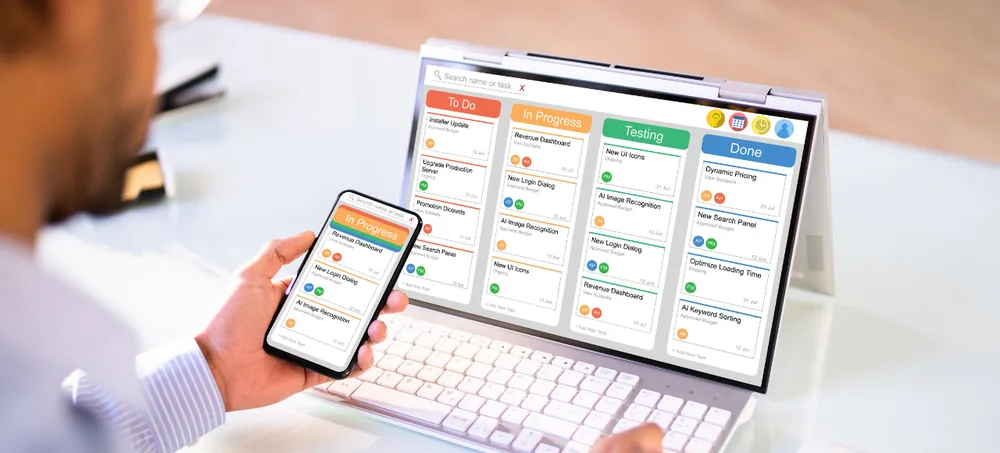
ERP software cost is an important consideration for businesses planning to implement a digital platform for managing operations. ERP pricing depends on multiple factors including business requirements, modules, workflows, configuration needs, integrations, and implementation approach — not only on initial software features. ERPLax helps businesses understand ERP Software Cost India considerations through a configurable cloud ERP platform designed for modern business operations, supporting sales, purchase, inventory, finance, customer management, reporting, and approval processes.
Tell us about your business and we’ll get back with next steps.
ERPLax is developed by EchoPx Technologies with experience supporting organizations through enterprise software and business process management platforms.
ERPLax has supported 1500+ clients across business requirements, industries, and operating models across India.
1700+ projects delivered across different technology needs support businesses looking for structured ERP solutions.
This experience helps businesses align ERP capabilities with their operational requirements — not just a feature checklist.
Businesses evaluating ERP software often compare prices without understanding what drives them. A complete view of ERP Software Cost India factors helps organizations evaluate pricing against real business requirements, not just a quoted number.
Businesses often compare ERP prices without considering differences in functionality, workflows, and implementation scope between providers. A complete evaluation requires understanding the business requirements behind the pricing, not only the number quoted.
ERP implementation involves planning, configuration, workflow setup, and process alignment. ERP implementation cost depends on these requirements, and unclear scoping can make it difficult to understand what is actually being priced.
Businesses evolve over time and may need additional modules, workflows, reports, or integrations. ERP pricing should account for future requirements along with current needs, rather than only the starting scope.
Cloud ERP follows a SaaS model based on required features, processes, configuration, and implementation needs. Understanding this model helps businesses evaluate which ERP solution actually fits their requirements.
Disconnected tools and manual processes cause repeated data entry, difficult reporting, limited visibility, and delays. ERP software automates and integrates these processes, which is itself a factor in evaluating overall ERP value against cost.
Small and medium businesses evaluate ERP affordability against operational value, focusing on essential modules, simple workflows, and core inventory, finance, and sales management needs rather than unnecessary complexity.
ERPLax helps businesses understand ERP software pricing India through a configurable SaaS ERP platform — where cost reflects the modules, configuration, and implementation a business actually needs, not a one-size-fits-all number.
The number and type of modules required — sales, purchase, inventory, finance, customer management, and reporting — directly influences ERP software cost.
Approval workflows, business rules, department processes, and reporting requirements shape the configuration effort behind ERP pricing.
Platform capabilities, required workflows, business processes, and configuration requirements together determine the SaaS ERP cost for a given business.
ERP software cost reflects the features and modules a business needs to manage. Reviewing these features helps evaluate whether an ERP quote matches real operational requirements.
Sales modules involve customer information, sales workflows, order management, approvals, and revenue-related reporting — all factors that influence how a sales module is priced.
Purchase modules require coordination between suppliers, departments, and approvers. The scope of this coordination is one factor businesses evaluate when comparing ERP pricing.
Inventory tracking, stock movement, and purchase coordination add to module scope and cost, particularly for manufacturing, retail, distribution, and trading businesses.
Finance modules connect with transaction management, invoice workflows, and expense processes, which influence configuration effort and overall ERP cost.
Approval workflows, process tracking, information updates, and reporting activities are evaluated when sizing the automation scope within an ERP cost estimate.
Sales information, inventory details, financial information, and business reports vary in depth across ERP solutions, which affects reporting-related pricing.
ERP implementation cost builds up across clear stages. Understanding each stage helps businesses evaluate ERP pricing against the actual work involved.
Understanding ERP software cost factors helps businesses make better-informed decisions, not just lower-priced ones.
Understanding ERP cost factors helps businesses plan their ERP investment against actual requirements rather than reacting to a single quoted figure.
Evaluating ERP cost against business process requirements helps organizations select modules and workflows that genuinely improve process management.
ERP software priced for the right scope of automation helps reduce manual activities such as data entry, approvals, and repetitive reporting.
Choosing ERP cost and scope aligned with reporting needs gives business leaders clearer visibility into sales, inventory, finance, and overall operations.
Right-sized ERP cost evaluation helps small businesses access essential sales, inventory, and finance modules without paying for unnecessary complexity.
Understanding ERP pricing in advance helps businesses plan for additional modules, users, and workflows as operations expand over time.
Manufacturing businesses typically require production, inventory, and quality-related modules, which affects the overall ERP cost compared to simpler trading setups.
Construction businesses often need project-based workflows and purchase coordination, which should be factored into ERP cost evaluation.
Retail businesses generally require sales and inventory-focused modules, which can keep ERP cost closer to essential, day-to-day workflow needs.
Education-sector organizations may need administrative and reporting-focused configuration, which influences ERP cost differently from product-based businesses.
Trading and distribution businesses typically need supplier, customer, and inventory coordination modules, which shape ERP cost around purchase and sales workflows.
Service-based organizations often prioritize customer management and billing workflows, which can keep ERP cost focused on fewer, targeted modules.
Businesses comparing ERP software cost India options need more than a quoted figure — they need clarity on what that figure includes. ERPLax focuses on transparent, requirement-based pricing over generic feature lists.
ERPLax pricing is based on the modules, configuration, and implementation your business actually needs, not a fixed package.
As a cloud SaaS ERP platform, ERPLax removes server and infrastructure costs from the overall ERP cost equation.
ERP customization needs are addressed through configuration within the SaaS platform, keeping customization cost predictable.
ERPLax lets businesses start with essential modules and add more as requirements grow, instead of paying for everything upfront.
19+ years of implementation experience helps ERPLax estimate ERP cost realistically, based on patterns across 1500+ clients.
Evaluating ERP software cost in India takes more than comparing numbers. Here’s how to approach the decision so the price you compare actually matches your requirements.
Map your sales, purchase, inventory, and finance workflows before comparing ERP pricing, so quotes get measured against reality, not marketing.
List the modules relevant to your operations instead of comparing full-suite pricing against a smaller, focused requirement.
Confirm what an ERP cost estimate includes beyond the software itself — configuration, implementation, training, and ongoing support.
Clarify how customization requirements and integration with CRM, accounting, or ecommerce tools affect the overall ERP cost.
Check whether ERP pricing allows you to add modules, users, and workflows later, so cost can scale with your business over time.
ERP software cost depends on factors such as the number of modules required, business process configuration, customization needs, integration requirements, number of users, and the scope of implementation.
Yes. ERPLax is offered as a cloud SaaS ERP subscription, so businesses can access the platform without investing in local servers or infrastructure.
Yes. ERPLax supports configurable modules for small businesses, allowing SMEs to start with essential sales, inventory, and finance workflows and expand as requirements grow.
Yes. The number of users, the modules selected, and the complexity of workflow configuration all influence ERP software cost.
ERP implementation may involve requirement analysis, configuration, data preparation, testing, and user training, and these activities are factored into the overall ERP implementation cost.
Yes. ERPLax is designed on a configurable SaaS platform, so additional modules, users, and workflows can be added as business requirements evolve.
ERPLax reviews your business requirements, modules needed, and implementation scope to provide ERP pricing details relevant to your specific operations.
ERP software pricing generally covers the SaaS platform subscription, selected modules, configuration support, and implementation assistance, based on your business requirements.
Businesses evaluating ERP software cost in India need clarity on modules, configuration, implementation, and SaaS pricing — not just a number. ERPLax provides a configurable cloud ERP platform designed to help you manage sales, purchases, inventory, finance, reporting, and business processes, with pricing based on your actual requirements. With 19+ years of experience, 1500+ clients, and 1700+ projects, EchoPx Technologies helps businesses across India evaluate ERP cost with confidence.
Specialized Applications
Purpose-built & ready to deploy. Hover to explore, click to learn more.
Testimonials
Real stories from businesses running their operations on ERPLax.
ERPLax gave us real-time visibility into stock across three warehouses. Wastage dropped and our fulfillment time improved almost overnight.
GST e-invoicing used to eat up two days every month. With ERPLax's accounting module it's now automatic and our filings are always on time.
Billing at our stores used to take a minute per customer. ERPLax's POS module cut that to under 15 seconds, even during peak festival rush.
Payroll for 200+ employees across two branches used to take our HR team a full week. ERPLax's HRM module now runs it in a single afternoon.
Tracking batch numbers and expiry across our distribution network was a nightmare on spreadsheets. ERPLax's inventory module made it effortless.
Front desk, housekeeping and billing are now all on one screen. ERPLax's hotel management module has made check-in day a breeze for our staff.
Fee collection, attendance and report cards used to live in three different tools. ERPLax brought it all into one dashboard our staff actually enjoys using.
Tracking material costs and site progress across four active sites was chaos before ERPLax. Now our project managers update status from their phones daily.
Our online store orders now sync straight into inventory and accounting — no more manual entry, no more overselling out-of-stock items.
Our sales team can now see every lead's history and follow-ups in one place. Deal closures are faster and nothing falls through the cracks anymore.
ERPLax gave us real-time visibility into stock across three warehouses. Wastage dropped and our fulfillment time improved almost overnight.
GST e-invoicing used to eat up two days every month. With ERPLax's accounting module it's now automatic and our filings are always on time.
Billing at our stores used to take a minute per customer. ERPLax's POS module cut that to under 15 seconds, even during peak festival rush.
Payroll for 200+ employees across two branches used to take our HR team a full week. ERPLax's HRM module now runs it in a single afternoon.
Front desk, housekeeping and billing are now all on one screen. ERPLax's hotel management module has made check-in day a breeze for our staff.
Fee collection, attendance and report cards used to live in three different tools. ERPLax brought it all into one dashboard our staff actually enjoys using.
Tracking material costs and site progress across four active sites was chaos before ERPLax. Now our project managers update status from their phones daily.
Our online store orders now sync straight into inventory and accounting — no more manual entry, no more overselling out-of-stock items.
Our sales team can now see every lead's history and follow-ups in one place. Deal closures are faster and nothing falls through the cracks anymore.
