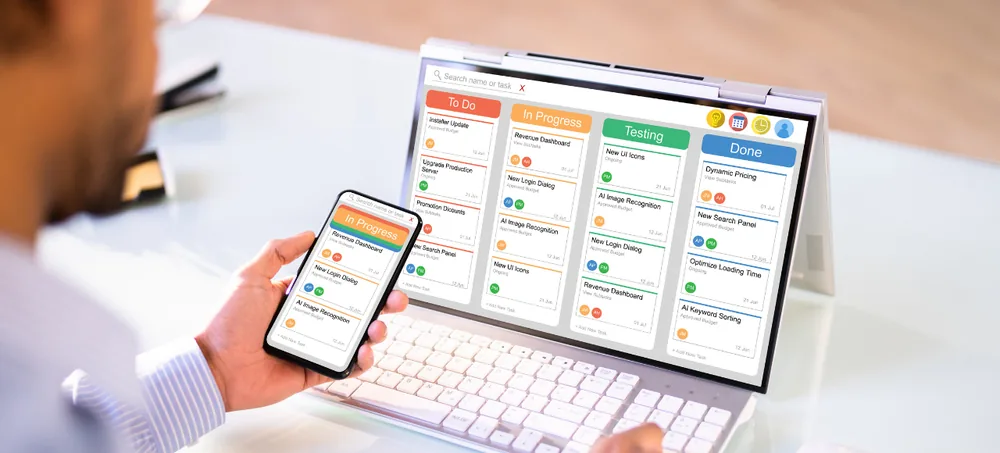
Scale smarter with a complete AI-driven ERP solution built for manufacturing, distribution, and e-commerce businesses etc...

ERP System Implementation India | Cloud ERP Implementation
Cloud ERP Implementation Across India

ERP System Implementation India: Map It Before You Configure It

ERP System Implementation India - ERPLax Cloud ERP Implementation

ERP implementation is not only a software setup process. Before anything is configured, somebody has to write down how sales, purchasing and inventory actually run today — including the steps nobody documented. That mapping stage is what makes the configuration match reality. ERPLax provides cloud ERP implementation solutions built around it, for businesses comparing ERP implementation services India providers offer — whether that is ERP software implementation for one site, an enterprise ERP implementation across several, or an ERP implementation consultant to run the mapping stage alone. Based in Karnataka, delivering nationally.

  • Requirement Analysis
  • Process Mapping
  • ERP Configuration
  • Testing & Validation
  • User Adoption
19+ Years of Experience 1500+ Clients 1700+ Projects

Talk to EchoPx Technologies

Tell us which processes are in scope and we will start with the mapping.

Verified Experts ERP consultants & implementation leads
Free Consultation No Obligation 24hr Response
0YearsExperience delivering technology solutions for organizations.
0ClientsBusinesses supported through technology solutions.
0ProjectsProjects delivered across different business requirements.
Why Implement

Why businesses need ERP implementation in India

ERP system implementation is the process of introducing, configuring and adopting a platform to manage business operations. Four problems account for most of the projects that get approved.

Managing disconnected business processes

Different tools for accounting, inventory, sales and purchasing each support their own tasks well enough. Keeping information consistent between them is the part nobody owns.

Implementation connects those operations through integrated business processes.

Automating manual workflows

Manual processes involve the same repetitive activities every week, and they get slower rather than faster as volumes grow.

  • Data entry
  • Approval follow-ups
  • Report preparation
  • Sharing between departments

Configured workflows support automation and process consistency.

Improving operational visibility

Leaders need accurate information to understand performance and make decisions, and disconnected systems make every report a construction job.

A centralized ERP system connects departmental information into usable visibility.

Supporting business growth

Growing organisations handle increasing operational complexity, and the processes that worked at half the size rarely survive the doubling.

Implementation gives changing business requirements a structured approach.

Business Process Mapping

Every organization has unique workflows

Process mapping identifies how departments currently operate and where automation would actually improve efficiency. It is the stage that turns three loosely-connected habits into three defined workflows — and configuration only works once that is done.

Six things the engagement covers

The implementation approach focuses on understanding business requirements and configuring the SaaS ERP solution according to organizational needs.

  • Business process analysis
  • ERP workflow configuration
  • Module setup
  • Process automation
  • Reporting requirements
  • Operational alignment
The same process, three states Mapping comes between how it runs and how it gets configured AS IT RUNS TODAY MAPPED CONFIGURED Sales process Purchase process Inventory process Skip the middle column and the configuration reflects an assumption, not your business
Cloud ERP Implementation India

How the platform is delivered

A cloud ERP platform that helps businesses implement organized and efficient operational workflows, with centralized business management through connected processes.

Cloud-only SaaS

Delivered on a subscription with hosting, updates, security and backups included. There is no on-premise or self-hosted deployment option, so ERP deployment planning covers process rather than servers.

Configurable ERP workflows

User roles, approval rules, business modules, reports and workflow settings are configured against what the mapping stage recorded.

Customization within the platform

Configuration and development inside the SaaS environment, covering workflows, modules and reports rather than code ownership.

Integration and migration scoped

ERP integration and ERP data migration requirements are defined during implementation by what moves, in which direction and how often.

The Process

ERP system implementation process

Five stages. The ERP implementation process India businesses run successfully tends to spend more time on the first two than feels comfortable, and less time firefighting later.

01

Requirement analysis

Reviewing existing workflows, department responsibilities, approval requirements, reporting needs and business objectives.

02

Business process mapping

Identifying how departments currently operate and where ERP automation can genuinely improve efficiency, rather than where it merely could.

03

ERP configuration

User roles, approval rules, business modules, reports and workflow settings configured according to the mapped processes.

04

Testing and validation

Sales workflow review, purchase process testing, inventory workflow validation, finance process review and reporting checks — against real scenarios.

05

User adoption

Teams need to understand how the platform supports their daily activities. Adoption is helped most by showing people their own work in the system.

06

Organizational readiness

Alongside process and configuration, readiness is one of the factors that most affects how an implementation lands. It is worth assessing honestly at the start.

Common Workflows

What gets mapped, in practice

These three chains come up in almost every mapping exercise. Yours will differ in the detail, and the detail is exactly what gets recorded.

Sales process

Six stages from first contact to invoice, each with an owner and a hand-off to somebody else.

  1. Customer enquiry
  2. Quotation creation
  3. Approval workflow
  4. Sales order
  5. Delivery process
  6. Invoice generation

Purchase process

Procurement crosses departments and suppliers, which is why approvals get mapped in the most detail here.

  1. Purchase requirement
  2. Approval request
  3. Supplier coordination
  4. Purchase order
  5. Goods receipt
  6. Invoice processing

Inventory process

Inventory is where the sales and purchase chains meet, so mapping it usually exposes the gaps in both.

  1. Material receipt
  2. Stock update
  3. Inventory tracking
  4. Order fulfilment
  5. Reporting
What Gets Configured

ERPLax ERP implementation features

Five areas configured from the mapped processes, each validated before anyone switches over.

Sales Workflow Management

Sales operations need structured processes for managing customers, quotations and orders, with each stage visible to the people downstream.

  • Customer management
  • Workflow configuration
  • Order processing
  • Approval workflows
  • Sales reporting

Improved sales coordination and organised customer processes.

Purchase Workflow Management

Procurement requires coordination between departments and suppliers, and usually carries the most approval configuration of any module.

  • Purchase requests
  • Approval processes
  • Purchase orders
  • Purchase tracking

Improved visibility into purchasing activity at every stage.

Inventory Management

Inventory operations need accurate tracking of stock movement, and it is usually the first place users notice the change.

  • Stock information
  • Inventory movement
  • Product details
  • Inventory reporting

Better inventory visibility supporting operational planning.

Finance Process Management

Financial processes need organised workflows and accurate information, connected to the operations that generated each transaction.

Better coordination between finance and other departments.

Reporting and Analytics

Reporting requirements are configured during implementation, because the reports decide what has to be captured upstream in the first place.

Improved operational visibility from connected business activity.

Approval Workflows

Approval rules cut across every module. ERP workflow automation replaces follow-up chasing with a queue that shows where each request actually sits.

Control that does not depend on catching someone at their desk.

Benefits

Benefits of ERP system implementation

Five changes that follow when the mapping was done properly and the configuration reflects it.

Centralized business management

One platform for managing different business activities rather than several tools each holding part of the record.

Improved efficiency

Automation reduces repetitive tasks and keeps workflows consistent as people and volumes change.

Better collaboration

Departments work together using connected information instead of passing versions of it between systems.

Enhanced operational control

Defined approvals and structured transactions give management a real understanding of business activity.

Flexible ERP configuration

Configurable workflows based on business requirements, adjusted as operations change rather than frozen at go-live.

Nothing to host or maintain

Hosting, updates, security and backups sit with the platform, so implementation covers process rather than infrastructure.

Industries

Industries that benefit from ERP implementation India

The five stages run the same way everywhere. Which workflow gets mapped first is what changes by sector.

Manufacturing Industry

Manufacturers manage production, inventory, purchasing, sales and finance, so mapping usually starts where those chains hand over to each other.

Trading and Distribution

Trading companies need visibility across suppliers, inventory and customer orders, which cloud ERP implementation organises through shared records.

Retail Industry

Retail organisations manage sales, inventory and reporting requirements across counters and locations, each with its own local habits to map.

Service Businesses

Service organisations need customer management, billing and reporting workflows configured around how projects actually run.

Small and Medium Businesses

Growing businesses need technology that supports expansion, and usually benefit from mapping two processes well rather than five roughly.

Multi-Location Operations

Businesses across several sites often find the same process is run differently at each one, which the mapping stage surfaces early.

Why ERPLax

Why choose ERPLax for ERP system implementation India?

Businesses comparing an ERP implementation company India-wide, or an ERP implementation partner India-based, should ask how much of the engagement happens before configuration starts.

01

Cloud ERP platform

A cloud-only SaaS ERP platform designed for modern businesses, with no infrastructure workstream alongside the process one.

02

Business process focus

The implementation approach aligns technology with operational requirements rather than the reverse.

03

Configurable workflows

Businesses configure ERP workflows according to their own processes, as recorded during mapping.

04

Integrated business operations

Sales, purchasing, inventory, finance and reporting connected through one platform and one set of records.

05

Experienced technology partner

EchoPx Technologies brings 19+ years of experience delivering technology solutions and ERP consulting.

06

1500+ clients, 1700+ projects

Delivery experience folded back into how each implementation is scoped, sequenced and supported.

FAQs

Frequently asked questions

What businesses ask before starting an ERP implementation in India.

ERP system implementation is the process of configuring and adopting an ERP platform to manage business operations through integrated workflows. It starts by understanding how current processes actually run, not by installing software.

ERP implementation helps businesses automate processes, connect departments, improve visibility and manage operations through centralized business management, so teams stop maintaining separate versions of the same information.

Yes. ERPLax is a cloud-only SaaS ERP platform designed for business process automation and integrated operations. There is no on-premise or self-hosted deployment option, and hosting, updates, security and backups are part of the subscription.

Yes. ERPLax supports configuration and development within the SaaS platform according to business requirements, covering user roles, approval rules, business modules, reports and workflow settings. Customers do not receive source code ownership.

ERP implementation helps organizations create structured workflows, reduce manual processes and improve operational visibility. The gain usually shows up first in the hand-offs between departments rather than inside any single team.

ERP implementation depends on business processes, workflow complexity, configuration requirements, reporting needs and organizational readiness. Readiness is the factor most often underestimated during planning.

Start your ERP implementation with the mapping

A successful implementation creates connected operations, automates workflows and improves business visibility — and it starts by writing down how your sales, purchase and inventory processes actually run today. ERPLax provides cloud ERP implementation solutions with configurable workflows, integrated processes and centralized business management. Talk to EchoPx Technologies about scope and sequencing.

Serving businesses across India info@erplax.in Cloud subscription · No servers to maintain

Specialized Applications

ERP Solutions Built for Your Industry

Purpose-built & ready to deploy. Hover to explore, click to learn more.

View all modules

Testimonials

What Our Clients Say

Real stories from businesses running their operations on ERPLax.