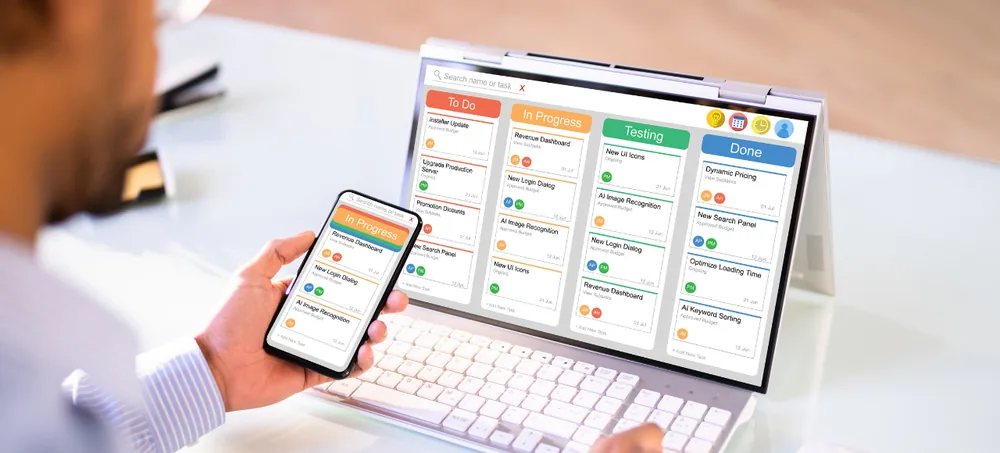
Connect People, Processes and Business Data Through One ERP Platform. ERPLax provides modern ERP technology for Indian businesses that want to connect sales, purchase, inventory, CRM, manufacturing, warehouse, billing, HR, approvals and reporting through one integrated platform. ERP technology helps businesses replace disconnected applications and spreadsheets with structured workflows, centralized data, automation, integrations and real-time reporting. Whether you need a complete ERP implementation or want to begin with selected modules and expand in phases, ERPLax can configure ERP around your operational requirements and future growth.
Tell us about your business and we’ll get back with next steps.
ERPLax is developed by EchoPx Technologies with experience supporting organizations through enterprise software and business process management platforms.
ERPLax has supported 1500+ clients across business requirements, industries, and operating models across India.
1700+ projects delivered across different technology needs support businesses looking for structured ERP solutions.
This experience helps businesses align ERP capabilities with their operational requirements — not just a feature checklist.
Sales teams use CRM applications, purchase teams manage suppliers and orders, warehouses track inventory, manufacturers manage production, HR teams manage employees and management depends on reports from multiple departments. When these functions are handled through separate applications, data can become fragmented and teams may spend unnecessary time reconciling information.
When leads, quotations, sales orders and customer history live in a separate CRM application, sales teams lose visibility into inventory availability and order status, making it harder to move a lead into a quotation and sales order without re-entering information.
Purchase teams managing suppliers and purchase orders through standalone tools cannot easily see when low inventory should trigger a purchase requirement, delaying approvals and creating duplicate supplier records across departments.
Warehouse teams tracking stock in a separate system often work from numbers that do not reflect confirmed sales orders or incoming purchases in real time, so picking, dispatch and reorder decisions are based on outdated information.
When manufacturing demand, material requirements and work orders are tracked outside the main business system, production planning cannot automatically generate material requirements from confirmed sales, slowing the move from order to dispatch.
HR teams managing employee records, attendance and leave separately from operational systems find it difficult to route approvals automatically or connect employee workflows to the departments those employees actually support.
Management depending on reports pulled manually from multiple departments often waits for consolidated numbers instead of having dashboards that update automatically from operational data as transactions happen.
ERP technology refers to the software architecture, databases, business workflows, automation, cloud infrastructure, integrations and interfaces used to operate an enterprise resource planning system. A modern ERP platform combines business applications with centralized data so that sales, purchasing, stock, production, customer management and reporting can work together instead of maintaining separate versions of the same information.
Maintain customers, suppliers, products, inventory, transactions, employees and operational records in one structured system instead of separate applications per department.
Support centralized access for authorized users working from branches, offices, warehouses or remote locations, without maintaining disconnected local systems.
Automate approvals, alerts, calculations, notifications and repeatable business processes so one transaction can trigger related activity across departments.
A modern ERP platform connects the day-to-day activities each department already runs — so the same record moves from lead to delivery without re-entry.
Manage leads, enquiries and customer history in one place so sales opportunities and pipeline reports stay connected to the rest of the business.
Move a confirmed lead through quotation, sales order and delivery without leaving the platform, with pricing and discount approvals built into the flow.
Route purchase requests through RFQ, supplier quotations and approval workflows so goods receipt and purchase returns stay reconciled with inventory.
Track stock inward, outward, transfer and adjustment with available and reserved stock visible across every location in real time.
Run multiple warehouses with bin-level location tracking, so receiving, picking, packing and dispatch preparation follow a consistent process.
Connect Bill of Materials, production planning and work orders to material requirement and finished goods receipt for full production costing visibility.
ERP implementation moves through defined stages, from requirement discussion to go-live and beyond, so the ERP roadmap stays based on business priorities and process dependencies.
Connecting departments through one ERP platform changes how operational information moves through the business, not just where it’s stored.
Maintain operational data in one connected system instead of separate records per department.
Provide authorized users and management with easier access to current business information as transactions happen.
Automate repetitive tasks, approvals and notifications so teams spend less time on administrative follow-up.
Use permissions, validations and workflow rules to standardize operations across every department.
Shared records reduce duplicate data entry across departments, cutting down on reconciliation errors.
Add modules, users, locations and workflows as business requirements grow, without re-platforming.
Connect sales, procurement, BOM, production, inventory, warehouse, costing and dispatch through one ERP platform.
Manage dealers, customer orders, pricing, purchase, multiple warehouses, dispatch, returns and outstanding payments.
Connect purchasing, stock, billing, customers, branches and management reporting.
Integrate online orders, inventory, warehouse, billing, fulfilment, courier workflows and returns.
Manage customers, orders, dispatch, documentation, billing and operational workflows based on requirements.
Manage leads, quotations, customers, service requests, tasks, billing, employees and reporting.
Businesses searching for ERP software India, ERP solutions India or ERP implementation in India need more than a feature list — they need a platform that configures around how their teams actually work.
ERPLax can configure and develop ERP workflows according to specific business requirements, not just standard templates.
Enable centralized access for branches, warehouses, offices and remote teams without maintaining local servers.
Connect compatible ecommerce, payment, accounting, logistics and communication systems to the ERP platform.
Start with priority modules and expand functionality phase by phase as operational requirements grow.
Support requirement analysis, configuration, training, go-live and future enhancement — not just the initial rollout.
Small and medium businesses often reach a stage where spreadsheets and standalone applications become difficult to manage. ERPLax supports modular ERP implementation so businesses can begin with the most important functions and expand gradually.
Document your current sales, purchase, inventory and billing process before comparing ERP options, so proposals get measured against your actual operations.
Begin ERP implementation with the functions that affect daily operations most directly, rather than deploying every module at once.
Add customer management, warehouse workflows and structured approvals once the core modules are stable and teams are comfortable.
Bring in production, HR and deeper reporting once operational data from earlier phases is reliable enough to build on.
Connect ecommerce channels, mobile workflows and third-party integrations as the business and its ERP roadmap mature together.
ERP Technology India refers to enterprise resource planning software and related technologies used by Indian businesses to manage sales, purchase, inventory, CRM, manufacturing, HR, billing, reporting and business workflows.
Yes. ERPLax can support cloud-based ERP deployment for businesses that require centralized and remote access.
Yes. ERP workflows can automate approvals, notifications, stock alerts, document generation, purchase requirements, task creation and other repetitive processes.
Yes. Subject to technical feasibility and available APIs, ERP can integrate with ecommerce platforms, payment gateways, logistics systems, accounting applications, communication tools and other third-party platforms.
Yes. Manufacturing ERP can support BOM, production planning, work orders, material requirements, inventory, WIP, finished goods, costing, warehouse and production reporting.
Yes. ERPLax can customize ERP modules, fields, forms, workflows, reports, permissions and integrations according to business requirements.
Yes. Small and growing businesses can begin with essential modules such as sales, purchase, inventory and billing, then add more functionality as requirements grow.
ERP pricing depends on modules, users, integrations, customization, deployment and support requirements. ERPLax can prepare a scope-based quotation after requirement analysis.
If your business is using disconnected software, spreadsheets or manual workflows, ERPLax can help you create a modern ERP environment that connects teams, processes and business data. Whether you need cloud ERP, custom modules, workflow automation, integrations, dashboards or industry-specific functionality, the solution can be structured around your operational requirements. Book a discussion with ERPLax to evaluate your ERP requirements.
Phone: +91 97399 66977 — Email: info@erplax.com
Specialized Applications
Purpose-built & ready to deploy. Hover to explore, click to learn more.
Testimonials
Real stories from businesses running their operations on ERPLax.
ERPLax gave us real-time visibility into stock across three warehouses. Wastage dropped and our fulfillment time improved almost overnight.
GST e-invoicing used to eat up two days every month. With ERPLax's accounting module it's now automatic and our filings are always on time.
Billing at our stores used to take a minute per customer. ERPLax's POS module cut that to under 15 seconds, even during peak festival rush.
Payroll for 200+ employees across two branches used to take our HR team a full week. ERPLax's HRM module now runs it in a single afternoon.
Tracking batch numbers and expiry across our distribution network was a nightmare on spreadsheets. ERPLax's inventory module made it effortless.
Front desk, housekeeping and billing are now all on one screen. ERPLax's hotel management module has made check-in day a breeze for our staff.
Fee collection, attendance and report cards used to live in three different tools. ERPLax brought it all into one dashboard our staff actually enjoys using.
Tracking material costs and site progress across four active sites was chaos before ERPLax. Now our project managers update status from their phones daily.
Our online store orders now sync straight into inventory and accounting — no more manual entry, no more overselling out-of-stock items.
Our sales team can now see every lead's history and follow-ups in one place. Deal closures are faster and nothing falls through the cracks anymore.
ERPLax gave us real-time visibility into stock across three warehouses. Wastage dropped and our fulfillment time improved almost overnight.
GST e-invoicing used to eat up two days every month. With ERPLax's accounting module it's now automatic and our filings are always on time.
Billing at our stores used to take a minute per customer. ERPLax's POS module cut that to under 15 seconds, even during peak festival rush.
Payroll for 200+ employees across two branches used to take our HR team a full week. ERPLax's HRM module now runs it in a single afternoon.
Front desk, housekeeping and billing are now all on one screen. ERPLax's hotel management module has made check-in day a breeze for our staff.
Fee collection, attendance and report cards used to live in three different tools. ERPLax brought it all into one dashboard our staff actually enjoys using.
Tracking material costs and site progress across four active sites was chaos before ERPLax. Now our project managers update status from their phones daily.
Our online store orders now sync straight into inventory and accounting — no more manual entry, no more overselling out-of-stock items.
Our sales team can now see every lead's history and follow-ups in one place. Deal closures are faster and nothing falls through the cracks anymore.
