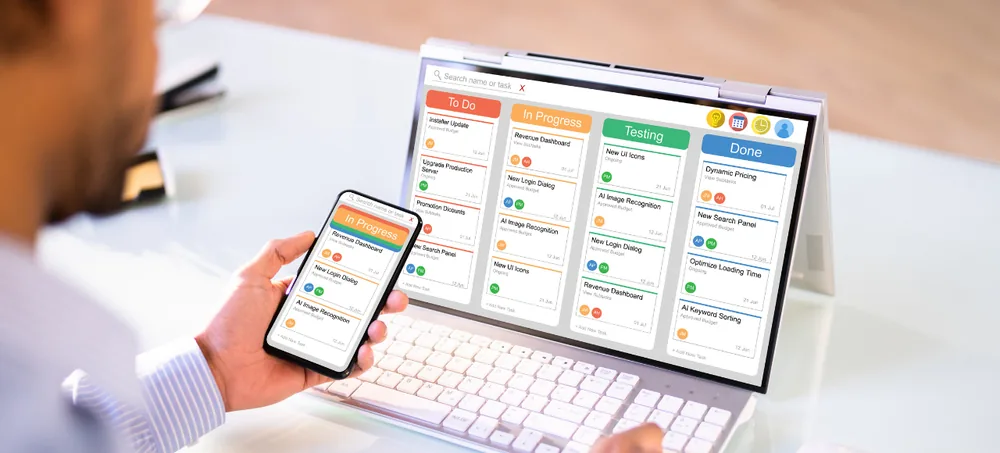
Cloud-based laundry ERP with POS billing, garment tracking, order processing, inventory, pickup & delivery, CRM and finance. Whether you operate a neighborhood laundry shop, a dry cleaning outlet, a wash-and-fold service, a multi-branch chain or a commercial laundry facility, ERPLax can be configured according to your operational requirements.
Get a free walkthrough tailored to your laundry business.
Laundry operations combine physical garment processing with customer service and financial administration — managing these activities becomes difficult when each department maintains separate records.
Paper registers may record a customer's name, garment quantity and collection date, but they can be difficult to search as transactions increase, and different employees may record garment descriptions or service instructions differently.
A billing-only application may calculate the price of an order without maintaining information about how the garments are processed, so employees may need to enter the same quantities and services into multiple systems.
A customer may submit shirts for washing, trousers for ironing and a jacket for dry cleaning — when these garments move through different work areas, employees need an appropriate way to maintain item references and processing instructions.
A reception employee may need to know whether an order is being cleaned, inspected or packed; without recorded processing stages, the employee may have to contact the laundry department directly for an update.
Doorstep laundry businesses must manage customer addresses, collection appointments, field assignments and delivery handover — when handled through separate messages, pending collections become difficult to review.
Detergents, chemicals, garment covers and packaging supplies need structured stock records, while purchasing teams separately need to verify requirements, place supplier orders and record received materials.
Commercial laundry providers may have different price agreements for different customers — a hotel billed by linen category and a uniform service billed on different rates both call for configurable pricing and customer account workflows.
Orders need to remain associated with the correct customer and originating branch as garments move between locations, while invoices, payments, balances and expenses stored across disconnected systems make consolidated reporting difficult.
Laundry shops ERP software is an enterprise resource planning solution designed to connect the operational and administrative processes of a laundry business. It brings customer service orders, garment processing, invoicing, inventory, purchasing, finance and reporting into related workflows. A complete laundry transaction does not end when the customer receives a booking receipt — garments must be received, inspected, sorted, cleaned, finished, checked, packed and returned.
Laundry shop management software generally focuses on customer bookings, processing, billing and delivery. Laundry ERP extends the workflow into related inventory, procurement, finance, approvals and management reporting.
Laundry POS software supports the service counter, recording customers, garment details, prices, invoices and payments. Laundry ERP connects these transactions with processing, fulfillment, stock and wider business administration.
Laundry CRM focuses on customer profiles, order histories, enquiries and relationships. ERP extends the connected records into relevant operational and financial transactions.
Configurable ERPLax workflows connecting customer orders, garment processing, POS billing, inventory, purchasing, finance and reporting for laundry businesses.
Configurable customer order records containing garment descriptions, selected services, quantities or weights, prices, processing instructions and expected completion information, originating at the counter, a scheduled collection or an online booking interface.
Operational value: Connected information from booking through processing, billing and fulfillment.
Configurable POS processes for customer lookup, service entry, price calculation, invoice preparation and payment recording, with garment-wise, weight-based or package pricing configured according to the business's requirements.
Operational value: More organized customer transactions and billing records.
Configurable invoice workflows linked to customer orders, covering relevant charges, approved adjustments, payment records and customer balances, with GST-related invoice fields considered for Indian businesses.
Operational value: Connected service, invoice and payment records.
Configurable status workflows reflecting the organization's actual processing stages — receiving, sorting, cleaning, drying, ironing, inspection and packing — so employees can update records as work progresses.
Operational value: Clearer work-in-progress information for reception and supervisors.
Individual garment references containing relevant service descriptions, handling instructions, condition notes and processing information, with the level of detail planned according to how the organization handles physical items.
Operational value: Better item identification and processing coordination.
Configurable identification workflows through compatible scanning devices at receiving, finishing or packing, plus evaluation for RFID integration where appropriate tags, readers and technical interfaces are available — relevant for commercial laundries and institutional textile providers.
Operational value: Consistent identification references and opportunities for more automated tracking where suitable equipment is implemented.
Configurable customer records that can include contact details, addresses, order histories and billing references, with company accounts, service locations and agreed price arrangements for commercial customers.
Operational value: Centralized customer and transaction information.
Configurable service order workflows that can be connected with suitable customer-facing interfaces, covering selected services, customer address, preferred collection date and special instructions.
Operational value: Better continuity between booking information and operational processing.
Configurable workflows for collection requests, scheduling, assignments, dispatch and recorded fulfillment status, remaining associated with the original customer order through to delivery or counter handover.
Operational value: More organized pickup and delivery administration.
Inventory workflows for item records, goods receipts, material issues and stock transfers, connected with procurement workflows for purchase requisitions, approvals, supplier orders and goods receipts.
Operational value: More structured stock records and connected purchasing processes.
Configurable customer and billing workflows for charges by linen category, garment type, quantity, weight or agreed service contract, including customer-specific prices, agreed billing periods and invoice references.
Operational value: More consistent recording of agreed commercial pricing and billing.
Configurable processing records planned around relevant orders, batches, departments and service stages, useful when a commercial laundry receives several linen categories and sorts them into processing groups.
Operational value: More organized work assignment and processing documentation.
Workflows for invoice records, payments, receivables and applicable expenses, connecting operational transactions with the accounts team's review of customer orders and supplier purchasing.
Operational value: More connected operational and accounting information.
Configurable approval workflows for special discounts, purchase requests, invoice adjustments or inventory corrections, alongside configurable reporting for customer orders, processing activity, invoices, payments, inventory and branch transactions.
Operational value: Clearer responsibilities and better visibility into recorded business activity.
Configurable business-location records and relevant transaction workflows, so an order can be associated with its originating branch while garments are processed through another location.
Operational value: Centralized administration with relevant branch-level visibility.
A complete laundry ERP workflow connects the activities required to receive, process and fulfill customer orders, from booking through delivery and financial reporting.
The business creates or retrieves the relevant customer record, then employees record garment categories, quantities or weight, selected services, prices and relevant instructions against an appropriate transaction reference.
The business records the garments actually received, documenting condition notes where required, then associates garments or batches with the correct customer order and sorts items according to the required cleaning process.
Relevant work is assigned to appropriate processing departments, and employees perform washing, drying, dry cleaning, ironing or other selected services with status information recorded.
Completed garments are reviewed before packing, with items requiring additional treatment following a suitable exception or reprocessing process.
The invoice is prepared using the applicable service prices and approved charges, with relevant payments or outstanding balances maintained against the transaction.
Completed items are associated with the relevant customer order and prepared for handover, with collection or delivery activities following the selected fulfillment workflow.
Material transactions, purchase requests and supplier receipts can be recorded through related ERP modules as processing and fulfillment continue.
Managers review operational and financial information based on transactions recorded in the system.
The practical value depends on the selected modules, the quality of recorded information and the organization's operational procedures.
ERPLax helps connect customer orders, processing records, billing, inventory and business administration through related ERP workflows, so employees refer to relevant transaction information rather than separate departmental records.
Configured processing stages help employees understand which activities have been recorded and what remains pending, so reception staff can review order status when responding to a customer enquiry.
Configured service catalogs and pricing rules help employees apply the business's established billing procedures, with commercial customer arrangements evaluated separately from retail price lists.
Customer contact details, service histories, invoices and relevant financial records can remain associated with the appropriate customer account.
Individual garment, order or batch references help organize physical textile information throughout processing, with barcode, QR code and RFID requirements considered according to the selected operational model.
Collection requests, dispatch information and fulfillment records can remain associated with customer orders — useful for doorstep laundry services or regular commercial customer collections.
Material receipts, stock issues, transfers and supplier purchases can be recorded through related ERP processes, while invoice, payment, purchase and expense records support more coordinated financial administration.
Configurable user roles and approval workflows help organize who performs and reviews particular business activities, with configuration and development available within the SaaS platform according to agreed requirements.
Businesses operating several outlets can configure appropriate branch structures and relevant centralized reporting.
Different laundry business models have different operational priorities — ERPLax can be configured according to the services a business actually provides.
Retail laundry shops typically need customer registration, garment intake, service pricing, POS billing and order tracking — ERPLax can be configured around these core requirements as a focused starting point.
Dry cleaning operators handle garments with different fabrics, care instructions and prices, often requiring individual garment identification, condition notes and service-specific processing stages.
Wash-and-fold businesses may use weight-based pricing or selected service packages, with a workflow commonly including receiving, weighing, washing, drying, folding, packing and delivery.
Home pickup businesses need customer addresses, collection requests, scheduled activities and dispatch information, with customer-facing applications and advanced logistics integrations evaluated according to requirements.
Laundry chains operating several collection outlets and central processing facilities need relevant customer, branch, order and financial records through configurable multi-location business structures.
Attended laundromats offering managed washing, drying, ironing or folding services can use relevant customer order and POS billing processes; self-service machine payment or cycle-control integration requires separate assessment.
Commercial laundries serving hotels, restaurants, institutions and other business customers may need bulk orders, customer-specific rates, recurring invoicing, material inventory and purchasing.
Industrial laundry facilities processing uniforms, workwear and other reusable textiles may need department-based work records, item or batch tracking, material administration and dispatch reconciliation.
Hotels managing guest garments, employee uniforms, housekeeping linen and department-level textile movements can organize the relevant service, inventory and billing processes through ERP configuration.
Healthcare institutions requiring records for linen receipt, processing, distribution and department returns can use administrative and inventory workflows, with specialized clinical handling remaining subject to institutional procedures.
Businesses providing reusable uniforms or textiles may need customer-specific item references, recurring collection cycles and relevant commercial billing, with rental and replacement workflows reviewed during implementation.
Hostels, PG accommodations and educational institutions may require bulk student laundry processing, batch tracking and periodic billing arrangements configured for the applicable institutional workflows.
Different ERP products emphasize different parts of laundry operations — evaluate order management, pricing, logistics, inventory and financial administration as connected functions rather than isolated feature names.
Determine whether the proposed software can represent the business's service categories, garment quantities, processing stages and customer references.
Review garment-wise prices, weight-based rates, customer-specific pricing and invoice requirements across retail laundry, dry cleaning and contract laundry businesses.
Decide whether the business requires overall order status, individual garment identification, processing batches or linen stock movement records.
Consider scheduled pickups, delivery assignments, packing verification and relevant customer handover procedures.
Evaluate materials, stock locations, replenishment requests, supplier transactions and approval procedures.
Determine the invoice, receivable, expense and operational reports required by managers.
Barcode scanners, RFID readers, payment services, customer portals and industrial equipment require a clear technical assessment.
Establish which processes can be configured and which require additional development within the platform.
Use representative transactions from your own laundry business to evaluate the proposed solution.
Laundry businesses across India may use different service and billing structures — retail shops charging per garment, wash-and-fold businesses using weight-based prices, and commercial providers with agreed institutional rates.
Relevant GST-related invoice fields can be configured according to applicable Indian accounting requirements, while counter transactions involving cash, UPI, cards or bank transfers can be recorded through configured billing workflows.
Businesses can maintain records for detergents, cleaning chemicals, packaging supplies and relevant purchasing, with order-level, garment-level and batch-related tracking requirements evaluated according to the business model.
Laundry businesses in Bengaluru may serve residential customers, dry cleaning clients, commercial establishments, hotels and institutions — ERPLax provides a SaaS ERP approach for businesses evaluating connected management software in Bengaluru and elsewhere in India.
Laundry ERP pricing depends on the organization's business model and the ERP functions required — ERPLax follows a cloud-only SaaS subscription model shaped by the factors below.
Customer management, order processing, POS, inventory, purchasing, finance and reporting.
Reception employees, processing personnel, purchasing staff, accounts teams and managers may need different ERP functions.
Collection outlets, processing facilities and stock locations can influence configuration requirements.
Garment categories, commercial price lists, approvals and specialized processing workflows may require configuration.
Barcode, QR code and RFID requirements can involve additional interfaces and compatible equipment.
Online booking websites, customer portals or mobile applications should be scoped according to the intended functions.
Route planning, live GPS tracking and dedicated driver applications require appropriate external services.
Existing customer, service, inventory and invoice records may need review before migration, with testing, employee training and operational rollout scoped to the business's processes and complexity.
ERP implementation begins with understanding how the business currently operates — a retail laundry shop has different needs from a commercial processing facility, and the selected workflows should reflect those differences.
Identify the services offered, customer types, number of locations, employee responsibilities and operational challenges.
Document booking, garment receipt, identification, sorting, cleaning, inspection, billing and fulfillment.
Choose relevant customer, order, POS, inventory, purchasing, finance and reporting functions.
Configure service catalogs, pricing rules, user roles, branch structures, statuses and approval processes.
Review barcode devices, RFID infrastructure, customer booking portals, communication services and external payment providers where required.
Prepare customer records, price lists, supplier information and other relevant data for migration.
Review representative orders and administrative transactions before operational adoption.
Train reception, processing, purchasing, accounts and management users according to their responsibilities, then adopt the configured workflows according to the agreed implementation plan.
ERPLax provides a configurable SaaS ERP foundation for businesses requiring laundry processes connected with related administration.
ERPLax provides a configurable SaaS ERP foundation for businesses requiring laundry processes connected with related administration.
Maintain relevant customer profiles, service orders and processing information.
Configure service pricing, invoices and payment records.
Support item, order or batch records according to business needs.
Connect collection and dispatch activities with customer transactions.
Organize operational supplies, stock movements and purchasing procedures.
Maintain relevant invoice, receivable, purchasing and expense information.
Configure business locations and appropriate centralized reporting.
Evaluate barcode, QR code, RFID, online booking, payment and communication requirements.
ERPLax is delivered as a cloud ERP platform through a subscription arrangement.
Customization means configuration and development within the SaaS platform according to agreed requirements.
ERPLax is developed by EchoPx Technologies, with 19+ years of experience, 1500+ clients and 1700+ projects.
Laundry shops ERP software connects customer bookings, garment processing, POS billing, inventory, purchasing, finance and reporting through related business workflows. ERPLax supports these activities through a configurable cloud SaaS ERP platform.
The best laundry ERP software depends on the business's services, operating locations, required modules, integrations and budget. ERPLax can be evaluated by businesses seeking connected laundry operations and ERP administration.
Yes. ERPLax is a cloud-only SaaS ERP platform delivered through a subscription model.
Yes. ERPLax can be configured for customer registration, service orders, POS billing, garment information and relevant management reports.
Yes. ERPLax supports configurable business-location structures, related order workflows and centralized reporting.
Yes. ERPLax supports configurable service pricing, invoices, payment records and relevant customer balances.
Yes. POS workflows can include customer selection, garment information, service entry, price calculation and invoice preparation.
GST-related invoice fields can be configured according to applicable business and accounting requirements.
Yes. ERPLax supports configurable customer orders containing garment details, selected services, prices and processing information.
Yes. Orders can follow configurable processing statuses corresponding to the business's operational stages.
Garment-level identification and processing records can be configured according to business requirements.
Barcode identification workflows can be evaluated with compatible labels, printers, scanning devices and appropriate interfaces.
QR code-based identification can be incorporated through relevant configuration and suitable scanning interfaces.
RFID integration feasibility depends on the selected tags, readers, supporting software and available technical interfaces. Specialized RFID functions must be included in the agreed scope.
Yes. ERPLax inventory workflows can support stock records, goods receipts, material issues, transfers and reporting.
Relevant cleaning material stock records can be managed through configured inventory workflows.
Yes. Purchasing workflows can include material requests, approvals, supplier orders and goods receipts.
Yes. ERPLax can support company accounts, service orders, relevant customer-specific pricing and billing arrangements.
Relevant price rules and customer-specific billing arrangements can be evaluated through ERP configuration. Specialized contract controls require explicit scope confirmation.
ERPLax can support relevant bulk order records, processing workflows, inventory, procurement and financial administration. Direct machine integration requires separate technical assessment.
ERPLax can support appropriate linen inventory, item movement and service order workflows according to the business's requirements. Specialized RFID and automated counting capabilities depend on integrations.
Yes. ERPLax supports configurable garment records, dry cleaning services, processing instructions, order tracking and billing.
Yes. Relevant weight-based pricing, order processing and fulfillment workflows can be configured.
Online booking can be supported through suitable connected websites, portals or application interfaces, depending on the agreed implementation scope.
Yes. ERPLax supports configurable collection requests, scheduling, assignments, dispatch and fulfillment records.
Live GPS tracking requires suitable mapping and driver application integrations. Recorded order or delivery status is separate from live vehicle location.
Route optimization requirements can be evaluated through appropriate external logistics or mapping integrations.
Yes. ERPLax supports relevant customer profiles, contact details, addresses, transaction histories and billing references.
Yes. Customer-related ERP workflows can connect account information, orders, invoices and relevant service transactions.
Specialized loyalty and rewards requirements can be evaluated for suitable configuration or integration. They are not assumed to be included in every implementation.
Yes. ERPLax can support relevant guest laundry, department references, linen inventory and billing workflows.
ERPLax can support appropriate administrative records for linen receipt, processing, movement and distribution. Specialized healthcare handling remains subject to the institution's procedures.
Relevant uniform categories, customer accounts, processing records and service pricing can be configured according to business requirements.
Yes. Configurable reports can use relevant invoice, payment, purchasing, inventory and expense information.
Customer invoices and payment records can support the review of outstanding balances through configured finance workflows.
Yes. Appropriate purchase requisition and approval workflows can be configured.
External accounting integrations can be assessed according to the selected application, available interfaces and agreed requirements.
Notification requirements can be evaluated through compatible communication service integrations.
Relevant business locations, order movements and processing workflows can be configured according to the organization's operating model.
Yes. ERPLax supports configuration and development within its SaaS platform according to agreed business requirements.
ERPLax can support changing operational requirements through appropriate configuration of modules, services, users, locations and business workflows.
Yes. ERPLax is a cloud-only SaaS ERP subscription platform.
Pricing depends on the required modules, users, business locations, configuration, integrations and implementation scope. Contact the ERPLax team for a subscription quotation.
Implementation depends on workflow complexity, data preparation, selected modules, integrations, testing and employee training.
Migration feasibility depends on the format and quality of the existing records and the intended ERP data structure.
Businesses can request a demonstration to review relevant ERPLax functionality and discuss their operational requirements.
Contact the ERPLax team with your business model, service types, number of locations, required ERP modules and integration needs. The proposed configuration can then be evaluated through a requirements-based discussion.
Manage laundry orders, POS billing, garment tracking, inventory, pickup and delivery, purchasing and finance through one ERP platform — ERPLax is cloud-only, subscription-based laundry shops ERP software.
Explore relevant customer, order, POS billing, inventory, purchasing and management reporting workflows.
Discuss your ERP modules, users, branches, processing facilities, business-specific configuration and integration requirements.
Review your laundry business processes and evaluate suitable connected ERP workflows.
+91 97399 66977 · info@erplax.com · www.erplax.com
Laundry ERP Software in Bangalore · Laundry Shops ERP Software in Bangalore · Laundry Shop Management System · Laundry Management System Software · Software Laundry Management System · Online Laundry Management System · Laundry Service Chains CRM Software · Laundry Tracking Software · Laundry Application Management System · Laundry Management Software Free Download Guide
Specialized Applications
Purpose-built & ready to deploy. Hover to explore, click to learn more.
Testimonials
Real stories from businesses running their operations on ERPLax.
ERPLax gave us real-time visibility into stock across three warehouses. Wastage dropped and our fulfillment time improved almost overnight.
GST e-invoicing used to eat up two days every month. With ERPLax's accounting module it's now automatic and our filings are always on time.
Billing at our stores used to take a minute per customer. ERPLax's POS module cut that to under 15 seconds, even during peak festival rush.
Payroll for 200+ employees across two branches used to take our HR team a full week. ERPLax's HRM module now runs it in a single afternoon.
Tracking batch numbers and expiry across our distribution network was a nightmare on spreadsheets. ERPLax's inventory module made it effortless.
Front desk, housekeeping and billing are now all on one screen. ERPLax's hotel management module has made check-in day a breeze for our staff.
Fee collection, attendance and report cards used to live in three different tools. ERPLax brought it all into one dashboard our staff actually enjoys using.
Tracking material costs and site progress across four active sites was chaos before ERPLax. Now our project managers update status from their phones daily.
Our online store orders now sync straight into inventory and accounting — no more manual entry, no more overselling out-of-stock items.
Our sales team can now see every lead's history and follow-ups in one place. Deal closures are faster and nothing falls through the cracks anymore.
ERPLax gave us real-time visibility into stock across three warehouses. Wastage dropped and our fulfillment time improved almost overnight.
GST e-invoicing used to eat up two days every month. With ERPLax's accounting module it's now automatic and our filings are always on time.
Billing at our stores used to take a minute per customer. ERPLax's POS module cut that to under 15 seconds, even during peak festival rush.
Payroll for 200+ employees across two branches used to take our HR team a full week. ERPLax's HRM module now runs it in a single afternoon.
Front desk, housekeeping and billing are now all on one screen. ERPLax's hotel management module has made check-in day a breeze for our staff.
Fee collection, attendance and report cards used to live in three different tools. ERPLax brought it all into one dashboard our staff actually enjoys using.
Tracking material costs and site progress across four active sites was chaos before ERPLax. Now our project managers update status from their phones daily.
Our online store orders now sync straight into inventory and accounting — no more manual entry, no more overselling out-of-stock items.
Our sales team can now see every lead's history and follow-ups in one place. Deal closures are faster and nothing falls through the cracks anymore.
