
Learning Management System (LMS) Software for Digital Learning, Course Management and Training Operations
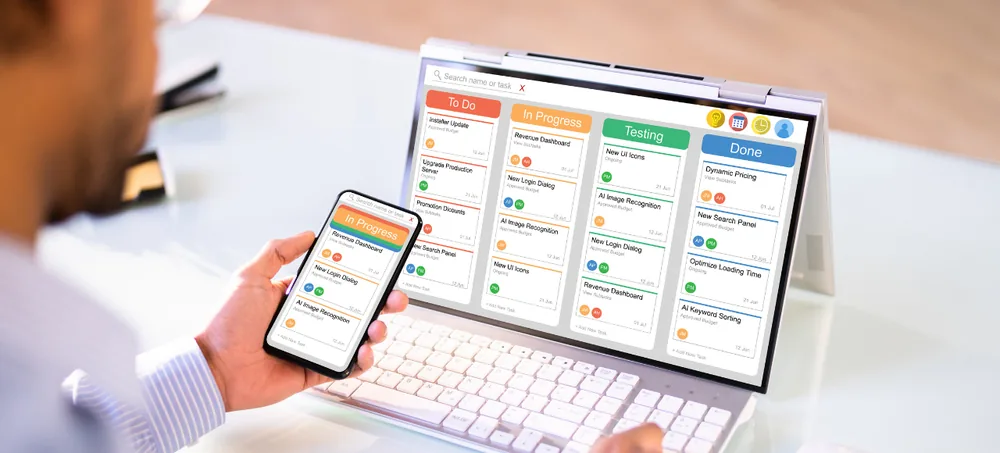
Organize Courses. Manage Learners. Track Training Activities. ERPLax connects learning management system software with cloud ERP workflows — course catalogs, enrollment, instructor assignments, assignments, assessments, progress tracking and completion records — within one configurable platform, built on 19+ years of EchoPx Technologies experience.
Get a Free Learning Management System (LMS) Consultation
Why Schools and Businesses Need a Structured LMS Platform
Administrators coordinate learner enrollment and course schedules, instructors prepare materials and assignments, students complete activities and assessments, and managers review training progress — often without connected records.
Scattered Learning Materials
Learning materials may be distributed through email, shared folders, messaging applications and separate teaching tools, making it harder for students or employees to identify the correct resources for a course.
Manual Learner Enrollment
Administrators may register learners through spreadsheets or separate databases, making it harder to maintain consistent relationships between learners, courses, batches and instructors.
Unclear Course Responsibilities
Training programs require instructors, coordinators, assessors and administrators. When responsibilities are not clearly recorded, learning activities may depend on informal communication.
Disconnected Assignments & Assessments
Assignments may be distributed through one application while grades or assessment results are recorded elsewhere, making it harder to maintain relevant references between activities.
Limited Learning Progress Visibility
A teacher may need to identify which assignments remain pending, or a training manager may need to review which employees completed a program — without consistent status records, this requires manual checking.
Difficult Training Scheduling
Classes, workshops and employee training sessions may involve different instructors, locations and dates, requiring a structured training calendar.
Incomplete Employee Training Records
If employee training histories are stored separately from personnel records, HR administration becomes more complicated.
Unorganized Course Completion
Organizations may require defined conditions — attendance, assessment results or other activities — before a learner is marked as having completed a program.
Multiple Departments or Campuses
Schools with several sections, universities with multiple departments and enterprises with different teams may require separate learning structures and centralized administration.
Disconnected Fees & Training Payments
If course enrollment and billing are managed independently, administrators may need to reconcile registrations with invoice records.
Limited Management Reporting
Without connected workflows, preparing information about enrollment, active courses, assessment records and training activities can involve collecting data from several departments.
A Digital Platform for Managing Learning and Training
A learning management system (LMS) is software used to administer, organize, deliver and track educational or training activities. Depending on its design, an LMS may support course content, learner registration, assignments, assessments, progress records, instructor communication and learning reports. These requirements depend on the intended learners and the organization providing the training.
LMS vs School Management Software
A school management system commonly covers broader institutional administration such as student records, admissions and fees. An LMS focuses more directly on courses, learning activities, assignments, assessments and progress tracking. The two can be connected where appropriate.
LMS vs Training Management Software
Training management software may focus on scheduling sessions, registering participants, managing instructors and keeping completion records. A full LMS may additionally include digital learning content delivery, interactive assessments and learner-facing course access.
LMS vs ERP
ERP supports wider organizational administration such as purchasing, employee management, finance, invoicing and reporting. An LMS connected with ERP can help associate relevant learning activities with institutional or corporate business processes.
ERPLax is a cloud-only SaaS ERP platform with configurable business processes. Organizations can evaluate learner and course administration, enrollment, session records, assignments, assessments, completion tracking and reports within the agreed scope. Dedicated learner portals, digital content players, virtual classrooms and advanced learning technologies must be defined as part of the proposed implementation.
ERPLax LMS Software Capabilities
Configurable learning management system software and ERP workflows spanning LMS platform administration, online learning management system records, cloud based LMS software, enterprise learning management system reporting, school LMS software, university LMS software, corporate LMS software and employee training management software — evaluated as a connected online learning platform rather than a standalone learning management software add-on.
Learner Registration & Profile Management
Configurable person, customer or employee records that can be associated with learning administration — a student's academic association and class reference, or an employee's role, department and assigned program.
Online Course Management System
Configurable course catalogs with information such as course name, category, duration, instructor, eligibility and relevant administrative requirements, following the institution's learning model.
Course Enrollment & Batch Management
Configurable registration and enrollment workflows associating learners with the appropriate program, course, batch or session, with approval rules and capacity limits evaluated as required.
Learning Content & Digital Resource Management
Configurable content registers, course references and document administration for reading materials, presentations, instructional documents and other learning resources.
Instructor & Trainer Management
Configured associations between instructors, courses, batches and planned learning activities, with employee-related details connecting to appropriate ERP records where required.
Class Scheduling & Training Calendar
Configurable scheduling and administrative records representing relevant dates, instructors, groups and locations for classroom sessions, workshops and online instruction.
Assignment Management Software
Configurable assignment records and completion workflows covering the associated course, assigned learner or group, instructions, due date and review status.
Online Assessment & Quiz Management
Configurable assessment administration and result records for quizzes, written assignments, practical evaluations or instructor reviews, according to agreed requirements.
Student Learning Progress Tracking
Configurable reports based on implemented learning records — enrollment, attendance, assignments, assessments and completion status — by class, subject or course.
Corporate Employee Training & Onboarding
Configurable training administration connected with employee and ERP records, including onboarding assignments, role-based learning and activity records for newly recruited employees.
Learning Paths & Training Programs
Configurable course relationships, administrative rules and completion records for sequences of related activities, such as an introductory program before an advanced module.
Training Attendance Management
Configurable attendance administration for instructor-led training, corporate workshops and scheduled sessions, with criteria defined by the organization.
Course Completion & Certificate Tracking
Configurable completion status and relevant certificate-reference records once learners meet defined assignment, attendance or assessment criteria.
Learning Reports & Dashboards
Configurable reports based on implemented learning and administrative transactions for course administrators, teachers, training managers and institute owners.
Mobile-Responsive Learning Interfaces
A responsive learner-facing interface for viewing courses and performing relevant actions across smartphones, tablets and computers, within the ERPLax cloud SaaS platform.
LMS Integration with ERP & HR Workflows
Configurable ERP workflows that can associate learning administration with employee data, student enrollment, invoices and payment records where compatible technical interfaces exist.
From Learner Registration to Training Completion and Reporting
A structured learning management process helps institutions organize the activities associated with each course or training program.
| Workflow Stage | Activity | Relevant LMS / ERP Record |
|---|---|---|
| Course setup | Define course or training program | Course catalog |
| Trainer assignment | Associate instructor or facilitator | Responsibility record |
| Learner registration | Create or retrieve learner | Student or employee record |
| Enrollment | Assign learner to course or batch | Enrollment workflow |
| Content planning | Associate learning resources | Content reference |
| Scheduling | Plan classes and sessions | Training calendar |
| Participation | Record relevant learning activities | Progress or attendance |
| Assignments | Allocate and review tasks | Assignment workflow |
| Assessments | Record results according to requirements | Assessment record |
| Completion | Apply defined completion criteria | Training status |
| Billing | Maintain relevant course fees or invoices | Finance |
| Reporting | Review course and learner administration | Management report |
Define the Program & Create Course Record
The organization establishes the course purpose, target learners and content structure, then configures relevant course information including name, category, schedule and instructor.
Register Learners
Students, training participants or employees are associated with the appropriate records.
Enroll Learners
The organization assigns participants to the relevant course, batch or training program.
Organize Learning Materials
The course administrator identifies the materials and learning activities needed for the program.
Schedule Sessions
Instructor-led or other scheduled activities are arranged according to the applicable timetable.
Record Participation
Relevant attendance, assignments and learning activities can be maintained.
Assess Progress & Confirm Completion
The institution applies its chosen evaluation method, records the results, then confirms completion according to the course's defined criteria.
Review Learning Reports
Administrators and managers review the appropriate records for their responsibilities.
Academic LMS — Schools, Colleges & Universities
Organize subjects, classes, enrollment, faculty assignments and progress records across K–12, college and university learning models.
Subject & Class Organization
Learning programs can be associated with classes, subjects and teachers according to the school's curriculum and academic model.
Student Enrollment Records
Student learning activities can be associated with the relevant academic groups.
Teacher & Faculty Assignment
Teachers and faculty can be linked to appropriate classes, courses and learning programs.
Digital Learning Materials
Relevant lesson resources and course documents can be organized through a suitable content structure or connected platform.
Homework & Assignment Tracking
Assignment records, due dates, submission information and review activities can be maintained for schoolwork and college assignments.
Student Progress Records
Teachers and administrators can review relevant participation and assessment information by class and subject or by course.
Blended Learning Support
Colleges may combine classroom teaching with digital learning activities, with the appropriate virtual learning interfaces evaluated separately.
Multi-Campus & Department Management
Universities operating multiple campuses or departments may require separate location references and centralized management.
School & College ERP Integration
Learning administration can connect with admissions, fees, personnel and other institutional ERP functions.
Corporate & Professional Training
Connect employee onboarding, role-based training and training institute operations with ERP and HR workflows.
Employee Onboarding Training
HR teams can define the learning activities required for new employees, with relevant training records associated with employee administration.
Role-Based Training
Organizations can define which courses apply to particular teams, job functions or responsibilities.
Department Training Programs
Departments may maintain their own technical, operational or process-related training requirements.
Instructor-Led Sessions
Workshops and internal training events may require scheduling, enrollment and attendance records.
Employee Skill Development
Organizations can maintain relevant records of learning programs and associated assessments, with formal competency evaluation defined separately.
Training Completion Records
Managers can review the recorded participation and completion status for assigned programs.
Course Catalogs & Batch Management
Training institutes may maintain separate programs by subject or skill category, offered in several batches with different schedules.
Course Fees & Billing
Paid training programs may require invoices, payment records and relevant customer accounts through configurable financial workflows.
HR & ERP Integration
Employee records and relevant training administration can be connected through suitable ERP workflows.
Why Use a Connected Learning Management System?
Benefits depend on the selected functions, appropriate data management and the organization's actual learning processes.
Centralized Learning Administration
Course, learner, training and relevant reporting records can be organized through connected workflows.
Consistent Course Information
Defined course records help administrators maintain relevant learning program details.
Better Enrollment Administration
Learners can be associated with the appropriate courses, sessions or training programs.
Clearer Instructor Responsibilities
Course and session assignments help identify the employees responsible for learning activities.
Organized Assignments & Progress Visibility
Defined assignment records and relevant attendance, assessment and completion information support administrative tracking and course reviews.
Employee Training Records
Corporate learning activity can be associated with appropriate employee administration.
Connected Training Billing
Paid course registration can be linked with relevant invoicing and financial workflows.
Multi-Department Coordination
Organizations can configure appropriate academic departments, corporate teams or training locations.
Configurable Business Workflows
ERPLax supports configuration and development within its SaaS platform according to agreed learning and administrative requirements.
Learning Management Software for Different Organizations
From schools and universities to corporate enterprises, manufacturing and healthcare training providers, the applicable LMS functions depend on the organization's learning model and administrative procedures.
Primary & Secondary Schools
Schools need organized course, class, teacher, assignment and learner records, evaluated for appropriate learning administration and connected school management workflows.
Colleges & Universities
Higher education institutions may need department-based courses, student enrollment, instructor assignments and assessment administration depending on their academic procedures.
Corporate Enterprises
Enterprises may need onboarding, role-based learning, employee training records and management reporting, connected with employee and ERP processes.
Manufacturing Organizations
Manufacturing businesses may require job-specific instruction, process training or employee development programs associated with workforce administration.
IT & Technology Companies
Technology organizations may conduct technical workshops, onboarding programs and professional development courses, with specialized content delivery scoped separately.
Healthcare Training Providers
Healthcare organizations may organize employee education, professional development and operational training according to their applicable requirements.
Professional Training Institutes & Coaching Centers
Training businesses may require course enrollment, batch scheduling, instructor administration, fee billing and completion records across subjects, student groups and academic schedules.
Government & Public Sector Training
Public sector organizations may need workforce capacity-building programs, training registrations and course reporting.
Nonprofit & Multi-Location Training Businesses
Nonprofits may organize educational workshops and skills programs, while organizations with several training centers may require location-specific sessions and consolidated administration.
Learning Management System Software in India
Indian educational institutions and organizations use different learning models — a school needs class-based academic administration, a college or university organizes learning by departments and courses, and a company requires employee onboarding and workforce development. Organizations evaluating learning management system software India, LMS software India, LMS software Bangalore or learning management system Bengaluru can assess ERPLax as a configurable cloud ERP workflow.
School LMS Software India
Schools can assess course records, learner enrollment, assignments, assessment administration and relevant reporting requirements.
University LMS Software India
Higher education institutions can evaluate department-specific course structures, learner records and academic administration.
Corporate LMS Software India
Businesses can connect appropriate training administration with employee and organizational records.
Online Training Management Software India
Training providers can organize relevant registration, course schedules, completion information and billing.
Student Data & Privacy Considerations
Organizations should evaluate their own requirements for learner data protection and record-keeping. ERPLax should not be assumed to provide automatic regulatory compliance without a separately confirmed implementation scope.
Learning Management System in Bengaluru & Bangalore
ERPLax, developed by EchoPx Technologies, provides a cloud SaaS approach for organizations evaluating LMS and training management workflows in Bengaluru, Karnataka and across India.
How to Choose the Best Learning Management System Software
The best LMS software is not necessarily the platform with the largest number of features. A school, a university and a corporate training department have different responsibilities and learning models.
Define Your Learner Groups
Identify whether the platform will serve school students, university learners, employees, customers or professional trainees.
Review Course Structures & Content Delivery
Determine how courses, modules, classes, subjects or training programs should be organized, and clarify whether learners need documents, videos, interactive modules or live classes.
Examine Enrollment Workflows
Review who can register learners, whether approvals are required and how batches are managed.
Evaluate Assignments & Assessments
Define whether the institution needs assignment tracking, quizzes, graded examinations or practical evaluations.
Review Learning Progress & Reporting
Identify the activity and completion information that teachers or managers need, and specify the reports required by learners, instructors and management.
Consider Instructor Management
Determine how classes and training programs are assigned to teachers or facilitators.
Review Mobile Learning
Clarify whether responsive web access is sufficient or dedicated mobile applications are required.
Examine Integrations
Determine whether the LMS must connect with HR, student records, billing, video conferencing or existing learning platforms.
Understand SaaS Pricing & Request a Demonstration
Confirm the modules, users, configuration and implementation requirements, then request a demonstration covering registration, enrollment, training activity and completion reporting.
Why Choose ERPLax Learning Management System Software?
ERPLax provides a configurable SaaS ERP foundation for organizations seeking to connect learning administration with business processes, developed by EchoPx Technologies with 19+ years of experience, 1500+ clients and 1700+ projects.
Connected LMS Administration & Cloud ERP Workflows
ERPLax provides a configurable SaaS ERP foundation for organizations seeking to connect learning administration with business processes.
Learner & Participant Management
Maintain relevant student, employee and training participant records.
Course Administration
Configure course catalogs, learning programs and relevant organizational relationships.
Enrollment Management
Associate learners with courses, batches or assigned programs.
Instructor Administration
Maintain suitable trainer and course responsibility records.
Training Scheduling
Organize relevant session information and learning activity plans.
Assignment & Assessment Workflows
Evaluate configurable records for learning activities, results and completion criteria.
Employee Training Integration
Connect appropriate corporate learning administration with relevant HR and ERP records.
Billing & Finance
Maintain applicable training fees, customer invoices and payment information.
Multi-Location Administration
Configure relevant campuses, departments or training centers.
Management Reporting
Review recorded courses, learner participation and related administrative transactions.
Cloud-Only SaaS Platform & 19+ Years of EchoPx Experience
ERPLax is delivered exclusively through a cloud ERP subscription model, developed by EchoPx Technologies with 19+ years of experience, 1500+ clients and 1700+ projects.
LMS Software Development & Implementation
Configure ERPLax around your learning and training programs — implementation scope depends on the selected modules, available data and external integrations.
Learning Requirement Assessment
Identify the organization, learner groups, course types, training objectives and administrative needs.
Course & User Structure Planning
Define courses, subjects, batches, instructors, learners and relevant departments.
Workflow Mapping
Document learner registration, enrollment, course scheduling, assignments, assessment and completion procedures.
ERP Module Selection
Determine which learning administration, HR, finance, customer management and reporting workflows are required.
SaaS Configuration
Configure relevant fields, course references, user roles, approval processes and learning statuses.
Integration Assessment & Data Preparation
Review external video conferencing, HR applications and payment providers, and prepare available course catalogs, student lists and employee information.
Workflow Testing & User Training
Test representative enrollments, instructor assignments and training completion scenarios, then train administrators, instructors, HR personnel and managers.
Operational Adoption & Ongoing Review
Introduce the configured learning workflows, then assess additional requirements as courses, departments and training programs evolve.
What Determines LMS Software Cost?
LMS pricing depends on the learning model, required functions and organization structure. ERPLax follows a cloud-only SaaS subscription model — request a requirements-based proposal below.
Number of Users
Learners, instructors, training coordinators, administrators and managers may require different functions.
Number of Courses
An organization may manage a small set of training programs or a more extensive course catalog.
Educational or Corporate Structure
Departments, classrooms, batches, business locations and employee teams can affect configuration requirements.
Course Content Requirements
Digital content delivery, multimedia playback and specialized eLearning standards may require additional functionality.
Assessment & Mobile Application Requirements
Basic assessment administration differs from a specialized examination engine, and dedicated Android or iOS learning applications require additional development scope.
Integration Requirements
Connections with HR, school ERP, student information systems, payment providers or communication tools must be evaluated.
Reporting Requirements
Custom learning reports and dashboards may require configuration.
Existing Data Migration
Learner lists, course information, employee records and training histories may need preparation for migration.
Implementation & Training
Configuration, testing and staff training depend on the organization's processes.
Frequently Asked Questions About Learning Management System Software
A learning management system is software used to administer, organize, deliver or track educational and training activities. It may include courses, enrollment, assignments, assessments and progress reporting, depending on the platform.
LMS stands for Learning Management System.
The best LMS depends on the organization's learners, course structure, content delivery requirements, assessments, reporting and budget. ERPLax can be evaluated for configurable learning administration connected with cloud ERP workflows.
ERPLax is a cloud-only SaaS ERP platform that can be configured for relevant learning and training management workflows.
No. Specific functions such as online examinations, video delivery, student portals and mobile applications must be confirmed within the agreed implementation scope.
Yes. Appropriate student, course, teacher, assignment and academic administration workflows can be evaluated for configuration.
Colleges can evaluate course enrollment, departmental structures, instructor records, assessment administration and relevant reporting.
Universities can assess ERPLax for suitable course, department, learner and business administration workflows.
Yes. ERPLax can support configurable employee training administration connected with relevant ERP and HR workflows.
Relevant onboarding programs, employee assignments, learning activities and completion records can be configured.
ERPLax can support training program and learner-related records. Specialized skill assessments and competency evaluation tools require an agreed scope.
Course catalogs, enrollment and relevant administration can be configured. The delivery of interactive online course content requires appropriate interfaces and integrations.
Yes. Configurable workflows can associate learners with appropriate courses, batches or training programs.
Relevant trainer and faculty assignment records can be associated with courses and sessions.
Live virtual classroom functionality can be evaluated through compatible video conferencing and learning platform integrations.
Relevant content registers, document references and course associations can be configured. Advanced multimedia playback and specialized content delivery require scope confirmation.
ERPLax can support relevant learning administration and integrations with customer-facing eLearning interfaces according to project requirements.
Assignment administration and completion records can be evaluated through configurable learning workflows.
A learner-facing assignment submission interface can be developed or integrated according to the agreed scope.
Specialized quiz and assessment features must be evaluated and confirmed as part of the implementation requirements.
Yes. Appropriate assessment administration, result fields and review processes can be configured.
Automated grading requires a defined assessment engine and question-scoring rules. It should not be assumed to be included in the standard ERP subscription.
Relevant enrollment, attendance, assignment, assessment and completion information can support configurable progress reporting.
Yes. Relevant participation or attendance records can be configured according to the organization's requirements.
Course completion fields and related workflows can be configured according to defined criteria.
Completion records can be maintained. Automated certificate generation, digital credential verification and external accreditation functions require separate scope confirmation.
Course sequences, training assignments and relevant completion records can be configured. Automated prerequisites and adaptive learning require explicit assessment.
Dedicated student, teacher or parent portals must be defined as customer-facing development or integration requirements.
Parent-facing communication or notification functions can be evaluated through suitable interfaces and integrations.
A dedicated Android learning app is not assumed to be included. Its development and integration can be assessed according to project requirements.
Dedicated iOS application requirements can be assessed as part of an agreed project scope.
Responsive learning interfaces or mobile applications can be evaluated according to the intended devices and required functionality.
HR integration can be evaluated according to the selected application, technical interfaces and business requirements.
Student information system integration depends on the selected system and available technical interfaces.
SCORM-specific delivery, tracking and compatibility requirements must be assessed through a suitable learning content engine or integration. They are not assumed to be standard ERP functionality.
Live video training can be evaluated through compatible third-party conferencing or virtual classroom integrations.
Yes. Relevant locations, courses, users and reporting relationships can be configured according to the organization's structure.
Relevant invoices, payment information and financial administration can be associated with course or training transactions through configured ERP workflows.
Yes. Training institutes can evaluate course catalogs, batch administration, learner records, scheduling, billing and reporting.
Public sector organizations can assess ERPLax against their training and administrative requirements. No official government affiliation or endorsement is implied.
Yes. ERPLax supports configuration and development within its SaaS platform according to agreed business requirements.
Yes. ERPLax is a cloud-only SaaS ERP subscription platform.
Pricing depends on the required modules, users, courses, integrations, configuration and implementation scope. Contact the ERPLax team for subscription details.
Implementation depends on the organization's learning structure, existing data, required features, integrations, testing and training.
Data migration feasibility depends on the available formats, quality of existing records and proposed system structure.
ERPLax can support changing requirements through appropriate configuration of users, programs, departments, locations and related ERP workflows.
Yes. Organizations can request a demonstration to discuss relevant learner, course, training and ERP administration workflows.
Contact the ERPLax team with your organization type, learner groups, course structure, required learning functions, existing systems and integration needs.
Coaching organizations can evaluate subjects, student groups, academic schedules, assessments and fee administration within configurable workflows.
Ready to Connect Learning Management with Cloud ERP?
Whether you manage a school, college, university, professional training institute or corporate learning department, ERPLax Learning Management System Software provides a configurable SaaS ERP approach for connecting relevant learning and organizational administration.
Request an ERPLax LMS Demo
Explore learner registration, course management, training administration, completion records and ERP reporting.
Request SaaS Subscription Pricing
Discuss your users, courses, departments, learning features, integrations and implementation scope.
Talk to an ERP Expert
Review your existing academic or corporate training processes and identify suitable configurable workflows.
+91 97399 66977 · info@erplax.in · www.erplax.com
Specialized Applications
ERP Solutions Built for Your Industry
Purpose-built & ready to deploy. Hover to explore, click to learn more.
Testimonials
What Our Clients Say
Real stories from businesses running their operations on ERPLax.
ERPLax gave us real-time visibility into stock across three warehouses. Wastage dropped and our fulfillment time improved almost overnight.
GST e-invoicing used to eat up two days every month. With ERPLax's accounting module it's now automatic and our filings are always on time.
Billing at our stores used to take a minute per customer. ERPLax's POS module cut that to under 15 seconds, even during peak festival rush.
Payroll for 200+ employees across two branches used to take our HR team a full week. ERPLax's HRM module now runs it in a single afternoon.
Tracking batch numbers and expiry across our distribution network was a nightmare on spreadsheets. ERPLax's inventory module made it effortless.
Front desk, housekeeping and billing are now all on one screen. ERPLax's hotel management module has made check-in day a breeze for our staff.
Fee collection, attendance and report cards used to live in three different tools. ERPLax brought it all into one dashboard our staff actually enjoys using.
Tracking material costs and site progress across four active sites was chaos before ERPLax. Now our project managers update status from their phones daily.
Our online store orders now sync straight into inventory and accounting — no more manual entry, no more overselling out-of-stock items.
Our sales team can now see every lead's history and follow-ups in one place. Deal closures are faster and nothing falls through the cracks anymore.
ERPLax gave us real-time visibility into stock across three warehouses. Wastage dropped and our fulfillment time improved almost overnight.
GST e-invoicing used to eat up two days every month. With ERPLax's accounting module it's now automatic and our filings are always on time.
Billing at our stores used to take a minute per customer. ERPLax's POS module cut that to under 15 seconds, even during peak festival rush.
Payroll for 200+ employees across two branches used to take our HR team a full week. ERPLax's HRM module now runs it in a single afternoon.
Front desk, housekeeping and billing are now all on one screen. ERPLax's hotel management module has made check-in day a breeze for our staff.
Fee collection, attendance and report cards used to live in three different tools. ERPLax brought it all into one dashboard our staff actually enjoys using.
Tracking material costs and site progress across four active sites was chaos before ERPLax. Now our project managers update status from their phones daily.
Our online store orders now sync straight into inventory and accounting — no more manual entry, no more overselling out-of-stock items.
Our sales team can now see every lead's history and follow-ups in one place. Deal closures are faster and nothing falls through the cracks anymore.