
Manufacturing ERP Australia for Smarter Production and Factory Management
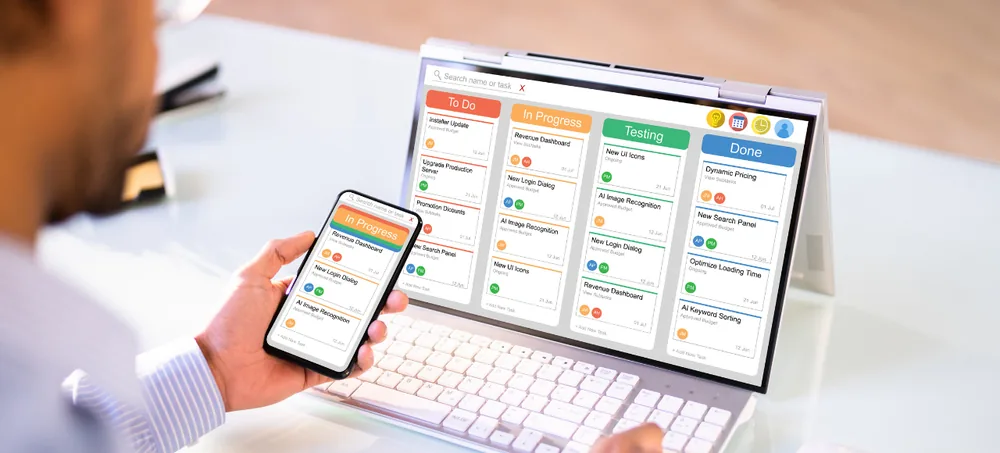
Discrete, process, job shop, repetitive and made-to-order manufacturers all ask for a manufacturing ERP and all need something structurally different from it. ERPLax builds Manufacturing ERP Software Australia matched to your production type — planning, MRP, work orders, factory operations, inventory, quality and costing on one platform.
Schedule Free Consultation
Tell us what you make and how a job moves through the floor — we will map the modules to it.
Manufacturing Models Supported
Years of ERP Delivery
Clients Across Industries
Projects Delivered
Five Manufacturing Types, Five Different ERP Requirements
This is the question that should come before any feature comparison, because the answer changes which modules matter and which are noise.
Discrete Manufacturing
Countable units built from a bill of materials — machinery, electronics, furniture, fabricated products. Needs multi-level BOM, work orders, routing and serial traceability. Costing is per unit and per job, and scrap is measured in pieces.
Process Manufacturing
Formulations and recipes rather than assemblies — food, chemicals, cosmetics, paint. Needs batch records, yield variance, potency and unit-of-measure conversion. Costing must handle co-products and by-products, which a discrete BOM cannot express.
Job Shop / Made-to-Order
Every order is effectively a new product. Needs quotation costing, per-job BOMs created on the fly, progress tracking and quote-versus-actual comparison. Standard costing is close to useless here; actual job cost is the whole point.
Repetitive Manufacturing
The same items produced continuously at rate. Needs production lines, takt-based scheduling, backflushing and shift-level output reporting rather than discrete work orders for every run.
Mixed-Mode Operations
Most Australian mid-size manufacturers are genuinely two of the above — repetitive for stock lines and made-to-order for specials. The ERP has to support both without forcing one into the other's data model.
Why This Comes First
Ask any provider which of the five they are configuring for before you look at a feature list. A platform built for discrete assembly will make a food producer track potency in a workaround field; one built for process will make a job shop invent fake part numbers. ERPLax delivers Manufacturing ERP Solutions Australia across all five models, including mixed-mode, and we will tell you plainly if your production type sits outside what we handle well.
Manufacturing ERP Australia for Modern Manufacturing Businesses
Whichever model you run, the same six problems bring manufacturers to an ERP conversation.
Jobs Waiting on Materials
The shortfall existed in the data days earlier, but surfaced the morning the run was due.
Planning by Spreadsheet
A schedule maintained by one person, out of date the moment anything changes.
Stock That Does Not Match
System quantities and physical stock diverge, so purchasing buys blind.
Unknown True Job Cost
Quotes built on standard cost while rework, overtime and scrap absorb the margin.
No Live Shop-Floor Status
Nobody can say what is running, what is late and what is ready to dispatch.
Manual Traceability
Batch and serial records reconstructed from paper when a customer asks a question.
What Is Manufacturing ERP Software?
A business management system built to plan, control and cost production, rather than record what happened after the fact.
What It Controls
- Raw materials, production orders and schedules
- Machines, labour and capacity
- Inventory, quality checks and finished goods
- Production cost and output reporting
What a Full ERP Connects It To
- Sales orders and delivery commitments
- Purchasing and supplier management
- Accounting, costing and profitability
- CRM and business-wide reporting
Comparing Manufacturing ERP Providers Australia
Every shortlist of the Best Manufacturing ERP Australia looks similar on a feature grid because production planning, BOM and inventory appear on all of them. The separation happens in configuration depth — whether your routing, scrap rules, quality gates and costing method are genuinely modelled or approximated. That makes the choice among Manufacturing ERP Providers Australia more consequential than the brand, and evaluating Manufacturing ERP Companies Australia should focus on manufacturing experience rather than a demo script. A capable partner walks your floor before quoting a Manufacturing ERP System Australia. ERPLax delivers ERP for Manufacturing Australia across the range — a small unit needing work orders and stock control, or a multi-plant business running full MRP and consolidated costing. Manufacturing ERP for Small Business Australia deployments start deliberately narrow, and Custom Manufacturing ERP Australia work is scoped explicitly. The same discipline applies whether you call it Manufacturing Software Australia or Manufacturing Management Software Australia.
Why Manufacturers Need ERP Software Australia
Six things that become possible once planning, materials and costing share one database.
Commitments You Can Keep
Promise dates calculated from real capacity and real material availability, so the sales team stops guessing.
Stock You Can Trust
One number for on-hand that purchasing, planning and the shop floor all work from.
Problems Surface Early
Shortages and overloads appear days ahead in the plan rather than on the morning of the run.
Margin You Can Prove
Actual material, labour and overhead per job, so quoting is priced on evidence.
Answers Without a Meeting
Production status, order progress and profitability available on screen at any hour.
Audits You Can Pass
Inspection records, batch genealogy and change history retained as a by-product of doing the work.
How ERPLax Manufacturing ERP Supports Businesses
One order flows through the whole plant, with no re-entry at any handover.
Demand to Schedule
Confirmed orders and forecast turned into a dated production schedule the floor can actually run.
Product Structure
Assemblies, sub-assemblies, formulations and revisions held as structured data rather than drawings.
Material Resolution
What to buy, what to make and when, recalculated whenever demand or supply moves.
Stock Through Its States
Raw, quarantined, released, in progress and finished, each with its own quantity and value.
Floor Feedback
Operators confirm quantities and time as work happens, so the plan reflects reality by lunchtime.
Release Control
Nothing ships until its inspection points pass, with the record kept against the batch or serial.
Manufacturing ERP Modules and Features
The detail that decides whether the schedule survives contact with the shop floor.
Finite Scheduling
Sequence against real machine availability rather than assuming infinite capacity.
Job Packs
Everything an operator needs for a run issued together: quantities, routing, drawings and checks.
Revision-Controlled Structures
Product changes versioned with effective dates so old jobs keep their original recipe.
Operation Times
Setup and run rates held per operation, which is what makes any schedule credible.
Load Visibility
Committed hours per work centre against available hours, week by week.
Issue and Backflush
Material consumed by explicit issue or automatic backflush, whichever suits the line.
Location-Level Stock
Site, warehouse, bin and line-side locations with controlled movement between them.
Forward and Backward Trace
Any batch or serial resolved to its inputs and its customers in one query.
Scan-Driven Transactions
Receipts, issues, moves and counts done by scanner rather than keyboard.
Inspection Plans
Characteristics, tolerances and sample sizes defined per item and applied automatically.
Nonconformance Handling
Hold, rework, concession or scrap as distinct routes with their own cost consequence.
Actual Versus Standard
Variance by material, labour and overhead reported per job while it is still open.
Yield and Loss Accounting
Expected output against actual, with losses coded to a cause rather than a bucket.
Order Promising
Availability checked across stock, work in progress and planned output before you commit.
Supply Follow-Up
Overdue purchase orders flagged against the jobs they are holding up.
Dispatch Readiness
What is finished, inspected, allocated and ready to leave, on one list.
Direct Labour Capture
Hours booked to operations as they happen, feeding both payroll and job cost.
Event-Driven Rules
Reorder triggers, escalations and notifications fired by conditions you define.
Plant-Level Security
Access scoped by site and function, with every posting attributable to a user.
Production ERP Software Australia for Better Production Control
Control means knowing what is running, what is late and what it is costing — while the job is still open. Good Production Planning Software Australia makes that visible without anyone walking the floor to ask.
MRP Software Australia for Material Planning
Material planning is arithmetic that humans do badly at scale. Six things the system should be doing instead of your buyer.
Factory ERP Software Australia for Complete Operations Management
The plant around the line: who is on shift, which machines are available, and what is quietly costing you capacity.
Manufacturing Inventory Software Australia
Stock in a factory changes identity as it moves. A retail stock module cannot express that, which is where most inventory pain originates.
Cloud Manufacturing ERP Australia
Useful for growing manufacturers, multi-plant operations, remote management and distributed supply chains.
Manufacturing ERP for Small Business and Custom Development
Small manufacturers should start narrow. Custom development is worth it only where the process is genuinely part of how you compete.
Manufacturing ERP for Small Business Australia
- Start with BOM, work orders and inventory
- Add job costing once volume justifies it
- Introduce MRP when materials become the constraint
- Add capacity planning when machines become the constraint
Custom Manufacturing ERP Australia
- Industry-specific costing and yield models
- Custom quality gates and inspection plans
- Shop-floor screens built for your operators
- Reports management actually reviews weekly
Manufacturing ERP Implementation Australia
A seven-step method that keeps the plant producing while the system goes live.
Manufacturing Requirement Analysis
Walk the process, confirm the production model, document product structure and routing.
ERP Planning
Define modules, user roles, plant structure, workflows and integration requirements.
System Configuration
Set up items, BOMs, routings, work centres, warehouses and production stages.
Data Migration
Import products, BOMs, inventory, supplier and customer data after cleaning and validation.
Testing
Validate production processes, MRP runs, costing and reports against your own data.
Training and Deployment
Train planners, operators, storepersons and management, then go live with support present.
Support and Optimization
Refine planning parameters once the system carries real production volume.
Manufacturing ERP Cost Australia
Six variables drive the number, and production model drives the range more than headcount does.
Why Choose ERPLax Manufacturing ERP?
19+ years of delivery, 1500+ clients and 1700+ projects behind every implementation.
Frequently Asked Questions About Manufacturing ERP Australia
Manufacturing ERP Australia is a business management system that helps manufacturers plan production, calculate material requirements, run work orders, control inventory, manage quality and cost jobs accurately, connected to sales, purchasing and finance.
Discrete, process, job shop or made-to-order, repetitive, and mixed-mode operations. The production model determines which modules matter, so it is the first question we ask rather than the last.
Yes. ERPLax provides customizable manufacturing ERP configured around your product structure, routing, quality gates and costing method rather than a fixed template.
Yes. Manufacturing ERP for Small Business Australia typically starts with BOM, work orders, inventory and job costing, then adds MRP, capacity planning and quality modules as complexity increases.
MRP calculates what materials are needed, in what quantity and by when. Manufacturing ERP includes MRP but also covers scheduling, work orders, shop-floor tracking, quality, costing, inventory, purchasing, sales and finance.
Yes. Manufacturing Inventory Software Australia capability covers raw materials, work in progress and finished goods across warehouses and bins, with transfers, valuation, reorder planning and full traceability.
Yes. Cloud Manufacturing ERP Australia provides secure online access, centralized data across plants, faster deployment and easier scalability, with Cloud available where data must stay in-house.
Yes. Production costs, purchase expenses, sales revenue and profitability reporting can integrate with your accounting platform, or be handled natively inside the ERP.
It improves planning accuracy, surfaces material and capacity constraints early, tracks actual consumption against BOM expectation, and replaces end-of-month reconstruction with live production visibility.
A tightly scoped single-plant rollout can go live in weeks. Multi-level BOMs, full MRP, multiple plants and heavy integration extend that to months, driven mainly by data quality and process change.
Choose Manufacturing ERP Matched to How You Produce
Start with your production model, then judge the modules. ERPLax provides customizable Manufacturing ERP Australia covering planning, MRP, work orders, factory operations, inventory, quality and costing on one integrated platform.