Top ERP Systems in Australia for Business Growth and Digital Transformation
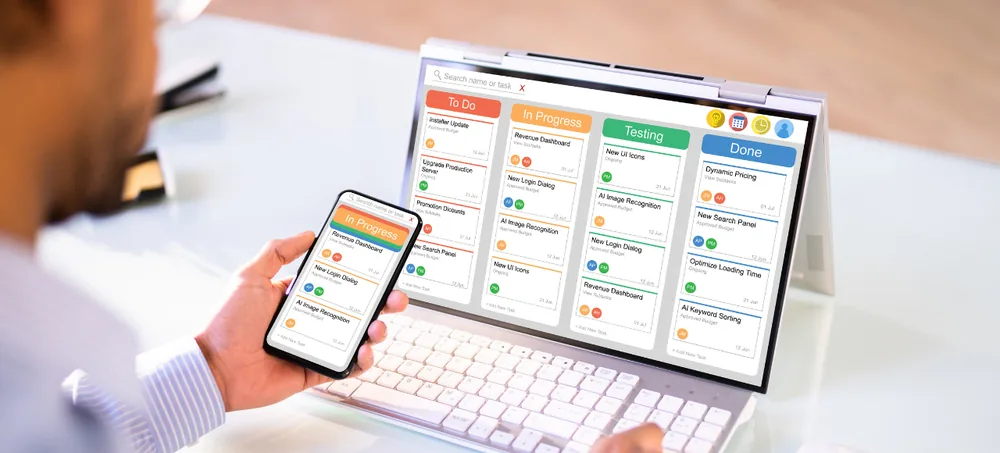
Choosing the right platform means understanding business requirements, industry needs, scalability, customization and integration — not reading a ranking. ERPLax provides customizable ERP Systems Australia solutions for small businesses, SMEs, manufacturers, distributors and growing enterprises, covering finance, sales, purchase, inventory, manufacturing, CRM, projects, reporting and automation on one platform.
Schedule Free Consultation
Tell us your industry and current systems and we will map the capability you actually need.
Years of ERP Delivery
Clients Across Industries
Projects Delivered
Evaluation Framework
Top ERP Systems Australia for Modern Businesses
Businesses now need more than basic accounting or inventory tools. They need connected systems that give complete visibility across operations.
What a Modern ERP Combines
- Finance, sales, purchase and inventory
- Manufacturing and project operations
- Customer relationships and employee management
- Reporting, analytics and automation
What It Improves
- Productivity across departments
- Data accuracy and decision-making
- Customer service responsiveness
- Operational control and accountability
How to Read a Ranking of ERP Systems
Lists of the Top ERP Systems Australia tend to rank vendors, which only helps once you know which capabilities matter for your operation. The more useful exercise is to evaluate depth against five criteria — industry fit, customization, integration, scalability and implementation support — and then judge the ERP Software Providers Australia operating in that space. That is what a genuine ERP Software Comparison Australia looks like, and it explains why ERP Software Reviews Australia disagree so often: the reviewers were solving different problems. Almost every platform on a Top ERP Software Australia shortlist can raise an invoice and hold a product master. Far fewer are configured so your costing rules, approvals and reports match how the business actually runs, which is the real difference between the Best ERP Systems Australia and expensive shelfware. The same applies when comparing ERP Companies Australia or evaluating ERP Solutions Australia at any budget: the software sets the ceiling, the implementation decides where you land. ERPLax delivers Enterprise Resource Planning Software Australia on that basis, scoped to the constraint rather than the catalogue.
What Is an ERP System?
An integrated business management solution connecting different departments and processes through one centralized system, replacing a separate application per function.
What an ERP Platform Manages
- Financial operations and purchasing
- Sales activities and inventory
- Manufacturing and customer relationships
- Employee management, reports and analytics
Why Unification Matters
- One record, not one per application
- A unified workflow across departments
- Rules applied consistently everywhere
- Reporting that reconciles by construction
Why Businesses Need ERP Software Australia
Five outcomes that follow from having one system of record rather than five partial ones.
Centralized Business Information
Customers, suppliers, products, inventory, transactions, employees and reports in one database.
Better Operational Visibility
Real-time sales performance, stock levels, financial position, production progress and customer activity.
Reduced Manual Work
Automation removes repetitive data entry, billing, approvals, reporting and inventory updates.
Improved Decision Making
Dashboards and reports available when the decision is made, not weeks afterwards.
Scalable Growth
Add users, modules, locations and integrations as the business expands.
Control and Compliance
Role-based permissions, approval limits and audit trails applied across every department.
Key Features of the Best ERP Systems Australia
Six module groups form the backbone. One transaction should flow through all of them without re-entry.
Accounting and Finance Management
- Invoices and payments
- Expenses and tax reporting
- Receivables and payables
- Financial statements
Sales Management
- Customer enquiries and quotations
- Sales orders
- Delivery tracking
- Sales analytics
Purchase Management
- Suppliers and purchase orders
- Procurement approvals
- Goods receipts
- Supplier payments
Inventory Management
- Products and warehouses
- Stock movement and transfers
- Batch and serial numbers
- Inventory reports and valuation
CRM Management
- Lead management
- Customer database
- Follow-ups and sales pipeline
- Communication tracking
Reporting and Dashboards
- Business performance
- Sales trends
- Inventory status
- Financial insights
ERP Features That Decide Day-to-Day Usability
Underneath the modules, these are the details that separate a system people use from one they work around.
Quotation to Order Conversion
Enquiries become quotations become orders without re-keying a single line.
Pricing and Discount Control
Customer price lists, volume breaks and approval limits on discounting.
Delivery and Dispatch
Packing lists, delivery documents and dispatch confirmation linked to the order.
Purchase Approvals
Multi-level routing with budget checks before an order is committed.
Three-Way Matching
Purchase order, goods receipt and supplier invoice reconciled before payment.
Multi-Warehouse Stock
Stock by warehouse, bin and location with transfers and valuation at each level.
Batch and Serial Traceability
Full traceability with batch, lot, serial number and expiry-date control.
Barcode and QR Support
Scan-based receiving, picking, transfers and stock counts on handheld devices.
BOM, MRP and Work Orders
Multi-level bills of materials, material planning, routing and shop-floor status.
Quality Control
Incoming, in-process and final inspection with rejection and rework tracking.
Job and Product Costing
Material, labour and overhead captured per job so true cost is known.
GST and Tax Compliance
Tax rules, compliant document formats and BAS-ready reporting.
Multi Currency and Multi Entity
Foreign currency transactions with revaluation and consolidated reporting.
Workflow Automation
Approval routing, notifications, reminders and rule-based status changes.
Role-Based Access Control
Granular permissions by user, branch and module with an audit trail.
Custom Reports and Dashboards
Build what management reviews without waiting for a vendor release.
Mobile Access
Approvals, stock lookups and field data capture from a phone or tablet.
Open Integration
Accounting, ecommerce, POS, payments, logistics and hardware connected properly.
Cloud-Based
Deploy to the cloud for anywhere access, or on your own server for data custody.
ERP Software Comparison Australia — What to Evaluate
Five criteria, scored for every platform on the shortlist against the same written scenario. This is the framework the rest of the page builds on.
Best ERP Solutions Australia for Different Industries
Industry compatibility is the first criterion because it is the hardest to retrofit later.
Cloud ERP Australia for Flexible Business Operations
Cloud is the default for most Australian businesses now, which makes the real question about hosting practice rather than concept.
ERP for Small Business Australia
Small businesses need affordable, scalable systems without enterprise complexity or an enterprise timeline.
Where to Start
Sales, purchase, inventory, billing, accounting and reports cover most small business requirements. That scope removes the current constraint without paying for capability nobody will touch this year.
What to Add Later
Manufacturing, projects, HR, extra branches and automation, switched on when a real constraint appears rather than at go-live. A modular platform makes that a configuration change, not a migration.
Manufacturing ERP Software Australia
Where cost truth per job is the point, not a reporting nicety.
Construction ERP Software Australia
Where the unit of profitability is a job and progress claims drive cash flow.
Custom ERP Software Australia Solutions
Worth it where the process is genuinely part of how you compete — and not worth it anywhere else.
ERP Implementation Australia Process
A seven-step method that keeps the business trading while the system goes live.
Business Requirement Analysis
Understand current processes, challenges, department requirements and reporting needs first.
ERP Planning
Define modules, user roles, workflows and integrations, then sequence the rollout by risk.
Configuration and Customization
Set up processes, documents, reports, dashboards and permissions to match operations.
Data Migration
Clean, de-duplicate and transfer customers, suppliers, products, inventory and financials.
Integration and Testing
Connect external systems and validate every process against your own data.
Training and Deployment
Role-specific training, then a supported cutover rather than a hard switch.
Support and Optimization
Ongoing support, upgrades and refinement once the system carries live volume.
ERP Software Cost Australia — Pricing Factors
Six variables drive the number. Any quote given before these are understood is a guess.
Why Choose ERPLax ERP Solutions?
19+ years of delivery, 1500+ clients and 1700+ projects behind every implementation.
Frequently Asked Questions About Top ERP Systems in Australia
Rather than a fixed brand ranking, the practical answer is the systems that score well on five criteria for your situation: industry compatibility, customization options, integration capability, scalability and implementation support. Options differ by business size, sector and workflow complexity.
The best ERP depends on business needs, required modules, scalability, integrations and workflow requirements. Two businesses of similar size in different industries will reach different conclusions on the same budget.
Yes. Small businesses use ERP to manage sales, inventory, accounting and operations, starting with the modules that address a current constraint and extending as the business grows.
Manufacturing, construction, trading, distribution, wholesale, retail, logistics, engineering and service businesses all use ERP, with each sector emphasising different modules and costing models.
ERP pricing depends on users, modules, customization, integrations, deployment model and support requirements. Ask each provider to quote licence, implementation and annual support separately so the comparison is meaningful.
Cloud ERP provides remote access, centralized data, faster deployment, easier scalability and reduced IT infrastructure, with hosting, backup and upgrades handled by the provider.
Yes. Workflows, modules, document formats, reports and dashboards can be customized. Customization should be scoped explicitly and kept upgrade-safe so future versions do not break it.
A tightly scoped rollout can go live in weeks. A multi-module, multi-site implementation usually runs over several months, driven mainly by data quality, integration count and how many processes change at once.
Yes. ERPLax provides consultation, requirement analysis, configuration, customization, data migration, integration, testing, training, deployment and ongoing support as one engagement.
By industry compatibility, customization options, integration capability, scalability and implementation support — then by price, once the shortlist is genuinely comparable on those five.
Choose the Right ERP System for Your Business
The strongest ERP system is the one that matches your industry, workflow and growth plans, and is still fully used two years later. ERPLax provides customizable ERP Solutions Australia covering finance, inventory, sales, manufacturing, CRM, projects and operations on one integrated platform.