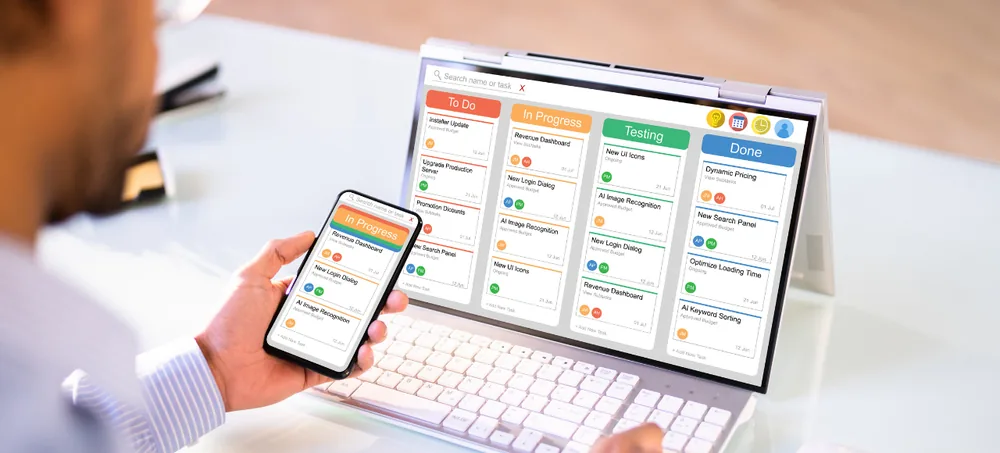
Manage Production, Fabrication, Inventory, Quality and Project Costing. ERPLax Heat Exchangers ERP Software in Bangalore provides a cloud-based platform connecting manufacturing operations with purchasing, inventory, sales, project management and financial processes for shell and tube, plate, finned tube, air cooled and brazed plate heat exchanger manufacturers, developed by EchoPx Technologies with 19+ years of experience, 1500+ clients and 1700+ projects.
Heat exchanger manufacturing involves customer-specific engineering, material preparation, machining, welding, assembly, inspection and project delivery — requiring coordinated information across engineering, production, stores, procurement, quality and finance.
A shell and tube heat exchanger may require shells, tubes, tube sheets, baffles, nozzles, flanges and support structures, while plate exchangers require a different component structure. Disconnected product files can give departments inconsistent material information.
Fabrication may involve plate cutting, rolling, welding, drilling, tube preparation, machining, assembly and inspection, with operations depending on earlier activities. Manual schedules make pending jobs and resource conflicts hard to spot.
Manufacturers use different grades and dimensions of plates, tubes, pipes, gaskets and fasteners. Disconnected stock records and production requirements leave purchasing teams without a clear view of upcoming material demand.
Multiple orders may be processed simultaneously across separate fabrication and assembly stages. Without centralized work-order status, management may depend on calls or spreadsheets to track progress.
Project-specific expenses can include raw materials, purchased components, machining, fabrication, subcontracting, inspections and dispatch activities. Independently recorded expenses make job-wise costs difficult to identify.
Quality management may involve incoming material inspection, dimensional checks, welding inspection, pressure testing and final documentation. Manual document handling complicates locating records and pending approvals.
Projects often require materials from different suppliers. Manual processes make it difficult to determine whether requests have been reviewed, approved or converted into purchase orders.
Management needs information on order status, production commitments, procurement, inventory demand, job expenses and receivables. Separate departmental records require additional manual work to consolidate.
ERPLax provides a cloud-only SaaS ERP platform configured to support heat exchanger manufacturing, connecting the business activities involved in receiving customer orders, planning production, purchasing materials, tracking inventory, managing work orders and monitoring financial transactions.
A common structure for organizing customer, supplier, inventory, production and financial information, configured around the company's product categories, material requirements and approval procedures.
Engineering BOM approvals, purchase authorization, production operation recording, quality document review and project costing configured according to documented business requirements.
A customer order provides the commercial reference for subsequent manufacturing activities, associating order details with production, material planning, procurement and financial records.
Reports configured around the organization's relevant operational indicators — planned orders, material availability, production progress and pending business activities.
ERPLax operates as a cloud ERP platform with subscription-based access — businesses can evaluate subscription arrangements, user requirements, relevant functionality, configuration services and implementation scope during their purchasing process.
Configurable heat exchanger ERP software Bangalore and heat exchanger manufacturing ERP Bangalore workflows spanning heat exchanger management software, ERP for heat exchanger manufacturers, industrial heat exchanger ERP and cloud based heat exchanger ERP — evaluated as a connected heat exchanger factory management platform with heat exchanger production management and project costing.
Configurable enquiry workflow organizing customer records, technical requirements, quotation versions, approval stages and order status, associated with approved orders and manufacturing processes.
Configurable BOM workflow organizing shells, tubes, tube sheets, baffles, flanges, nozzles, plates, gaskets, frames, quantities and approved revisions, with engineering changes following a defined review process.
Configurable production planning workflow organizing planned operations, work centers, priorities and target dates for coordinating multiple customer projects and equipment configurations.
Configurable work-order process organizing shell preparation, tube sheet machining, tube cutting, welding, assembly and testing coordination, with assigned responsibilities and progress status.
Configurable inventory workflow organizing item masters, stock receipts, material issues, warehouse references and adjustments for plates, tubes, flanges, fittings, gaskets and fasteners.
Configurable procurement workflow connecting material demand with purchase requests, supplier quotations, purchase approvals and purchase orders, with receipts recorded against relevant transactions.
Configurable fabrication workflow organizing shell rolling, welding, tube sheet machining, nozzle preparation, assembly stages and progress updates across different equipment types.
Configurable job-wise costing workflow organizing material estimates, issues, purchased components, subcontracting charges and other expenses, comparing estimated and recorded costs.
Configurable quality workflow organizing inspection references, observations, document status, responsible personnel and corrective actions for incoming materials, welding and pressure testing.
Configurable subcontracting workflow organizing job work orders, material issue references, supplier details, expected returns and receipt transactions, with related expenses in job costing.
Configurable finance workflow organizing purchases, customer invoices, project expenses and collections within the agreed business structure, accounting treatment and approval rules.
Configurable reporting covering open sales orders, pending work orders, production progress, material demand, purchase status, inventory movements and project expenses.
A connected ERP workflow organizes the relationship between customer requirements, engineering, materials, manufacturing operations and financial records.
| Workflow Stage | Business Activity | ERP Process |
|---|---|---|
| Customer enquiry | Record equipment requirements and specifications | CRM and sales |
| Quotation | Prepare and approve commercial quotation | Quotation workflow |
| Sales order | Confirm customer order and project reference | Order management |
| Engineering BOM | Prepare and validate components and materials | BOM references |
| Production scheduling | Plan manufacturing activities and sequence | Work orders |
| Procurement | Request, approve and order materials | Purchasing |
| Material receipt | Receive, inspect and issue materials | Inventory |
| Fabrication & assembly | Process shells, tubes, plates and components | Production stage |
| Quality documentation | Coordinate inspections and testing records | Quality workflow |
| Dispatch & billing | Fulfil orders and record financial transactions | Finance and reporting |
The sales team records the customer's enquiry and equipment requirements, including heat exchanger type, thermal duty, operating conditions and delivery terms.
Commercial and engineering personnel review requirements and prepare a quotation, with an ERP approval workflow organizing review responsibilities and versions.
The approved order establishes the commercial and manufacturing reference, associated with subsequent material planning and production activities.
Engineering personnel prepare or validate required components — shell plates, tubes, tube sheets, baffles, flanges — for purchasing and production to reference.
Planners determine manufacturing sequence while material demand is reviewed against stock, with purchase requests and approvals processed for additional requirements.
Purchased materials are received and inspected, then issued against manufacturing work orders or defined project references.
Manufacturing departments record progress — shell fabrication and tube preparation for shell and tube units, or frame and plate pack assembly for plate exchangers.
Quality personnel coordinate inspections and documentation, dispatch organizes order fulfilment, and management reviews recorded project expenses and order status.
ERPLax can be evaluated for configuring workflows that connect approved customer orders with component manufacturing, tube bundle assembly and subsequent inspection stages.
Component and material requirements organized according to approved engineering BOMs.
Relevant component tracking for tube and baffle procurement and assembly.
Production operations organized across shell rolling, machining and welding stages.
Assembly progress recorded against the relevant work order reference.
Welding and inspection records associated with the applicable production stage.
Material issues and usage tracked against job or project references.
Estimated and recorded costs compared for management review.
Finished equipment prepared for delivery according to agreed order terms.
ERPLax can be scoped for plate heat exchanger production planning, inventory control, purchase management, assembly coordination and job costing.
Component inventory organized by plate, gasket, frame and connection specifications.
Approved BOM information maintained for different models and customer configurations.
Procurement workflows connecting frame and connection requirements with supplier orders.
Assembly operations organized through configured production work orders.
Inspection references associated with the relevant assembly stage.
Work-order status reviewed to identify completed and pending assembly activity.
Material requirements associated with the applicable customer order.
Relevant purchasing and manufacturing expenses recorded against the project.
ERPLax can be configured to organize relevant work orders, material transactions and production reporting for finned tube heat exchanger manufacturing.
Base tube and fin material requirements organized through configured BOM structures.
Component and specification records maintained for finned tube product configurations.
Production operations sequenced according to the manufacturer's fabrication method.
Operation status recorded against the relevant manufacturing work order.
Material issues tracked against production and assembly activity.
Supplier-sourced components coordinated through configured procurement workflows.
Inspection and testing documentation associated with production records.
Manufacturing expenses organized for job-level cost review.
ERPLax can be assessed for organizing production operations, purchased material status, work order progress and project costing for air cooled heat exchanger manufacturing.
Fabricated and structural component requirements organized through engineering BOMs.
Supplier-provided mechanical components coordinated through purchasing workflows.
Production activities sequenced across fabrication and final assembly stages.
Purchase orders tracked against required mechanical and structural components.
Inventory records maintained for fabricated and purchased components.
Quality references associated with the relevant manufacturing stage.
Project-specific expenses recorded for management cost review.
Delivery activities coordinated against agreed customer order terms.
ERPLax can be evaluated against the required planning, production recording and costing processes for brazed plate heat exchanger manufacturing.
Component and material stock organized for brazed plate production.
BOM records maintained for the manufacturer's brazed plate configurations.
Stack assembly operations organized through configured work orders.
Brazing process progress recorded against the relevant work order.
Quality and testing documentation associated with production records.
Material usage tracked against manufacturing activity.
Completed units maintained through configured inventory records.
Order fulfilment coordinated according to agreed delivery terms.
The value of these capabilities depends on appropriate setup, accurate transaction records and consistent workshop procedures.
Structured work orders, manufacturing stages and target schedules help teams review pending operations and coordinate activities by approved priorities.
Connecting BOM information with inventory and purchasing gives procurement teams a clearer basis for planning purchases and supplier follow-up.
Work order management provides a consistent structure for recording production activities and identifying outstanding operations.
Project-wise expense records help compare estimated and actual material and manufacturing costs for more informed commercial review.
A configurable purchasing workflow establishes defined review and approval steps for material transactions.
Inspection references and supporting documents associated with manufacturing activity help departments identify pending reviews.
Integrated ERP workflows reduce unnecessary duplication of records across engineering, purchasing, production, stores, sales and finance.
Management reporting brings together information from configured ERP processes, depending on reliable data entry and workflow design.
From shell and tube and plate manufacturers to HVAC equipment makers and heat transfer equipment suppliers, the applicable ERP configuration depends on the business model and production complexity.
Coordination of engineering material requirements, fabrication operations, tube bundle assembly and project documentation.
ERP processes for inventory, assembly management and order tracking across plate packs, gaskets, frames and related components.
Specialized material planning and fabrication operation tracking organized through configured work orders.
Coordination between fabricated heat transfer assemblies and purchased mechanical components across purchasing, fabrication and assembly.
Product BOMs, component stock, manufacturing stages, inspection records and finished goods management.
Vessels, thermal equipment and fabricated process assemblies sharing material planning, work orders, procurement and job costing requirements.
Coils, fabricated assemblies, purchased components and production scheduling organized through a configurable ERP approach.
Customer order management, supplier coordination, component inventory, assembly processes and financial reporting.
ERPLax can be evaluated by heat exchanger manufacturing businesses located across Bengaluru and nearby industrial corridors.
Engineering and fabrication businesses can assess ERP workflows for material planning, work orders, supplier purchases and manufacturing expense tracking.
Manufacturers handling fabricated equipment and industrial assemblies can evaluate centralized production planning, inventory and purchasing processes.
Manufacturing facilities can assess ERP requirements for work order management, material consumption, subcontracting and business reporting.
Industrial equipment manufacturers and suppliers can evaluate ERP processes connecting customer orders with procurement, production and financial transactions.
Manufacturers along this corridor can evaluate connected SaaS ERP workflows for sales, purchasing, inventory and operational reporting.
Engineering and equipment businesses can consider SaaS ERP workflows for managing sales, purchasing, inventory and operational reporting.
Manufacturing companies in these corridors can evaluate production scheduling, material planning, purchase approvals and job-wise costing requirements.
Industrial manufacturers can assess ERP workflows according to their product structures, manufacturing processes and reporting requirements.
Manufacturers should assess how the proposed software will support their operations rather than relying only on general feature descriptions.
Determine whether configuration can represent the material structures used for the company's heat exchanger products.
Identify current manufacturing scheduling and tracking methods against the proposed work-order structure and reporting.
List materials and components requiring inventory control, including specifications, units, stock locations and issue procedures.
Review how material requests are generated, approved and converted into purchases, reflecting authorization responsibilities.
Determine which expenses must be recorded against manufacturing orders to establish meaningful cost reporting.
Identify internal inspection and manufacturing documentation needs for administrative coordination, not engineering validation.
List applications needing data exchange, confirm feasibility, and review subscription scope, functionality and implementation services.
Ask how the proposed solution represents a customer order, engineering BOM, material requirement, fabrication work order and job costing process.
ERPLax offers a configurable SaaS ERP approach for evaluating the relationship between customer requirements, material structures, manufacturing stages, purchasing processes and financial information.
ERPLax operates as a cloud-only subscription ERP solution, with required users, functionality, configuration and service arrangements evaluated before adoption.
Workflows configured or developed within the SaaS platform according to the manufacturer's production methods and reporting requirements.
Related activities connected across customer orders, procurement, inventory, production and finance to reduce disconnected departmental information.
Routine approval and transaction workflows reviewed for automation, prioritizing structured routing and standardized status recording.
Configuration evaluated around the manufacturer's relevant BOM structures, production operations and work order processes.
Operational reports organized around information recorded within configured ERP processes for order, production, procurement and finance review.
ERPLax is developed by EchoPx Technologies, with company-wide experience of 19+ years, 1500+ clients and 1700+ projects.
Selection begins with understanding operating processes, defining additional configuration or development requirements within the SaaS platform.
ERPLax customization involves configuration and development within the SaaS platform according to agreed business requirements — a business manufacturing customized shell and tube units may require different workflows from a company assembling standardized plate exchangers.
Product attributes and engineering references identified for managing orders — exchanger type, material specifications, component categories and approved BOM information.
Production stages structured according to actual processes — material preparation, shell fabrication, machining, tube bundle assembly and final inspection coordination.
Purchasing responsibilities and review procedures defined, including approval stages for requests, quotation comparisons and purchase orders.
Item classifications, material grades, dimensions, units of measurement and stock locations reflecting purchasing and inventory processes.
Expense categories and costing methods planned around how the organization records consumption, outsourced processing and job-related expenses.
Inspection documentation organized according to manufacturing checkpoints, review responsibilities and relevant test record references.
Reports defined for pending orders, work order progress, procurement status, inventory demand and recorded project expenses.
Potential integrations with existing accounting, engineering or production software assessed according to interfaces, data flows and implementation scope.
An ERP implementation should be treated as a business process project rather than only a software configuration exercise.
Review existing enquiry handling, quotation, engineering BOM creation, purchasing, inventory, fabrication, assembly and financial activities.
Define required workflows — equipment categories, BOM structures, material specifications, work order stages, approval rules and reporting needs.
Review customers, suppliers, inventory items, product categories, BOMs, warehouses and accounting references for completeness before migration.
Configure approved workflows — user responsibilities, transaction types, approval procedures, reporting structures and manufacturing records.
Test representative scenarios from customer order through BOM planning, purchase requests, material receipts, work orders and costing reports.
Train sales, procurement, production and finance personnel on their respective enquiry, purchasing, work-order and reporting responsibilities.
Transition opening data, active orders, inventory records and departmental responsibilities, then review data quality and process compliance.
Evaluate additional configuration, workflow refinements and reporting enhancements as the business and its requirements evolve.
Heat exchangers ERP software connects customer orders, engineering BOMs, production planning, fabrication, material inventory, purchasing, quality documentation, job costing and finance through related business workflows.
ERPLax can be evaluated by Bangalore-based manufacturers for centralized order, material, production and financial management within a configurable SaaS platform.
Yes. ERPLax operates as a cloud-only subscription SaaS ERP platform.
Yes. ERPLax supports configuration and development within its SaaS platform according to agreed manufacturing requirements.
Yes. Relevant shell, tube, tube sheet and baffle material planning, fabrication and assembly workflows can be configured.
ERPLax can be configured for plate, gasket and frame inventory, product configuration and assembly work order management.
Relevant tube and fin material planning, fabrication scheduling and production costing can be configured.
Yes. Tube bundle and structural component BOMs, fan and motor procurement, and assembly scheduling can be configured.
Yes. Relevant plate material inventory, product BOMs, assembly work orders and brazing status recording can be configured.
It is an ERP workflow that organizes planned operations, work centers, production priorities and target dates for manufacturing coordination.
Yes. Work order status, operation references and completion records can be organized through a configured production workflow.
It organizes item masters, stock receipts, material issues, warehouse references and stock adjustments for the relevant materials and components.
Yes. Material estimates, recorded issues, purchased components, subcontracting charges and other expenses can be organized for job-wise cost review.
Relevant inspection references, observations and document status can be organized. The system does not replace physical inspections or legally required certification processes.
Potential integrations can be evaluated based on the software involved, available interfaces and required data exchange, with feasibility confirmed before implementation.
Pricing depends on subscription scope, number of users, required functionality, implementation services, customization and integration requirements.
Duration depends on workflow complexity, master data readiness, configuration, development requirements, integrations and testing.
ERPLax can be evaluated by small and medium-sized manufacturers, with suitability depending on functional needs, resources and commercial scope.
Yes. A connected ERP process can organize information used by engineering, purchasing, inventory, production, quality, sales and finance.
ERPLax is positioned around configurable ERP workflows and business process automation, including purchase approvals and standardized transaction processing.
Yes. An ERP subcontracting workflow can organize external work orders, material movements, supplier references and related expenses.
Future ERP requirements should be reviewed against user needs, process complexity and transaction volumes, with capacity and service arrangements confirmed with the provider.
Useful information includes sample customer orders, BOMs, production stages, material lists, purchase workflows, costing examples and required management reports.
Heat exchanger manufacturing ERP requirements may additionally involve engineering-specific BOMs, fabrication operations, specialized components, inspection documentation and project-wise costing.
Contact ERPLax through its website with details about your heat exchanger products, manufacturing operations and business requirements.
Whether your company manufactures shell and tube, plate, finned tube, air cooled, brazed plate or other industrial heat transfer equipment, ERPLax can be evaluated according to your production and business requirements.
See how a connected ERP workflow can be planned around your order-to-production process.
Share your manufacturing challenges, product types, operational procedures and reporting requirements.
Review the SaaS subscription, implementation, configuration and development considerations for your required business scope.
Specialized Applications
Purpose-built & ready to deploy. Hover to explore, click to learn more.
Testimonials
Real stories from businesses running their operations on ERPLax.
ERPLax gave us real-time visibility into stock across three warehouses. Wastage dropped and our fulfillment time improved almost overnight.
GST e-invoicing used to eat up two days every month. With ERPLax's accounting module it's now automatic and our filings are always on time.
Billing at our stores used to take a minute per customer. ERPLax's POS module cut that to under 15 seconds, even during peak festival rush.
Payroll for 200+ employees across two branches used to take our HR team a full week. ERPLax's HRM module now runs it in a single afternoon.
Tracking batch numbers and expiry across our distribution network was a nightmare on spreadsheets. ERPLax's inventory module made it effortless.
Front desk, housekeeping and billing are now all on one screen. ERPLax's hotel management module has made check-in day a breeze for our staff.
Fee collection, attendance and report cards used to live in three different tools. ERPLax brought it all into one dashboard our staff actually enjoys using.
Tracking material costs and site progress across four active sites was chaos before ERPLax. Now our project managers update status from their phones daily.
Our online store orders now sync straight into inventory and accounting — no more manual entry, no more overselling out-of-stock items.
Our sales team can now see every lead's history and follow-ups in one place. Deal closures are faster and nothing falls through the cracks anymore.
ERPLax gave us real-time visibility into stock across three warehouses. Wastage dropped and our fulfillment time improved almost overnight.
GST e-invoicing used to eat up two days every month. With ERPLax's accounting module it's now automatic and our filings are always on time.
Billing at our stores used to take a minute per customer. ERPLax's POS module cut that to under 15 seconds, even during peak festival rush.
Payroll for 200+ employees across two branches used to take our HR team a full week. ERPLax's HRM module now runs it in a single afternoon.
Front desk, housekeeping and billing are now all on one screen. ERPLax's hotel management module has made check-in day a breeze for our staff.
Fee collection, attendance and report cards used to live in three different tools. ERPLax brought it all into one dashboard our staff actually enjoys using.
Tracking material costs and site progress across four active sites was chaos before ERPLax. Now our project managers update status from their phones daily.
Our online store orders now sync straight into inventory and accounting — no more manual entry, no more overselling out-of-stock items.
Our sales team can now see every lead's history and follow-ups in one place. Deal closures are faster and nothing falls through the cracks anymore.
