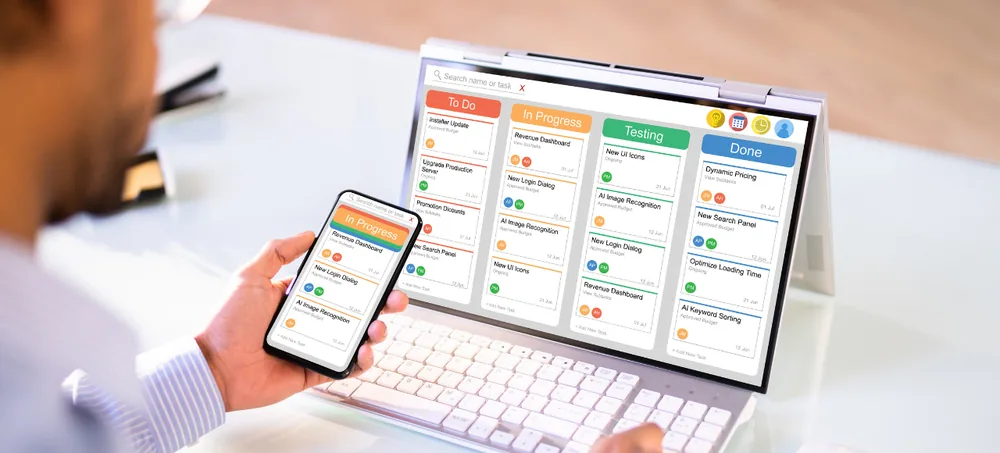
ERPLax provides a configurable cloud ERP platform for assembly manufacturers that stock standard components and complete final assembly once a customer order is confirmed — connecting product configuration, multi-level BOM, material requirements planning, component inventory, assembly work orders, quality, purchasing, costing and dispatch in one SaaS platform.
Get a personalized walkthrough for your assembly manufacturing process.
Assembly manufacturers coordinating customer configurations and shared components often face these recurring problems.
Assemble-to-order (ATO) production stocks standard components in advance and completes final assembly once a customer configuration is confirmed.
Standard components and subassemblies are prepared in advance, and final assembly is completed once a customer order is confirmed.
ATO combines elements of make-to-stock and make-to-order, stocking common components while assembling to the approved configuration.
Finished products can include subassemblies, each with its own components, so material planning must reflect the full structure.
Reliable final assembly depends on accurate visibility into shared component stock across several orders.
A customer's selected variant, options and accessories are reflected in the relevant BOM and assembly reference.
A connected workflow helps align component stocking decisions with actual customer configuration demand.
A customer-selected configuration gates which components dock into assembly, with stock availability and completion tracked at every stage.
A configurable set of workflows connecting product configuration, components and assembly execution.
Customer enquiry, quotation, confirmed order quantities, configuration references and internal approvals.
Better coordination between commercial commitments and assembly operations.
Organizing permitted variants, optional components and configuration rules into a consistent product structure.
Reduced confusion between sales and manufacturing teams.
Reviewing the approved configuration, component availability and manufacturing operations once an order is confirmed.
More consistent configuration references throughout the manufacturing process.
Standard and optional component requirements corresponding to the approved product configuration.
Clearer basis for procurement, allocation and assembly.
Subassembly and component relationships for complex, multi-stage assembled products.
More accurate material planning for configurable products.
Comparing approved BOM requirements with recorded inventory and outstanding purchase transactions.
Better coordination of material availability, purchasing and planned assembly.
Identifying which available components are committed to a specific assembly order.
Reduced confusion over components shared across multiple orders.
Received materials, warehouse locations, production issues and finished goods transactions by order.
More consistent information about materials used for customer-specific assembly.
Reviewing BOM requirements, material availability, assembly sequence and production priorities.
More structured production planning around actual customer demand.
Planned operation dates, work centers, order priorities and recorded status.
Better information for coordinating assembly commitments.
Assembly stages, responsibilities, planned dates and recorded completion information.
Clearer coordination of order-linked assembly activities.
Production status, material issues and completed quantities as an order moves through assembly.
More accessible order-wise assembly information.
Inspection references, configuration verification and approval status before release for dispatch.
More consistent quality documentation across product configurations.
Purchase requests, supplier quotations, internal approvals and material receipts.
Clearer connection between component shortages and procurement.
Materials, purchased components, labour and other expenses recorded by order or configuration.
Clearer basis for evaluating assembly costs and profitability.
Open orders, production status, component availability, costs and finance in configured reports.
Centralized operational visibility for management.
Record the requested product and specifications.
Select the permitted product variant and optional components.
Confirm commercial terms and relevant product information.
Authorize the confirmed customer requirement.
Identify the components needed for the selected configuration.
Evaluate stock, reservations and outstanding purchase requirements.
Prepare and authorize the assembly work order.
Record required production activity.
Complete the specified inspection process.
Release the approved finished assembly for customer fulfillment.
Purchase requests, supplier quotations, internal approvals, purchase orders and material receipts.
External work orders, material movements, supplier references and completed job receipts, where applicable.
Raw materials, purchased components, labour and other expenses by order or configuration.
Approved cost categories compared with recorded expenses, and order-wise commercial records.
Inspection references, observations and approval status before release for delivery.
Finished goods receipts, dispatch references and related commercial records.
Invoices, receivables, payables and manufacturing expense information.
Open orders, production status, materials, costs and finance in configured reports.
A connected ERP process helps align customer specifications with assembly requirements.
Inventory records provide a basis for reviewing which materials are available and which require purchasing.
Approved configuration procedures reduce confusion over optional components and product variants.
Work orders define relevant production requirements and responsibilities.
Procurement teams can review component shortages against planned assembly requirements.
Manufacturing managers can use configured reports to review assembly activity and order status.
Integrated records reduce the need to reproduce the same business information across separate documents.
Configurable workflows allow businesses to evaluate additional operating requirements as their manufacturing processes change.
Control panels, power distribution assemblies and configurable accessories with component and testing documentation.
Standard mechanical, electrical and control components configured to each customer order.
Recurring product families, shared components and stock allocation accuracy.
Predefined building blocks assembled by size, capacity or accessory selection.
Centralized sales, manufacturing, inventory and purchasing as product variation increases.
Configurable products needing connected sales, BOM and production workflows.
Assembly manufacturers can evaluate connected production planning, material purchasing and component inventory management.
Businesses can coordinate production work orders, component stores, purchasing and customer deliveries.
Equipment and component manufacturers can assess configuration management, production tracking and inventory workflows.
Electrical, electronics and automation manufacturers can evaluate configurable BOMs, assembly and manufacturing costs.
Engineering and equipment businesses can assess manufacturing order administration, procurement and financial reporting.
Industrial manufacturers can evaluate scheduling, supplier purchasing and centralized sales, inventory and finance workflows.
A cloud-only platform, not an on-premise install.
No one-time licence or perpetual purchase.
Product configuration and BOM processes configured to the company's own process.
Sales, purchasing, inventory and production coordinated together.
Manufacturing and financial reporting connected end to end.
Reduced manual, spreadsheet-driven coordination.
Coordinated around confirmed customer configurations.
Configuration and development within the SaaS platform per agreed requirements.
Internal sales order, configuration and revision approval workflows.
Configuration options, quantities and customer instructions.
Standard, optional and multi-level materials and components.
References connecting confirmed orders to work orders and job cards.
Planned operation dates, priorities and recorded status.
Order-related material requests, receipts and stock records.
Estimated vs recorded cost categories and reports.
Potential integrations with existing accounting or business software.
Review customer order processing, product configurations, BOM structures, component inventory and purchasing procedures.
Document configuration rules, approval responsibilities, production records, costing methods and reports.
Prepare customer, supplier, product, BOM, component, work center, warehouse and financial references.
Configure approved workflows within the ERPLax platform per the agreed implementation scope.
Test a representative configuration from quotation through purchasing, assembly, dispatch and costing.
Train sales, configuration, purchasing, stores, production, dispatch and finance personnel.
Migrate product, BOM, component and inventory records, and define handling of open orders and work in progress.
Review data quality, workflow adoption, production reporting and any additional requirements.
Assemble-to-order manufacturing ERP software helps manufacturers connect confirmed customer requirements with product configuration, component inventory, BOM management, material planning, assembly production and order fulfillment.
ERPLax is a cloud-based SaaS manufacturing ERP platform that can be evaluated by assembly manufacturers in Bangalore according to their business requirements.
Assemble-to-order typically uses prepared components or subassemblies and performs final assembly after customer order confirmation. Make-to-order generally begins the required manufacturing process after receiving the order.
Yes. ERPLax supports configuration and development within its SaaS platform according to agreed business requirements.
Multi-level BOM requirements can be included in the manufacturing solution evaluation and configuration process.
ERP connects production requirements with component structures, stock information and purchasing activity, helping teams organize material availability reviews.
ERPLax manufacturing workflows can be configured around work order creation, approvals, relevant production records and completion procedures.
ERPLax supports inventory management workflows for purchasing receipts, stock movements, material issues and relevant production-related transactions.
Yes. ERPLax is a cloud-only SaaS ERP solution provided through a subscription-based model.
Product configuration requirements can be reviewed and incorporated into the agreed ERP configuration scope.
Quotation and configuration requirements can be assessed during the solution discussion. Advanced CPQ functionality should be confirmed against the specific requirements and agreed scope.
Material requirements planning workflows can be evaluated and configured according to manufacturing BOM, inventory and production requirements.
ERPLax can support configurable workflows for recording assembly production activity. Specialized MES requirements should be evaluated separately.
Yes. ERPLax can be configured around sales order to production workflows, enabling approved customer requirements to be related to assembly planning and production records.
Electrical panel manufacturers can evaluate ERPLax for product configuration, component management, BOM workflows, assembly planning and reporting.
Integration feasibility depends on the external applications, required data exchange and available technical interfaces. Requirements should be reviewed before implementation.
Pricing depends on subscription scope, modules, users, implementation services, workflow configuration and integration requirements.
Implementation duration depends on manufacturing complexity, data readiness, scope, testing and organizational requirements. A project-specific plan is necessary.
ERPLax can be evaluated by small and medium manufacturers seeking centralized management of customer orders, BOM records, component inventory, purchasing and assembly workflows.
ERPLax provides configurable SaaS workflows. Additional requirements should be reviewed against the available platform capabilities and agreed solution scope.
Relevant industries include electrical equipment assembly, electronics, industrial machinery, automotive components, engineering products, modular equipment and other configurable product manufacturing.
ERPLax offers configurable reporting workflows for relevant production, inventory, purchasing, sales and management information.
Product variant requirements can be defined and evaluated during ERP configuration planning, including relevant BOM, order and approval processes.
Contact ERPLax with information about your products, assembly processes, component inventory requirements, purchasing procedures and customer order workflows.
A structured allocation workflow can be evaluated to identify which available components are committed to a specific assembly order, reducing confusion over shared material commitments.
Product variant structures, selection rules and associated manufacturing requirements can be evaluated and reflected in the approved order and BOM information.
Work-in-progress records and associated inventory transactions can be organized to separate available stock from components already issued to active assembly orders.
Subcontracting workflows can be evaluated to organize external work orders, material movements, supplier records and related expenses, where relevant to the business.
Production scheduling workflows can be configured around defined production resources, order priorities and component readiness to help coordinate shared workstations and equipment.
Assemble-to-order completes final assembly after a confirmed order using stocked components, while make-to-stock produces finished goods in advance based on forecast demand.
Inspection stages such as incoming component checks, in-process verification and final testing can be evaluated and documented within the configured quality workflow.
Some businesses use assemble-to-order alongside make-to-stock or make-to-order for different product categories. The required workflows should be assessed during ERP configuration.
ERPLax connects everything you need, from customer order to delivery:
Specialized Applications
Purpose-built & ready to deploy. Hover to explore, click to learn more.
Testimonials
Real stories from businesses running their operations on ERPLax.
ERPLax gave us real-time visibility into stock across three warehouses. Wastage dropped and our fulfillment time improved almost overnight.
GST e-invoicing used to eat up two days every month. With ERPLax's accounting module it's now automatic and our filings are always on time.
Billing at our stores used to take a minute per customer. ERPLax's POS module cut that to under 15 seconds, even during peak festival rush.
Payroll for 200+ employees across two branches used to take our HR team a full week. ERPLax's HRM module now runs it in a single afternoon.
Tracking batch numbers and expiry across our distribution network was a nightmare on spreadsheets. ERPLax's inventory module made it effortless.
Front desk, housekeeping and billing are now all on one screen. ERPLax's hotel management module has made check-in day a breeze for our staff.
Fee collection, attendance and report cards used to live in three different tools. ERPLax brought it all into one dashboard our staff actually enjoys using.
Tracking material costs and site progress across four active sites was chaos before ERPLax. Now our project managers update status from their phones daily.
Our online store orders now sync straight into inventory and accounting — no more manual entry, no more overselling out-of-stock items.
Our sales team can now see every lead's history and follow-ups in one place. Deal closures are faster and nothing falls through the cracks anymore.
ERPLax gave us real-time visibility into stock across three warehouses. Wastage dropped and our fulfillment time improved almost overnight.
GST e-invoicing used to eat up two days every month. With ERPLax's accounting module it's now automatic and our filings are always on time.
Billing at our stores used to take a minute per customer. ERPLax's POS module cut that to under 15 seconds, even during peak festival rush.
Payroll for 200+ employees across two branches used to take our HR team a full week. ERPLax's HRM module now runs it in a single afternoon.
Front desk, housekeeping and billing are now all on one screen. ERPLax's hotel management module has made check-in day a breeze for our staff.
Fee collection, attendance and report cards used to live in three different tools. ERPLax brought it all into one dashboard our staff actually enjoys using.
Tracking material costs and site progress across four active sites was chaos before ERPLax. Now our project managers update status from their phones daily.
Our online store orders now sync straight into inventory and accounting — no more manual entry, no more overselling out-of-stock items.
Our sales team can now see every lead's history and follow-ups in one place. Deal closures are faster and nothing falls through the cracks anymore.