
Disconnected Manufacturing Departments
When sales, purchasing, production, inventory and finance teams work from separate spreadsheets and registers, information about a single customer order can become scattered and difficult to reconcile.
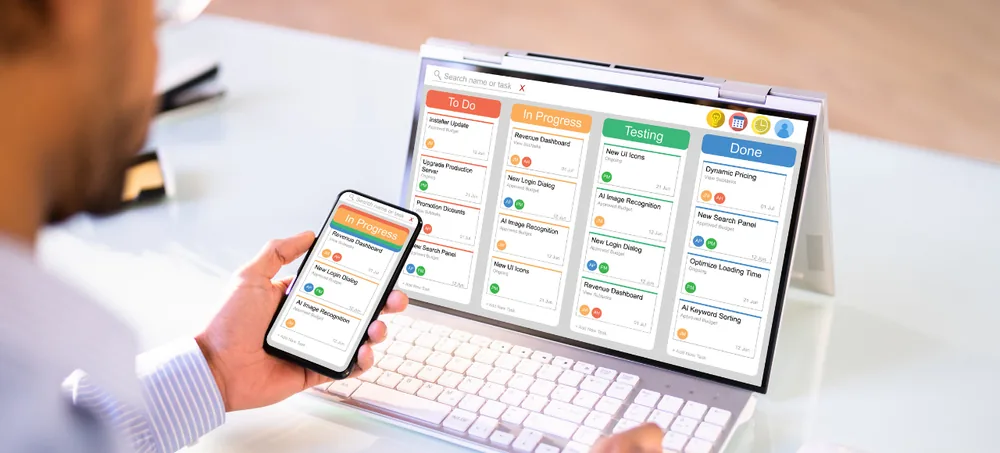
Organize production planning, BOM, work orders, inventory, purchasing, quality and finance with ERPLax Manfact ERP. ERPLax is a cloud ERP platform developed by EchoPx Technologies to help Bangalore manufacturers manage factory operations, material requirements, job work, dispatch and management reporting through integrated workflows, with specialized manufacturing capabilities verified against the proposed configuration.
ERPLax is developed by EchoPx Technologies, bringing business software experience to organizations planning manufacturing ERP adoption. Manufacturers should consider this background alongside demonstrated product functionality, implementation scope, integrations and subscription terms.
Looking for a reliable manufacturing ERP to organize production planning, BOM, work orders, raw material inventory, purchasing, quality inspection, job work, dispatch and finance through a centralized platform? ERPLax Manfact ERP is a cloud ERP solution developed by EchoPx Technologies to help Bangalore manufacturers manage connected factory operations through integrated workflows.
Manufacturing companies maintain relationships with industrial customers, suppliers, job-work vendors and recurring buyers while coordinating sales, purchasing, production, inventory and finance teams. A CNC workshop, an automotive component supplier, an electronics assembler or a fabrication unit may each have different production methods, material structures and operational requirements. When these activities are maintained through separate spreadsheets and disconnected applications, factory teams may spend additional time reconciling information and confirming order status.
ERPLax Manfact ERP provides a cloud-only SaaS ERP platform for manufacturers seeking centralized business management and configurable operational workflows. Factories can evaluate the platform for production planning, BOM management, work orders, inventory, purchasing, quality, job work, sales, dispatch, finance and reporting. The difference between a manufacturing ERP and a general ERP is that manufacturing ERP software adds production-specific workflows — BOM, work orders, material requirements planning and quality inspection — on top of standard business management functionality. Specialized capabilities, including automated material planning, machine scheduling and detailed job costing, should be verified against the proposed configuration. Whether your business operates in precision engineering, automotive components, electronics or fabrication, ERPLax can be evaluated around your actual factory operations.
Connect production planning, BOM management, work orders, raw material inventory, purchasing, quality-related workflows, customer orders, finance and management reporting through one configurable cloud ERP platform.
Searching for Manufacturing ERP Software Bangalore, Manufacturing ERP Bangalore, ERP Software for Manufacturing Companies Bangalore, Manufacturing ERP Solutions Bangalore, Manufacturing ERP System Bangalore, Factory ERP Software Bangalore, Production Planning ERP Software Bangalore, Industrial ERP Software Bangalore, Cloud Manufacturing ERP Software Bangalore, MRP Software Bangalore, Inventory Management ERP Software Bangalore, Manufacturing Execution Software Bangalore, BOM Management Software Bangalore, Work Order Management Software Bangalore or Small Manufacturing ERP Software Bangalore? ERPLax Manfact ERP is a configurable cloud ERP that manufacturers can evaluate directly.
Many manufacturers also look for a cloud-based manufacturing ERP software for Bangalore factories, manufacturing ERP software for production planning and work orders, ERP software for raw material inventory and purchasing, a manufacturing ERP system with BOM and job work management, manufacturing ERP software for CNC machining and fabrication, a subscription-based manufacturing ERP software, manufacturing ERP software for quality inspection and rejection tracking, an ERP solution for manufacturing dispatch and customer orders, a manufacturing ERP system for multiple Bangalore industrial areas, manufacturing ERP software with batch and barcode tracking, manufacturing ERP implementation for small and medium factories and cloud ERP for automotive and electronics manufacturers while comparing providers.
Bangalore manufacturers range from CNC workshops and automotive component suppliers to electronics assemblers and fabrication units — as production volume, customer orders and vendor relationships grow, manually maintained spreadsheets and disconnected applications become harder to keep consistent across departments.
When sales, purchasing, production, inventory and finance teams work from separate spreadsheets and registers, information about a single customer order can become scattered and difficult to reconcile.
Without organized visibility into raw material levels, factories can face unexpected shortages that delay production while other materials sit as excess, under-utilized stock.
Production schedules built manually from scattered information can make it difficult to confirm material availability, machine capacity and realistic delivery timelines together.
Materials sent to external vendors for processing can be difficult to track without a structured record of what was issued, what was returned and what remains outstanding.
Inspection results and rejected-material records kept inconsistently can make it harder to review product quality trends or confirm corrective action was taken.
Purchase requests without clear approval workflows can slow down material procurement and leave production waiting on pending supplier orders.
Without structured records connecting materials, labor and overheads to specific work orders, factories may find it difficult to understand actual manufacturing costs.
When finished goods, order status and delivery information are not connected, sales and warehouse teams may struggle to give customers accurate dispatch updates.
Without a centralized platform, factory owners and department heads may need to manually assemble sales, purchasing, inventory and production information for review.
A manufacturing ERP is a business management system used to organize and connect the operational activities associated with running a factory. A manufacturer may need to coordinate BOM structures, work orders, raw material purchasing, job work, quality inspection and finished-goods dispatch — for example, a customer order may require a quotation, a BOM review, a work order, material issue, production stages, quality inspection and a customer invoice. Without an integrated approach, each stage might be recorded in a different register; with configured ERP workflows, related manufacturing records can be organized around the same production activity.
Manufacturing ERP and general ERP software: a general ERP typically covers sales, purchasing, inventory and finance, while a manufacturing ERP adds production-specific workflows such as BOM, work orders, material requirements planning and quality inspection on top of those core processes. A factory may require capabilities from both categories, and ERPLax should be evaluated according to which processes can be supported through its existing SaaS modules, configurable workflows or agreed additional development.
Beyond ordinary spreadsheets and registers: manufacturing requirements frequently extend beyond standard spreadsheets to include BOM-level material planning, work-order routing, batch and serial tracking, job-work reconciliation and production-cost reporting.
Illustrative BOM structure — the actual product structure and work-order routing depends on your configured ERP modules
Selecting a manufacturing ERP requires understanding what each feature does, which operational problem it addresses and how factory staff will use it. ERPLax offers core business management modules that can support relevant manufacturing processes, while specialized production-automation capabilities must be evaluated against the proposed configuration.
Organize production schedules, work-order sequencing and planning information so factory teams can review what needs to be manufactured and when.
Maintain material structures for finished and semi-finished products, including component relationships relevant to manufacturing and costing.
Organize work-order creation, material issue, production stages and completion records connected to the relevant sales order or production plan.
Track raw material receipts, issues, transfers and balances across warehouses and production locations.
Organize inventory records for semi-finished goods moving between production stages and completed finished goods ready for dispatch.
Organize purchase requests, approvals, supplier orders and material receiving processes connected to production requirements.
Evaluate automated material planning functionality that compares production requirements against available stock and pending orders.
Organize warehouse locations, stock transfers and movement records for raw materials, components and finished goods.
Assess batch, serial number and barcode identification requirements to support traceability and faster transaction recording.
Organize inspection checkpoints, acceptance and rejection records connected to production batches and incoming materials.
Track materials issued to external vendors for processing, the returned goods and the related supplier transactions.
Organize customer enquiries, quotations, sales orders and customer records relevant to manufacturing businesses.
Organize delivery records connected to customer orders, finished-goods availability and dispatch-related activities.
Organize supplier purchases, customer invoices, expenses, payments and applicable GST billing and reporting requirements.
Review reports and dashboards covering production, purchasing, inventory, sales and manufacturing cost information relevant to each department.
Organize employee records for production and administrative staff, and assess integration requirements with accounting, ecommerce, barcode or weighing equipment.
ERP software becomes more useful when manufacturing departments follow clearly defined transaction stages — the following example production sequence (Raw Material → Work Order → Production → Quality Check → Finished Goods → Dispatch) illustrates one such workflow.
A customer submits an enquiry, the sales team prepares a quotation, and once confirmed, the production team reviews material availability and organizes the required manufacturing activity.
A department identifies the need for materials, the purchasing team prepares a supplier order, and warehouse personnel record the delivery and any required incoming inspection.
The approved bill of materials provides the relevant structure, the production team creates work-order records, materials are issued, and completed products are recorded as finished goods.
Personnel inspect a batch requiring review, accepted products continue to the next stage, and rejected materials follow the company's approved handling process.
A component requiring external processing is issued to a vendor, the vendor completes the process, and receiving personnel verify quantities before processing related supplier charges.
Production is completed, the warehouse prepares dispatch against the customer order, and finance creates the related invoice and maintains customer transaction records.
A well-configured manufacturing ERP implementation can support better coordination between sales, purchasing, production, inventory and finance when staff use a common system and maintain accurate records.
An integrated ERP platform helps organize the information that sales, purchasing, production, inventory and finance departments share.
Structured material receipts, issues and transfers provide a better foundation for understanding stock movements across the factory.
Related business transactions can use shared references, reducing unnecessary re-entry into independent spreadsheets and departmental applications.
Production supervisors can evaluate work-order and material records to support planning discussions and scheduling decisions.
Configurable workflows help establish who reviews purchase requirements and authorizes supplier transactions.
Sales teams can review order information and communicate with production and warehouse departments using organized transaction records.
Structured inspection and rejection workflows help organize information about production quality activities.
ERPLax finance and reporting modules help organize the relationships between purchasing, sales and expense transactions.
Manufacturing businesses have different production methods, material structures and operational requirements. ERPLax Manfact ERP can be evaluated against the needs of several manufacturing industries.
Evaluate ERPLax for raw material purchasing, machining-related job records, inspections and finished-part dispatch for customer-drawing-based manufacturing.
Evaluate component inventory, production transactions, purchasing, sales and reporting relevant to recurring customer orders and batch-level documentation.
Evaluate material structures, stock records, purchasing procedures and inspection requirements relevant to purchased components and product revisions.
Evaluate material purchasing, work-order management, inventory movements, customer orders and finance for cutting, bending, welding and assembly operations.
Evaluate manufacturing-related processes together with purchasing, inventory, sales and finance for multi-level product structures and assembly stages.
Evaluate inventory, purchasing, production activity and financial reporting relevant to injection molding, extrusion or compression molding processes.
Evaluate sales, inventory, production-related and accounting workflows relevant to cartons, printed packaging, films and other packaging products.
Evaluate core purchasing, production, inventory and sales management activities, with specialized food safety and traceability requirements verified separately.
Evaluate purchasing, inventory, finance and manufacturing-related processes relevant to process-specific materials, fabric production stages or equipment assembly.
The best manufacturing ERP is the solution that meets your factory's actual functional requirements within an appropriate commercial and implementation scope — not just comparing feature lists.
Determine whether your company manufactures standard products, customer-specific items, assemblies or batch production, since this affects the required BOM, work-order and inventory processes.
List the operational difficulties experienced by purchasing, production, inventory, sales and finance personnel, such as repeated data entry, material discrepancies and delayed approvals.
Identify whether the business needs simple BOMs, multi-level structures or component substitutions, and ask for a practical demonstration if automated material planning is required.
Document work orders, production stages, outsourced processes, quality inspections and finished-goods recording, and test the relevant transactions using one of your actual products.
Review stock receipts, issues, transfers, batch identification, location-level reporting and GST billing requirements against your actual operations.
Understand the selected modules, users, configuration services, integration work, additional development and training arrangements in the full proposal.
Involve purchasing staff, production supervisors, warehouse personnel, sales employees and finance users, since their practical knowledge helps identify important workflow requirements.
A complete proposal provides a better basis for comparison than a basic subscription figure — review integration requirements, implementation readiness and future scalability before committing to a particular manufacturing ERP.
ERP pricing depends on the manufacturing business's required functionality, user structure and implementation scope. ERPLax follows a cloud-only SaaS subscription model, and a detailed quotation should account for the specific processes the factory needs to manage.
Request Manfact ERP Software Pricing based on your actual operational needs rather than choosing software solely from an advertised starting price.
A manufacturing ERP decision should consider business-process suitability, production and BOM capability, configuration flexibility, implementation planning and commercial transparency.
ERPLax Manfact ERP is positioned around production, inventory, purchasing, sales, billing and reporting as part of a wider business management system.
ERPLax is developed by EchoPx Technologies, with 19+ years of experience, 1500+ clients and 1700+ projects, alongside demonstrated software functionality.
ERPLax follows a subscription-based cloud ERP model, so businesses can review relevant modules and commercial arrangements according to their operating requirements.
ERPLax supports configuration and additional development within its SaaS platform as businesses add products, manufacturing stages or reporting requirements.
ERPLax helps organize relationships between sales, purchasing, inventory, production-related workflows and finance for more consistent departmental coordination.
Reports and dashboards present information from relevant business transactions so management can evaluate purchasing, production, sales and financial decisions.
Implementing a manufacturing ERP involves reviewing existing processes, preparing product and material data and establishing clear staff responsibilities — from requirements discovery through module selection, workflow configuration, data migration, integration assessment, testing, training and operational rollout.
The business documents its products, materials, production methods, suppliers, customers and operational processes, identifying current challenges and required workflows.
The required capabilities are assessed against ERPLax Manfact ERP, with core modules and specialized manufacturing functions reviewed to establish the proposed scope.
The agreed production, purchasing, inventory, sales and administrative processes are configured within the SaaS ERP platform, with additional development assessed for feasibility.
The company prepares products, components, suppliers, customers, warehouses and BOM information, correcting duplicate or incomplete records before migration.
Existing accounting applications, barcode devices, ecommerce systems or specialized tools are evaluated where integration is required, defining compatible interfaces and responsibilities.
Employees test realistic transactions, including purchase orders, goods receipts, material issues, production records, quality review and customer invoicing.
Purchasing, warehouse, production, sales and finance employees receive training relevant to their responsibilities, since consistent transaction entry supports useful reporting.
The company adopts the configured workflows according to an agreed plan, then assesses whether additional reports, workflows or configuration changes are appropriate.
ERPLax's cloud-only SaaS model allows manufacturers in different Bangalore industrial locations to evaluate centralized ERP workflows without tying the software platform to a particular industrial estate.
Engineering businesses, machine shops, component suppliers and industrial enterprises across Peenya and Peenya 2nd Stage can evaluate purchasing, inventory, production tracking, job-work records and financial reporting.
Manufacturers in Bommasandra and Jigani operating in engineering, fabrication, components and industrial production can evaluate connected material planning, supplier management and production information.
Electronics, engineering and industrial manufacturers across Electronic City and Hoskote can evaluate coordinated sales, purchasing, material management and production processes.
Manufacturers around Bidadi, Nelamangala and Tumkur Road can assess ERPLax for production-related processes, supplier purchasing, warehouse records and financial reporting.
Businesses in Whitefield and Mahadevapura can evaluate ERP processes for electronics, engineering, equipment assembly and industrial distribution according to their manufacturing models.
Manufacturers operating in northern Bengaluru, including Yelahanka and Devanahalli, can evaluate integrated purchasing, production, inventory and management reporting.
Answers on production planning, BOM, work orders, inventory, quality, job work, GST billing, pricing and implementation.
Manfact ERP is ERPLax's manufacturing-focused enterprise resource planning solution. It helps businesses organize production-related activities, purchasing, inventory, sales, finance and reporting through a centralized ERP platform.
Yes. ERPLax Manfact ERP can be evaluated by manufacturers in Bangalore for managing connected manufacturing and business processes. The appropriate configuration depends on the company's production method, required modules and operational complexity.
The best manufacturing ERP depends on the company's products, manufacturing process, inventory structure, functional requirements and budget. ERPLax is an option for manufacturers seeking a configurable SaaS ERP platform with production, purchasing, inventory and financial management capabilities.
Yes. ERPLax Manfact ERP is a cloud-only SaaS ERP solution available through a subscription model.
Yes. Small and medium manufacturers can evaluate ERPLax for the relevant modules and workflows, with the implementation scope based on their actual operating requirements.
ERPLax Manfact ERP includes production planning and manufacturing-related functionality. Specific scheduling, material planning and capacity management requirements should be confirmed during the product demonstration.
ERPLax Manfact ERP identifies BOM management as one of its manufacturing capabilities. Businesses requiring multi-level BOMs or engineering revisions should verify those functions using realistic product examples.
ERPLax includes work-order-related manufacturing functionality. Detailed production routing and work-center scheduling should be assessed against the proposed configuration.
Yes. ERPLax includes inventory functionality for recording material receipts, issues, transfers and adjustments, with material categories and warehouses defined during implementation.
ERPLax provides warehouse and stock movement functionality, with required location structure, transfer procedures and reporting confirmed as part of the implementation scope.
ERPLax Manfact ERP identifies batch and serial tracking among its inventory-related capabilities, with exact traceability and identification functions verified according to business requirements.
Barcode-related functionality is included in the ERPLax Manfact ERP offering. Compatibility with specific scanners and operational workflows must be confirmed.
Yes. ERPLax includes purchasing and supplier-related functionality, letting businesses evaluate purchase requests, approvals, supplier orders and material receiving processes.
ERPLax Manfact ERP identifies inspection checkpoints and rejection tracking as relevant capabilities, with specialized inspection and rework processes demonstrated where required.
Job work is included among the manufacturing areas identified by ERPLax, with material reconciliation and supplier billing requirements confirmed during evaluation.
ERPLax includes finance and reporting functionality that can be evaluated for manufacturing cost information, with detailed job costing and overhead allocation requiring functional verification.
Yes. ERPLax includes sales management functionality for organizing customer enquiries, quotations and commercial transactions, reviewed alongside production and inventory.
Yes. ERPLax includes finance and accounting functionality for relevant business transactions and reporting, with specific accounting processes evaluated against business needs.
ERPLax Manfact ERP identifies GST-related billing and reporting requirements within its manufacturing offering. Specific tax calculations and invoice formats should be confirmed against the proposed configuration.
ERPLax identifies popular accounting systems among potential integration categories. Actual integration depends on the application, available interfaces and agreed technical scope.
Yes. ERPLax supports configurable ERP workflows and additional development within its SaaS platform according to agreed requirements, distinguishing existing functionality from configuration and development.
CNC machining businesses can evaluate ERPLax for purchasing, inventory, work-order information, sales and financial workflows, with machine scheduling and production costing verified separately.
Yes. Automotive component manufacturers can evaluate ERPLax for material management, purchasing, production-related activities and reporting, with traceability requirements assessed separately.
Fabrication businesses can evaluate ERPLax for customer orders, raw materials, work orders, inventory and finance, with nesting calculations and fabrication-specific costing needing confirmation.
Yes. ERPLax includes reports and analytics functionality, with exact production, purchasing, inventory and profitability reports depending on available data and configuration.
Pricing depends on selected modules, users, manufacturing requirements, workflow configuration, integrations and implementation services. Manufacturers should request a quotation based on their business needs.
Implementation duration depends on business complexity, required modules, data preparation, integration work, testing and employee training. A project schedule should be established after requirements discovery.
ERPLax provides a configurable SaaS ERP platform that can be evaluated as manufacturing processes and organizational requirements change, with additional modules or development affecting commercial scope.
Prepare product information, sample BOMs, material records, purchase procedures, work-order examples, warehouse structures and reporting requirements, with realistic scenarios for specialized functions.
Visit the ERPLax website and request a manufacturing ERP consultation or product demonstration, explaining your industry, products, production processes and required ERP modules.
Manufacturing businesses require consistent coordination between customer orders, material purchases, inventory, production, quality processes, dispatch and finance. When these functions are managed through disconnected applications and manual records, employees may struggle to maintain accurate information and understand the progress of related transactions.
ERPLax Manfact ERP provides a cloud-only SaaS ERP platform for manufacturing companies seeking centralized business management, configurable workflows and integrated processes. Whether your business operates in precision engineering, automotive components, CNC machining, fabrication, electronics, packaging, machinery manufacturing, textiles or another industrial sector, the right ERP configuration should reflect your actual factory operations.
Discuss your production challenges, material requirements, purchasing procedures, inventory management, customer orders and reporting needs with the ERPLax team.
Discuss the modules, workflow configurations, integrations and implementation services required for your factory.
Request a product demonstration based on real manufacturing transactions and the workflows used by your employees.
ERPLax Manfact ERP — Cloud Manufacturing ERP Software for Production Planning, BOM, Work Orders, Inventory, Purchasing, Quality, Job Work, Dispatch and Finance for Bangalore Manufacturers. Developed by EchoPx Technologies | 19+ Years of Experience | 1500+ Clients | 1700+ Projects. Write to info@erplax.in
Specialized Applications
Purpose-built & ready to deploy. Hover to explore, click to learn more.
Testimonials
Real stories from businesses running their operations on ERPLax.
ERPLax gave us real-time visibility into stock across three warehouses. Wastage dropped and our fulfillment time improved almost overnight.
GST e-invoicing used to eat up two days every month. With ERPLax's accounting module it's now automatic and our filings are always on time.
Billing at our stores used to take a minute per customer. ERPLax's POS module cut that to under 15 seconds, even during peak festival rush.
Payroll for 200+ employees across two branches used to take our HR team a full week. ERPLax's HRM module now runs it in a single afternoon.
Tracking batch numbers and expiry across our distribution network was a nightmare on spreadsheets. ERPLax's inventory module made it effortless.
Front desk, housekeeping and billing are now all on one screen. ERPLax's hotel management module has made check-in day a breeze for our staff.
Fee collection, attendance and report cards used to live in three different tools. ERPLax brought it all into one dashboard our staff actually enjoys using.
Tracking material costs and site progress across four active sites was chaos before ERPLax. Now our project managers update status from their phones daily.
Our online store orders now sync straight into inventory and accounting — no more manual entry, no more overselling out-of-stock items.
Our sales team can now see every lead's history and follow-ups in one place. Deal closures are faster and nothing falls through the cracks anymore.
ERPLax gave us real-time visibility into stock across three warehouses. Wastage dropped and our fulfillment time improved almost overnight.
GST e-invoicing used to eat up two days every month. With ERPLax's accounting module it's now automatic and our filings are always on time.
Billing at our stores used to take a minute per customer. ERPLax's POS module cut that to under 15 seconds, even during peak festival rush.
Payroll for 200+ employees across two branches used to take our HR team a full week. ERPLax's HRM module now runs it in a single afternoon.
Front desk, housekeeping and billing are now all on one screen. ERPLax's hotel management module has made check-in day a breeze for our staff.
Fee collection, attendance and report cards used to live in three different tools. ERPLax brought it all into one dashboard our staff actually enjoys using.
Tracking material costs and site progress across four active sites was chaos before ERPLax. Now our project managers update status from their phones daily.
Our online store orders now sync straight into inventory and accounting — no more manual entry, no more overselling out-of-stock items.
Our sales team can now see every lead's history and follow-ups in one place. Deal closures are faster and nothing falls through the cracks anymore.