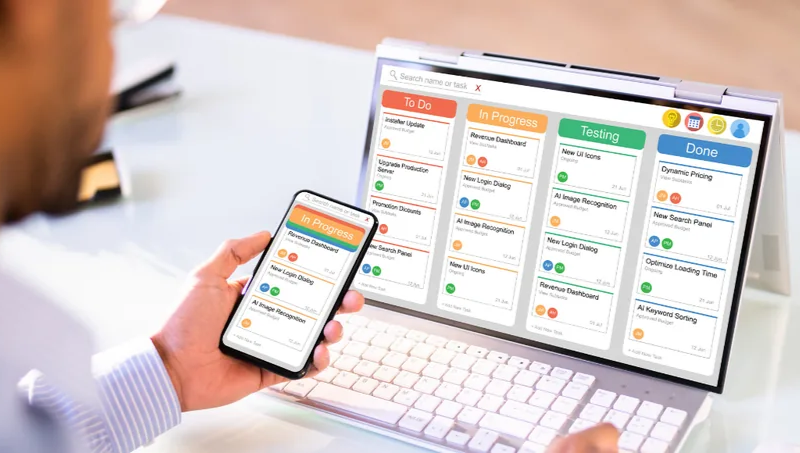
ERPLax Textile Machinery ERP Software in Bangalore is a configurable cloud ERP solution for manufacturers of spinning, weaving, knitting, dyeing and textile finishing machinery — organizing production planning, bills of materials, procurement, inventory, equipment assembly, costing and financial workflows through centralized business management, developed by EchoPx Technologies.
Textile machinery manufacturing involves multiple production stages, specialized components and coordination between engineering, procurement, fabrication and assembly teams. Without integrated ERP software, manufacturers may experience several administrative challenges.
Without a connected planning structure, machinery manufacturing orders and work center responsibilities are harder to coordinate on schedule.
Disconnected BOM and inventory records make it difficult to confirm accurate material and component requirements before production.
Without configured work orders, fabrication, machining and assembly progress is harder to monitor across production stages.
Purchase requests, supplier quotations and stock records maintained separately create gaps between what is ordered and what is available.
Material costs, purchased components and subcontracting expenses spread across systems make machine-wise costing difficult to review.
Informal approval processes and manual consolidation of records can delay purchase, production and financial reporting.
ERPLax Textile Machinery ERP Software in Bangalore is a configurable cloud ERP solution for manufacturers of spinning, weaving, knitting, dyeing and textile finishing machinery, providing configurable ERP workflows that help organize production activities within a centralized SaaS platform.
Organize manufacturing orders, planned operations and production progress across fabrication, machining and assembly stages.
Maintain structured component requirements for textile machines, including mechanical assemblies, motors, drives and shafts.
Organize raw materials, spare parts, mechanical components and electrical items through connected stock transactions.
Track fabrication, machining, mechanical assembly and electrical integration activities using configured work orders.
Organize purchase requests, supplier quotations, approval workflows, purchase orders and receipt records.
Organize estimated and recorded material costs, purchased components, subcontracting expenses and other manufacturing costs.
Maintain relevant inspection checkpoints, testing documentation references and internal review status.
Connect relevant sales, purchasing, invoicing and financial processes with operational manufacturing records.
The following capabilities represent textile machinery manufacturing workflows — covering production planning, BOM management, inventory, assembly, costing, quality and financial reporting — that can be evaluated for configuration in ERPLax. Manufacturers across Peenya, Bommasandra, Jigani, Electronic City, Bidadi, Nelamangala, Whitefield and Doddaballapur can request a functional demonstration.
Organize machinery manufacturing orders, planned operations, work center responsibilities and production progress.
Business value: Clearer schedules and better coordination between fabrication, machining and assembly teams.
Maintain structured component requirements for textile machines, including mechanical assemblies, motors, drives, shafts and purchased parts.
Business value: Better material planning and clearer engineering information.
Organize raw materials, spare parts, mechanical components and electrical items through connected stock transactions.
Business value: Improved visibility into recorded inventory and production material requirements.
Manage purchase requests, supplier quotations, approval workflows, purchase orders and receipt records.
Business value: More consistent purchasing processes and supplier coordination.
Track fabrication, machining, mechanical assembly and electrical integration activities using configured work orders.
Business value: Clearer information about manufacturing progress and outstanding tasks.
Organize estimated and recorded material costs, purchased components, subcontracting expenses and other manufacturing costs.
Business value: Better information for machine-wise costing and commercial reviews.
Maintain relevant inspection checkpoints, testing documentation references and internal review status.
Business value: More organized quality documentation and production coordination.
Connect relevant sales, purchasing, invoicing and financial processes with operational records.
Business value: Centralized business information and more consistent management reporting.
ERPLax can be configured according to your manufacturing requirements, whether you build standard textile machines or customized industrial textile equipment.
Configure workflows for spinning equipment BOMs, component purchasing, machining, production scheduling and assembly management — covering ring frames, draw frames and related spinning line equipment.
Organize weaving machine manufacturing, loom components, work orders, inventory and machine-wise costing for shuttle and shuttle-less loom builders.
Manage knitting equipment component requirements, fabrication, assembly and procurement processes across circular and flat knitting machine lines.
Coordinate material planning, fabricated assemblies, purchased components and manufacturing documentation for dyeing and processing equipment.
Organize production workflows for fabric finishing machines, rollers, conveyors, heating assemblies and related finishing-line equipment.
A connected manufacturing workflow follows these stages, configured according to the manufacturer's agreed business requirements.
Record machinery specifications and customer requirements.
Prepare and approve commercial proposals, then confirm the machinery manufacturing order.
Define approved material and component requirements.
Review inventory and purchase required components.
Organize fabrication, machining and assembly work orders.
Coordinate inspection and equipment testing documentation.
Manage finished machinery delivery records.
Process invoices and review manufacturing expenses.
Structured manufacturing and business workflows give management a clearer, centralized basis for reviewing production, procurement, inventory and financial information.
Connect manufacturing and business records within a consistent ERP structure.
Review planned and outstanding work orders across fabrication, machining and assembly.
Organize material receipts, issues and stock information for raw materials and components.
Establish structured purchase approval workflows and supplier coordination.
Review machinery manufacturing expense records for clearer machine-wise costing.
Configure routine approvals and transaction processes, with access to relevant manufacturing and financial reports.
ERPLax can be evaluated by textile equipment manufacturers operating across Bengaluru — the SaaS ERP platform can be configured according to business requirements regardless of the manufacturer's specific industrial location.
Evaluated according to the business requirements of machinery manufacturers operating in and around Peenya.
Configurable ERP workflows for textile machinery manufacturers based in the Bommasandra industrial belt.
Production, procurement and inventory workflows assessed for Jigani-based machinery manufacturers.
ERP configuration evaluated for manufacturing units along the Electronic City and Hosur Road corridor.
SaaS ERP workflows for textile equipment manufacturers operating in the Bidadi and Nelamangala belt.
Business-specific configuration for machinery manufacturers located in Whitefield and Doddaballapur.
ERPLax, developed by EchoPx Technologies, provides a configurable SaaS ERP platform for textile machinery manufacturers — functionality and implementation scope are established according to agreed requirements.
A subscription-based cloud ERP model with service scope evaluated before adoption.
Production, assembly, procurement and costing workflows configured within the SaaS platform.
Manufacturing, procurement, inventory and finance connected within a consistent structure.
Related operational and financial information managed through connected ERP processes.
Configuration and development evaluated according to agreed manufacturing requirements.
Functionality and implementation scope established according to agreed business requirements.
ERPLax customization means configuration and development within the cloud SaaS platform according to documented and agreed manufacturing requirements.
Configure manufacturing order stages, work center responsibilities and progress tracking around your shop-floor procedures.
Structure engineering bills of materials for mechanical assemblies, motors, drives and purchased parts as your machines require.
Define how material costs, purchased components and subcontracting expenses are organized for machine-wise costing.
Configure inspection checkpoints and testing documentation references to match your internal review procedures.
Plan manufacturing and financial reports around the information your management team reviews.
Potential integrations with other business applications assessed for technical feasibility before implementation.
A textile machinery ERP implementation should reflect the manufacturer's production, procurement and financial procedures across eight structured phases.
Review existing production, procurement, inventory and costing procedures.
Identify required workflows, BOM structures, costing methods and reports.
Prepare items, components, suppliers, work centers and opening balances, reviewed before migration.
Configure approved production, procurement, inventory and costing workflows within the agreed SaaS scope.
Review configured inspection checkpoints and costing structures against manufacturing procedures.
Test representative transactions from customer enquiry through production to dispatch and invoicing.
Train production, procurement, quality, finance and management personnel on their transaction responsibilities.
Establish procedures for opening data and pending orders, then review reporting and process consistency.
Answers to common questions about ERPLax's configurable textile machinery manufacturing ERP workflows.
Textile machinery ERP software helps manufacturers organize equipment production, engineering BOMs, purchasing, inventory, assembly, costing and financial activities.
Yes. ERPLax is a cloud-only SaaS ERP platform offered through a subscription model.
Yes. ERPLax supports configuration and development within its SaaS platform according to agreed business requirements.
ERPLax can be evaluated for manufacturing workflows involving spinning, weaving, knitting, dyeing and textile finishing equipment.
Configured ERP work orders can organize manufacturing stages, assigned operations and production status.
ERPLax can be evaluated for workflows connecting material requirements, stock records, purchase approvals and supplier transactions.
Pricing depends on the subscription scope, users, functionality, configuration and implementation requirements. Contact ERPLax for a business-specific proposal.
Contact ERPLax through its website and share your textile machinery manufacturing requirements.
ERPLax can be evaluated for structuring component requirements for textile machines, including mechanical assemblies, motors, drives and shafts.
Configured work orders can organize fabrication, machining, mechanical assembly and electrical integration activities with status visibility.
ERPLax can be evaluated for organizing estimated and recorded material costs, purchased components and subcontracting expenses by machine.
Relevant inspection checkpoints, testing documentation references and internal review status can be organized within configured workflows.
ERPLax can be evaluated for knitting equipment component requirements, fabrication, assembly and procurement processes.
ERPLax can be evaluated for material planning, fabricated assemblies, purchased components and production workflows for dyeing and finishing equipment.
ERPLax can be evaluated by manufacturers across Peenya, Bommasandra, Jigani, Electronic City, Bidadi, Nelamangala, Whitefield and Doddaballapur, regardless of specific location.
Potential integrations can be evaluated according to the applications involved, available interfaces and required information exchange.
Implementation duration depends on business processes, master data, configuration, integrations, testing and training required. A schedule is established after reviewing project scope.
Yes. Production, procurement, quality, finance and management personnel can be trained according to their transaction responsibilities.
Purchase requests, supplier quotations, approval workflows, purchase orders and receipt records can be organized within configured workflows.
Subcontracting expenses and related component records can be included in the manufacturing costing assessment, defined during implementation.
ERPLax provides a configurable SaaS ERP platform through which additional workflow and user requirements can be evaluated as the business grows.
ERPLax can be evaluated for connected workflows across production, procurement, inventory, quality and finance departments.
Reports can be planned around the production, procurement, costing and financial information maintained through configured ERP workflows.
Existing master data such as items, components, suppliers and opening balances can be reviewed and prepared for migration during implementation.
ERPLax operates as a cloud-hosted SaaS platform; specific security, access-control and data-handling practices should be confirmed with ERPLax during evaluation.
Cloud-based access depends on the configured platform and browser compatibility; specific mobile access capabilities should be confirmed during a demonstration.
Post-implementation support arrangements depend on the agreed subscription and service scope, which should be confirmed before adoption.
ERPLax can be configured specifically around textile machinery production, assembly and costing workflows rather than generic, one-size-fits-all processes.
Finished machinery delivery records can be organized within configured workflows connecting production, quality review and dispatch.
ERPLax can be evaluated for manufacturers producing standard textile machines as well as customized industrial textile equipment.
Useful examples include your BOM structures, production stages, supplier list, costing requirements and reporting needs to help define a relevant demonstration.
Document your production, BOM, procurement, costing and reporting requirements, then evaluate the proposed software against practical manufacturing scenarios and subscription costs.
Whether you manufacture spinning, weaving, knitting, dyeing or textile finishing machinery, ERPLax can be configured according to your manufacturing requirements.
Specialized Applications
Purpose-built & ready to deploy. Hover to explore, click to learn more.
Testimonials
Real stories from businesses running their operations on ERPLax.
ERPLax gave us real-time visibility into stock across three warehouses. Wastage dropped and our fulfillment time improved almost overnight.
GST e-invoicing used to eat up two days every month. With ERPLax's accounting module it's now automatic and our filings are always on time.
Billing at our stores used to take a minute per customer. ERPLax's POS module cut that to under 15 seconds, even during peak festival rush.
Payroll for 200+ employees across two branches used to take our HR team a full week. ERPLax's HRM module now runs it in a single afternoon.
Tracking batch numbers and expiry across our distribution network was a nightmare on spreadsheets. ERPLax's inventory module made it effortless.
Front desk, housekeeping and billing are now all on one screen. ERPLax's hotel management module has made check-in day a breeze for our staff.
Fee collection, attendance and report cards used to live in three different tools. ERPLax brought it all into one dashboard our staff actually enjoys using.
Tracking material costs and site progress across four active sites was chaos before ERPLax. Now our project managers update status from their phones daily.
Our online store orders now sync straight into inventory and accounting — no more manual entry, no more overselling out-of-stock items.
Our sales team can now see every lead's history and follow-ups in one place. Deal closures are faster and nothing falls through the cracks anymore.
ERPLax gave us real-time visibility into stock across three warehouses. Wastage dropped and our fulfillment time improved almost overnight.
GST e-invoicing used to eat up two days every month. With ERPLax's accounting module it's now automatic and our filings are always on time.
Billing at our stores used to take a minute per customer. ERPLax's POS module cut that to under 15 seconds, even during peak festival rush.
Payroll for 200+ employees across two branches used to take our HR team a full week. ERPLax's HRM module now runs it in a single afternoon.
Front desk, housekeeping and billing are now all on one screen. ERPLax's hotel management module has made check-in day a breeze for our staff.
Fee collection, attendance and report cards used to live in three different tools. ERPLax brought it all into one dashboard our staff actually enjoys using.
Tracking material costs and site progress across four active sites was chaos before ERPLax. Now our project managers update status from their phones daily.
Our online store orders now sync straight into inventory and accounting — no more manual entry, no more overselling out-of-stock items.
Our sales team can now see every lead's history and follow-ups in one place. Deal closures are faster and nothing falls through the cracks anymore.
